Elaine Massacre memorial anchors Phillips County's history in Helena
Phillips County's reckoning with the Elaine Massacre sits in Court Square Park, turning Helena's civic center into a place for mourning, teaching, and public accountability.
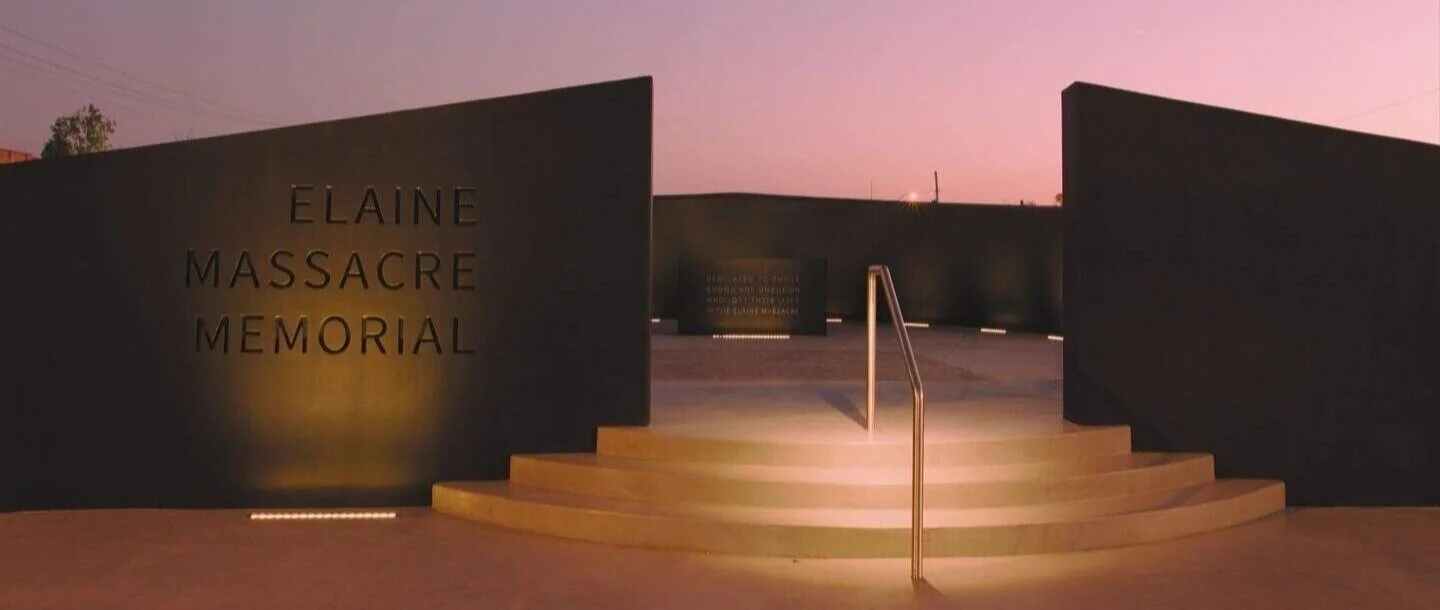
The Elaine Massacre Memorial stands at 622 Walnut Street in Helena, in Court Square Park between the Phillips County Courthouse and the present Federal Building. That placement puts the county’s most painful racial history in the middle of public life, where government, tourism, and daily foot traffic all pass the same ground.
Dedicated on September 29, 2019, the memorial was built to mark the 100-year anniversary of the tragedy and to serve as a permanent place to mourn the people who died. Its own description calls it a place of remembrance and reverence, while also acknowledging a hard truth that still shapes the story: the exact number and names of those who died remain unknown.
Why the memorial belongs in Helena
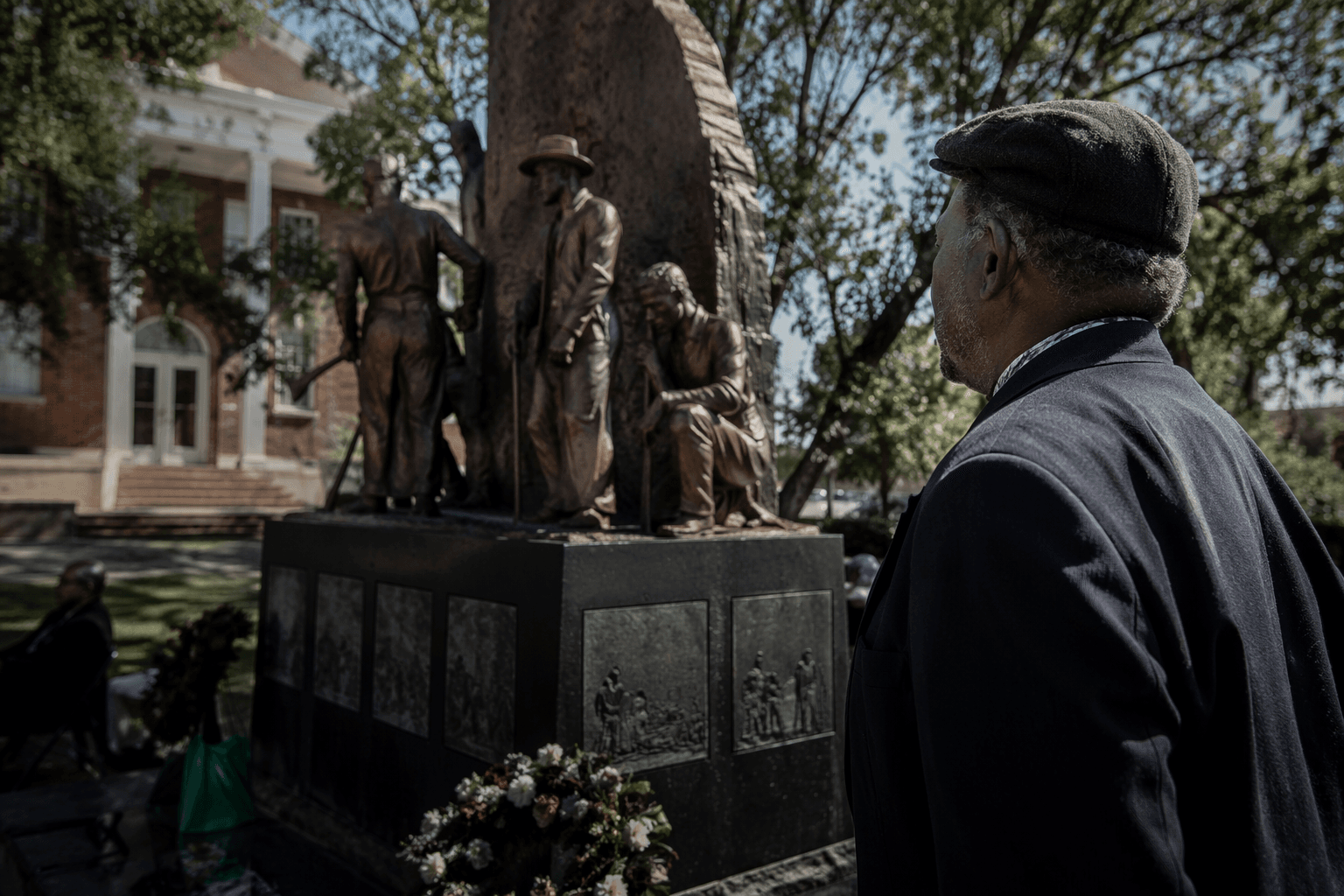
The choice to place the memorial in Helena, not in a museum basement or a distant archive, matters for Phillips County’s public memory. Court Square Park sits in the county seat, beside the courthouse and the federal building, so the memorial reads as a civic statement as much as a commemorative one. It tells residents and visitors that the county’s racial history is not separate from its institutions, but part of the same landscape where power, law, and public trust are negotiated.
That visibility also gives the site a practical purpose today. People coming to downtown Helena can stop at a public marker that explains one of the most devastating events in Arkansas history without needing a ticketed exhibit or a special appointment. For a county still working through how it tells the truth about racial violence, that kind of access is part of the accountability.
What happened at Hoop Spur in 1919
The violence began on the evening of September 30, 1919, when Black sharecroppers gathered at a church in Hoop Spur, three miles north of Elaine, to talk about how to get a fair share of the record price for cotton that fall. Armed guards were posted outside, and two white law officers were nearby when gunfire erupted. One officer was killed, and the event was quickly framed by authorities as a supposed uprising.
From there, the violence spread across Phillips County. Helena officials sent armed posses to Hoop Spur and asked the governor of Arkansas for troops to put down the “uprising.” Over the next four days, mobs and troops swept through the county. The memorial says more than 100 African Americans were killed, around 300 were jailed, and 122 were charged with first degree murder, intent to kill, or a lesser charge. University of Arkansas historical materials say federal troops arrived in Phillips County on October 2, 1919, and some exhibits place the end of the violence on October 7.
The scale of the event is why the Encyclopedia of Arkansas describes Elaine as the deadliest racial confrontation in Arkansas history and possibly the bloodiest racial conflict in the United States. That is not just a historical label. It is a reminder that Phillips County’s public spaces still carry the weight of a mass killing that was long minimized, misnamed, and stripped of its human toll.

The labor struggle behind the violence
The memorial’s value is not only in what it remembers, but in what it explains. The deeper cause of the massacre was the fight of Black sharecroppers and tenant farmers to be paid fairly in Jim Crow cotton country. The Progressive Farmers and Household Union of America, organized by Robert L. Hill in Winchester, Arkansas, in 1918, gave farmers a way to organize, pool resources, and seek legal help.
University of Arkansas materials describe the union as a response to poverty and peonage practices in the Arkansas Delta. That detail matters because it shifts the story away from a single outbreak of disorder and toward the labor system that made Black farmers vulnerable in the first place. The massacre was bound up with race, land, labor, and the punishment of Black organizing.
Seen that way, the memorial is not just about grief. It is also a public correction to a long history of official silence around how Phillips County treated Black economic self-advocacy. The site asks visitors to understand that the violence followed organizing, not the other way around.
How the memorial can serve schools and public institutions
Phillips County already has the bones of an educational network around the memorial. The memorial’s resources page points teachers and readers toward the University of Arkansas exhibit on Elaine, lesson plans from the Encyclopedia of Arkansas, and other historical materials that can be used in classrooms or public programming. That gives local schools a ready-made path for teaching the massacre with primary context instead of treating it as a passing footnote.
The site also has tourism value. The Arkansas Delta Byways Tourism Association includes the memorial as a place to visit, which means the county has a marker that can bring travelers into downtown Helena and into the story of Phillips County itself. For local institutions, that creates a chance to connect history with economic activity, especially when visitors are guided beyond the monument to other places that help explain the county’s past.
Public accountability now depends on what Phillips County does with that access. The memorial exists in a place where courthouse traffic, school groups, library programming, and heritage tourism can all intersect. If local schools, libraries, and government institutions use the memorial’s history consistently, the county can turn a once-buried atrocity into a durable lesson in how racial violence was enabled and how public memory can be corrected.
This article was produced by Prism’s automated news system from verified source data, official records, and press releases, then run through automated quality and moderation checks before publishing. The system is built and supervised by the people who set the standards it runs under. Read our full AI policy.
Did this article answer your question?