Elaine’s small footprint hides a large place in Arkansas history
Elaine's history is visible at Main and Quarles, the Parker Tate marker and the Legacy Center, where Phillips County's smallest town interprets a national racial turning point.
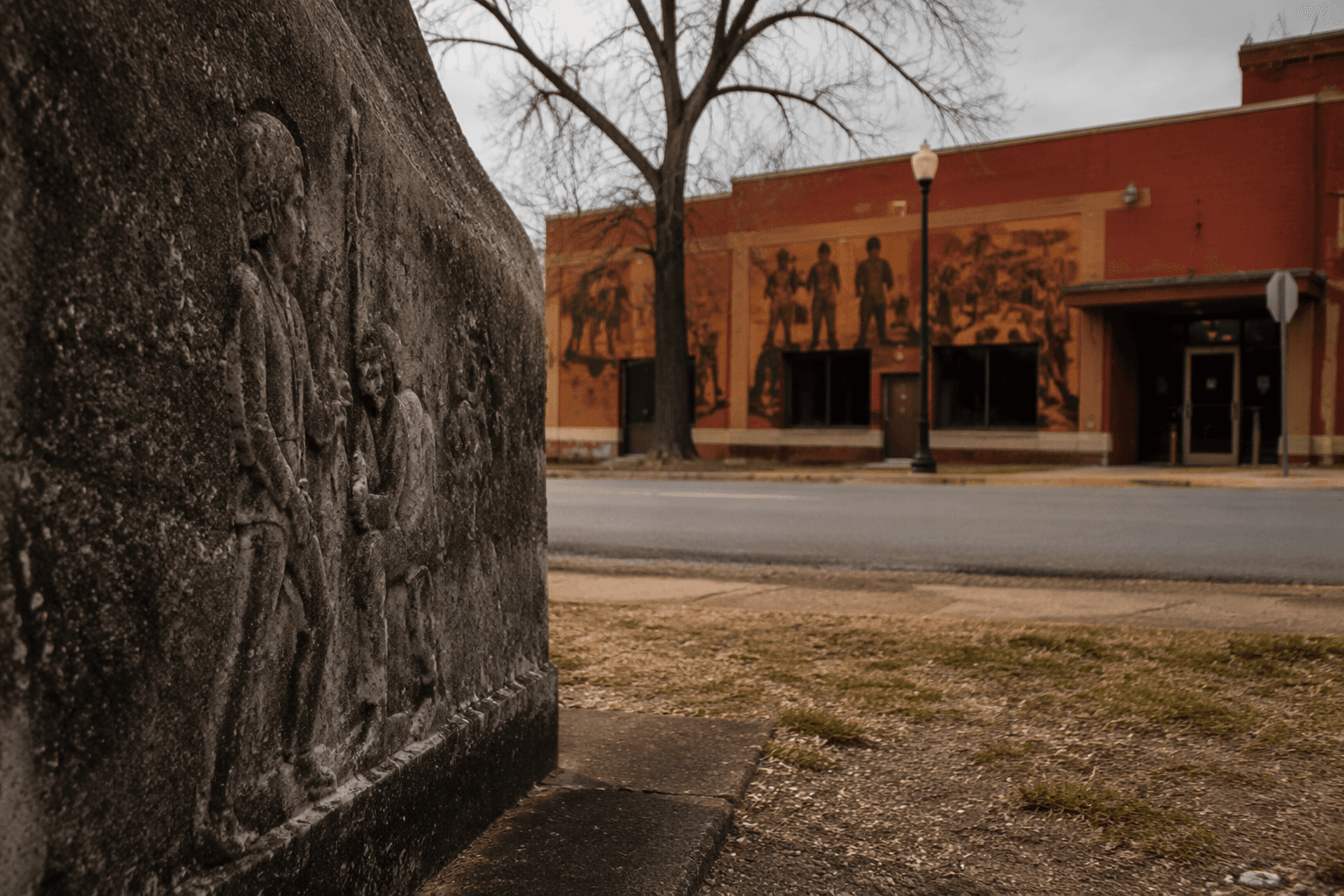
In Elaine, the past is not locked behind glass in some distant archive. It is anchored in downtown streets, at the former Lee Grocery Store on Main Street and Quarles Road, at the Elaine Legacy Center, and at the marker honoring Black sharecropper Parker Tate. In a town that covers just 0.51 square miles and counted 509 people in the 2020 Census, those places give Phillips County one of its most concentrated and consequential history sites.
Where Elaine sits in Phillips County
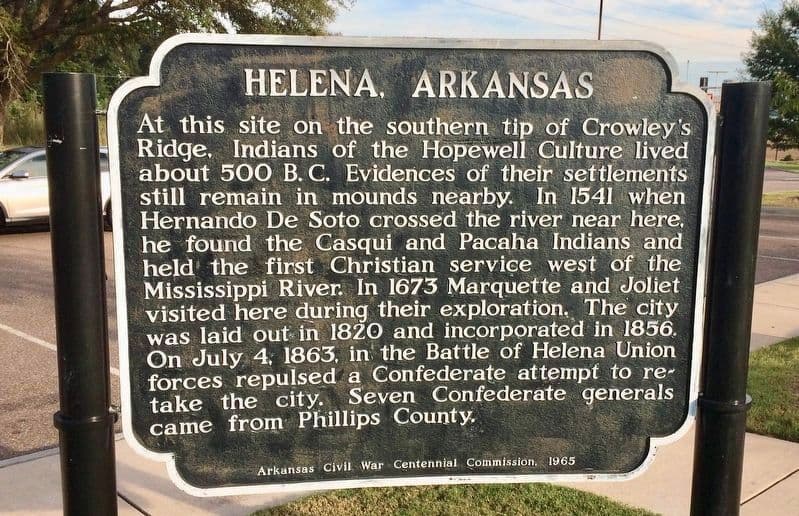
Elaine is in southern Phillips County, at 34º18’30″N 090º51’07″W and an elevation of 171 feet. Census Reporter lists an ACS 2024 population estimate of 487, Data USA lists 445, and World Population Review projects 419 for 2026, a reminder that this is a very small community by any measure. The geography matters because Elaine sits within the Arkansas Delta, where farming, levees, rail access, and small towns shaped the county’s development.
That setting also explains why Elaine’s story cannot be separated from the broader Mississippi Delta. Phillips County’s early industries included transportation, lumber, and agriculture, especially cotton production, and the town developed inside a labor system built around that economy. The result is a place where the map is small, but the historical footprint is large.
The farm economy that shaped the town
Elaine’s history begins with the land and the people who worked it. The University of Arkansas at Little Rock’s Elaine Race Massacre exhibit places Phillips County squarely inside the Arkansas Delta and ties the county’s growth to cotton, labor, and sharecropping. A broader Arkansas agriculture history resource shows the state moving from small self-sufficient landowners before the Civil War to a plantation culture, then to tenant farming and sharecropping after emancipation.
That shift matters in Elaine because Black farmers and sharecroppers lived under conditions that made organizing both urgent and dangerous. The town’s place in Arkansas history comes from that tension between agricultural production and political power, where local economy, race, and land ownership were inseparable. Elaine became one of the clearest examples of how Delta agriculture could concentrate wealth and risk in the same fields.
The 1919 crisis that defined the town’s name
The Elaine Race Massacre followed a September 30, 1919 meeting led by Robert L. Hill, where Black farmers organized the Progressive Farmers and Household Union of America. The violence that followed unfolded between September 30 and October 7, 1919, in rural Phillips County. University and media sources describe it as one of the deadliest racially motivated conflicts in American history, and it remains a central episode in the Red Summer era.
The aftermath reached beyond the immediate violence into the courts and into national civil rights history. Moore v. Dempsey grew out of the Elaine events and became part of the legal struggle over due process and mob-dominated justice. The University of Arkansas at Little Rock exhibit notes that after those legal battles, many of the Elaine 12 left the city, along with much of the town’s Black population, showing how violence and law together changed the community’s demographics and sense of place.
What visitors can still see and learn
Elaine’s public memory now lives in a small set of specific sites that make the history visible. The former Lee Grocery Store at Main Street and Quarles Road was added to the National Register of Historic Places in 2020 and became the future home of the Elaine Museum and Richard Wright Civil Rights Center. The building’s preservation turned a local commercial structure into a civic landmark, linking everyday downtown space to the story of race, labor, and memory in Phillips County.
The Elaine Legacy Center is another key place to visit and understand. It has appeared in local and state tourism listings, and it was the site of a February 5, 2019 remembrance event in which the Elaine Truth-Seeking Commission took part. That kind of programming matters because it brings descendants, scholars, and residents into the same room, turning a painful history into something that can be interpreted locally rather than only from afar.
Other markers broaden the experience beyond one building. In November 2019, the Elaine 12 were inducted into the Arkansas Civil Rights Heritage Trail, and in March 2020 a marker honoring Parker Tate was unveiled. Taken together, those recognitions create a trail of interpretation across town, from the former grocery store site to commemorative markers that help explain why Elaine remains part of Arkansas civil rights memory.
Why the town still matters now
Elaine’s value to Phillips County is not just that it preserves a hard chapter of history. Its value is that the town gives people a place to encounter that history directly, in a community that is still lived in and still named. The National Park Service completed a reconnaissance survey of selected civil rights sites in Phillips County in December 2019, a sign that Elaine and neighboring places have potential relevance beyond county lines.
That potential is practical as well as symbolic. A visitor interested in Phillips County can connect Elaine’s downtown sites, the Legacy Center, the Parker Tate marker, the museum project at Main and Quarles, and the broader story of the Elaine 12 into one coherent local experience. For a town of just 0.51 square miles, that is a powerful form of civic identity: Elaine stands as a small Delta community that helps explain sharecropping, labor organizing, racial violence, legal redress, and the modern work of remembering all of it accurately.
This article was produced by Prism’s automated news system from verified source data, official records, and press releases, then run through automated quality and moderation checks before publishing. The system is built and supervised by the people who set the standards it runs under. Read our full AI policy.
Did this article answer your question?