Helena Crossing mounds reveal 2,000-year-old Phillips County history
Helena Crossing preserves a 2,000-year-old Phillips County burial record on Crowley’s Ridge, where lost mounds and salvage digs make preservation and interpretation urgent.
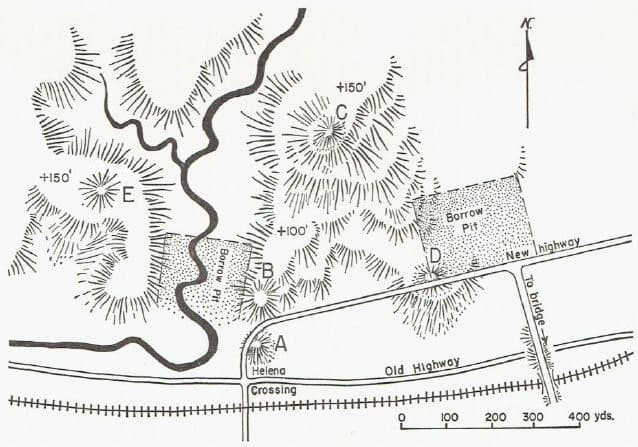
On the terraces above the confluence of the St. Francis and Mississippi rivers, Helena Crossing holds one of Phillips County’s oldest surviving records of human life. The mounds at the site, known in the archaeological literature as 3PH11, contain the remains of people buried about 2,000 years ago in elaborate log-lined tombs, along with personal and ritual objects. That makes the site more than a relic of ancient settlement, it is a rare, tangible marker of how long this county has been a place of memory, ceremony, and burial.
A burial ground on the county’s high ground
The setting matters as much as the remains. The southern edge of Crowley’s Ridge offered higher land that Native Americans used long before modern roads, bridges, and towns filled the Delta lowlands. Helena Crossing sits in that elevated landscape, overlooking a river junction that would have made the site both visible and meaningful, and the broader Phillips County record notes that 20th-century construction destroyed much of the area’s archaeological treasure. In that context, the mounds that survived are not just old, they are scarce evidence from a landscape that has already lost too much.
The site belongs to the Woodland period, roughly 600 BC to AD 1000, when Arkansas communities were experimenting with horticulture and often used mounds as burial places. A state marker in Helena says Hopewell Culture people lived at the site about 500 B.C., which fits the wider Woodland-era frame and gives the public a concise way to understand why the place matters. The Helena Crossing mounds also connect to broader regional traditions, including the Hopewell tradition in the Midwest and Middle Woodland mortuary practices, with some Arkansas heritage material placing the burial sites within the Fourche Maline culture as well.
What the excavations revealed
Helena Crossing first came to scholarly attention in 1940, when James B. Griffin, Phillip Phillips, and James A. Ford discovered the site during an alluvial-valley survey. Ford later returned with a salvage mission that shows just how vulnerable the mounds had already become: by 1958, three of the original five had been destroyed. His excavation of Mounds B and C began on September 12, 1960, and ended on December 20, 1960, with a crew of 7 to 10 laborers working under Ford and graduate student Asa Mays, Jr.
Ford’s 1963 monograph, *Hopewell Culture Burial Mounds near Helena, Arkansas*, remains the named scholarly anchor for the site. The University of Michigan Museum of Anthropological Archaeology catalogues Helena Crossing as Archaeological Site Number 3-Ph-11, period Middle Woodland, culture Hopewell, which helps place the site squarely in the academic record. That kind of documentation matters in Phillips County because it preserves what the ground can no longer say for itself after decades of disturbance and loss.
A 2010 reanalysis sharpened the picture further. It reported 30 individuals and 25 burials, including 7 infants, 5 juveniles, and 13 adults. The study also found signs of a remarkably complex mortuary program, including postmortem processing of remains, which means the site preserves not just bones but evidence of ritual decisions about how the dead were treated. For readers trying to understand the human scale of the place, those numbers matter: this was not a single burial episode, but a layered record of families, age groups, and changing practices.
Why Helena Crossing matters to Phillips County now
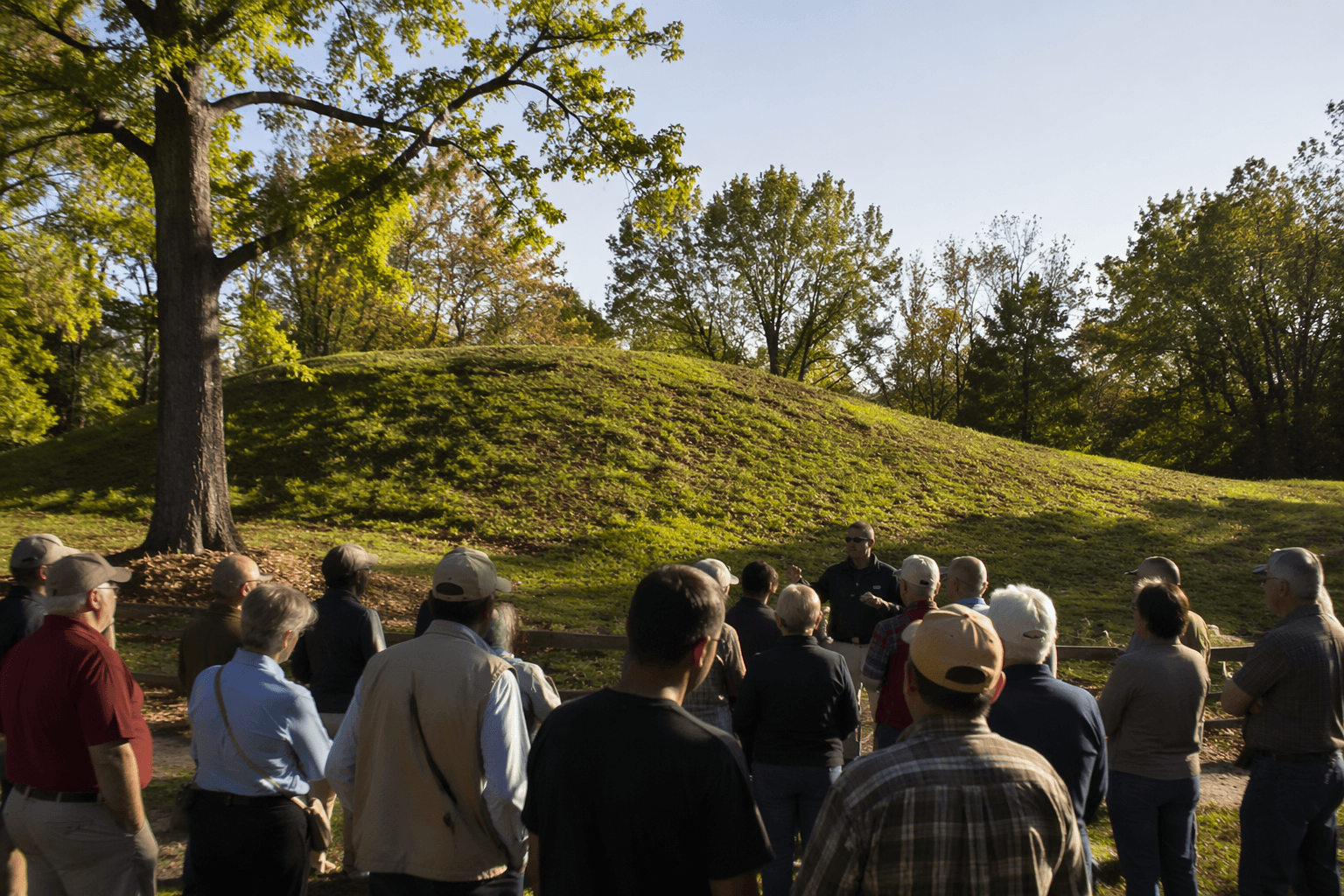
The county’s visible heritage already draws attention to the 19th and 20th centuries, but Helena Crossing pushes the timeline back by millennia. That makes it an underused local asset, especially for schools, public interpretation, and heritage tourism that goes beyond the well-known Civil War and riverfront stories. Students in Phillips County do not have to imagine deep antiquity as something far away; they can stand within the county lines and see a site where people were burying their dead and placing ritual objects thousands of years before modern Helena existed.
The preservation stakes are plain. When three of five mounds had already been destroyed by 1958, the surviving evidence became more valuable, not less, because so much of the context had already been lost. The National Park Service says the National Register of Historic Places is meant to identify and protect historic and archaeological resources, and that framework is relevant here because Helena Crossing is exactly the kind of place where recognition can shape what survives next. In a county where development has already erased much of the archaeological landscape, the remaining mounds are a finite public resource.
How the county can use the record
Phillips County already has an institution that can help translate the site for the public: the Helena Museum of Phillips County, which holds an extensive collection of artifacts tied to regional history. That collection, paired with the Helena Crossing record, gives schools and visitors a practical way to connect classroom lessons to local evidence rather than distant textbook abstractions. A county that treats the site as a teaching asset can make the past legible in a way that is both local and immediate.
The opportunity is bigger than education alone. The Helena Crossing mounds show that Phillips County’s heritage economy does not have to start and end with later-era landmarks. It can also rest on a 2,000-year-old burial landscape on Crowley’s Ridge, documented by named archaeologists, tied to a specific site number, and still visible enough to demand care. The county cannot recover the mounds that were destroyed, but it can decide whether the remaining record stays a footnote or becomes part of how Phillips County explains itself.
This article was produced by Prism’s automated news system from verified source data, official records, and press releases, then run through automated quality and moderation checks before publishing. The system is built and supervised by the people who set the standards it runs under. Read our full AI policy.
Did this article answer your question?