Helena Depot anchors Delta Cultural Center and Phillips County rail history
The Helena Depot is more than a preserved station: since 1990 it has anchored the Delta Cultural Center, linking Phillips County’s rail past to downtown Helena’s museum campus.
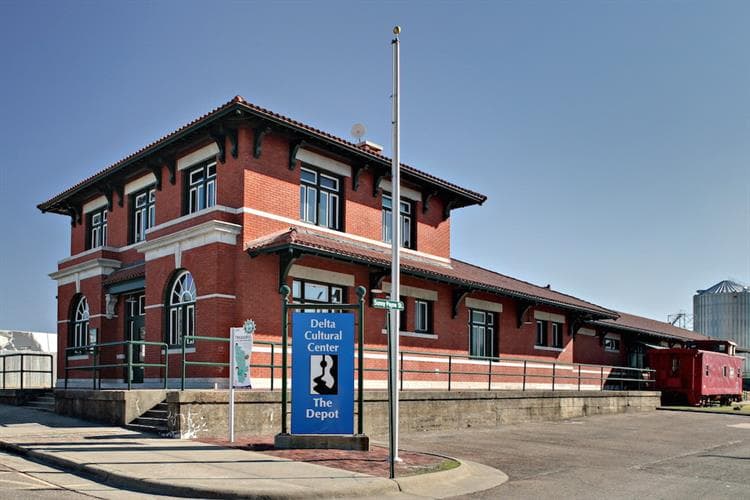
The Helena Depot is where Phillips County’s rail history, downtown identity, and museum culture meet in one building. Opened to the public in 1990 as the first structure to house the Delta Cultural Center, the depot was already a historic artifact when it became an interpretive space. Its 1912 origins as the Missouri Pacific Train Depot give it a clear before-and-after arc: first a working rail station, then the front door to how Helena-West Helena presents the Arkansas Delta today.
A rail station that became a museum anchor
The depot matters because it is not just preserved architecture, it is a building with a second life. Historic-preservation materials identify it as the Missouri Pacific Train Depot, dated to 1912, and the Advisory Council on Historic Preservation places it among the historic buildings that make up the Delta Cultural Center in Helena. That pairing turns the building into evidence of the county’s transportation era as well as a place where visitors can learn from it.
For Phillips County, that is an especially fitting use. Helena sits in a Mississippi River county shaped by movement, and rail was part of the same story as the river: people, freight, ideas, and music all moved through Helena-West Helena along transportation corridors that tied the town to the wider Delta. The depot gives that history a physical address in historic downtown Helena-West Helena, where the town’s past is still legible in the built environment.
Why the depot is the right starting point for Phillips County history
The Delta Cultural Center is a Department of Arkansas Heritage museum dedicated to the history of the Arkansas Delta, and Arkansas Heritage says its mission is to preserve, research, document, interpret, and present that heritage. That mission explains why the depot was chosen as the first home for the center. A former rail station makes the county’s story easy to read: commerce, migration, and culture all passed through places like this before they were ever interpreted in a gallery.
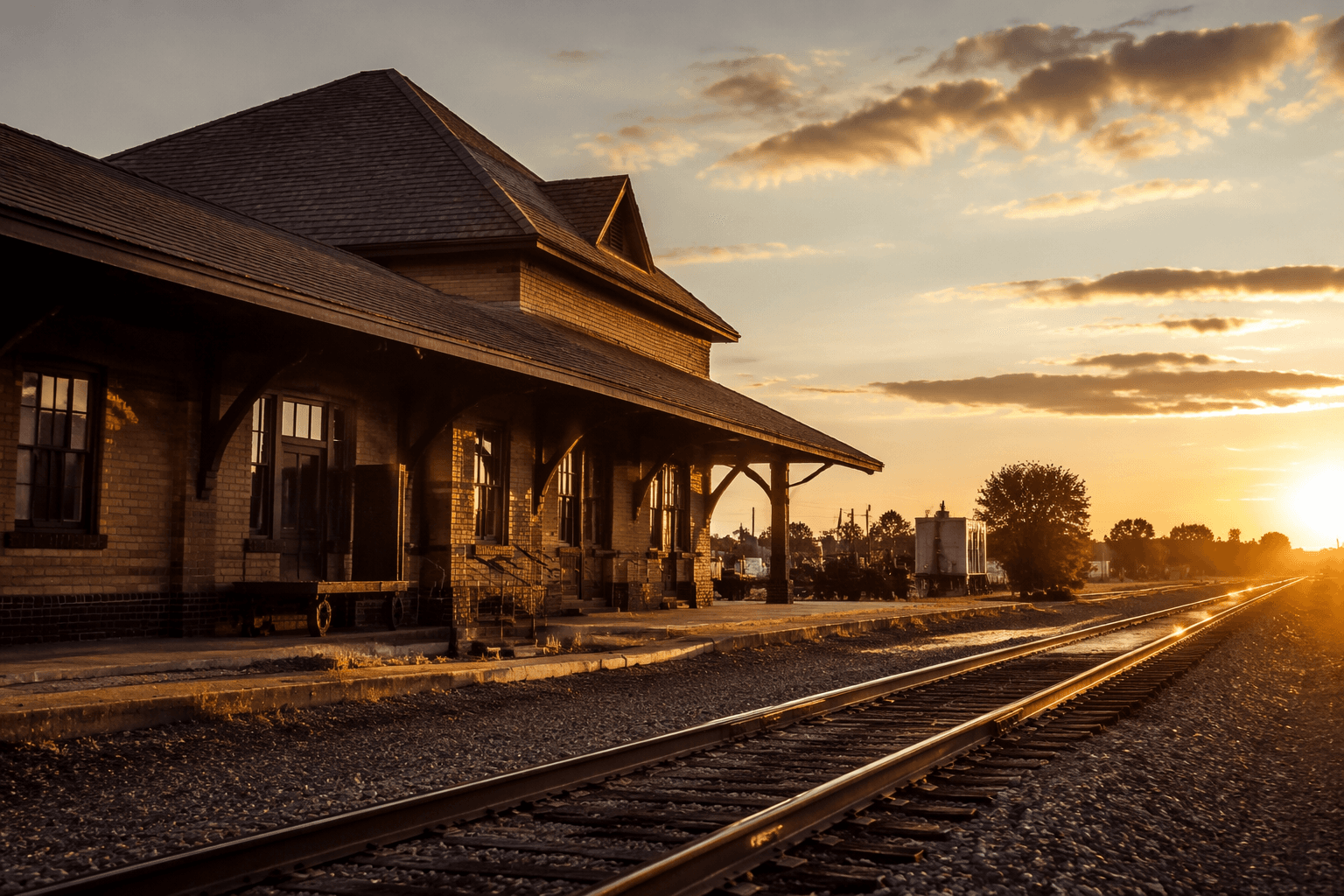
That is also why the depot works so well as a guide to Helena-West Helena. It links the county’s rail era to the city’s present downtown identity, showing how a preserved landmark can still function as an active public space rather than a static relic. In that sense, the depot is a case study in adaptive reuse, where historic preservation supports heritage tourism and gives residents and visitors a reason to spend time in the heart of town.
How the Delta Cultural Center campus is laid out
The depot is part of a larger museum complex, not a standalone stop. Arkansas Heritage says the Delta Cultural Center is comprised of seven facilities and several acres of land located in Helena, Arkansas. Its exhibitions are split between two museums, The Depot and The Visitors Center, which helps explain how the center uses multiple historic buildings to interpret different parts of Delta life.
The Depot includes the exhibit “A Heritage of Determination,” while the broader center interprets Civil War history and Delta music traditions. Those traditions include blues, gospel, country, and rockabilly, which places Phillips County inside a much wider musical geography than one building alone could suggest. The museum’s structure matters because it lets the depot function as the opening chapter in a larger story about the Arkansas Delta.
What to expect from the rest of the museum campus
The Visitors Center adds another layer to the site. It is made up of three connected buildings, including two historic commercial buildings and one reconstructed structure. That mix is important because it shows how the Delta Cultural Center uses both original fabric and reconstruction to tell its story, while the depot remains the most direct link to Helena’s railroad era.
Together, the two museums create a campus that moves from transportation history to commerce, architecture, Civil War history, and music. The result is a place where Phillips County’s past is not packaged as a single theme, but arranged as a network of related histories. That is what gives the depot staying power: it is the clearest entry point into a broader local narrative that still depends on downtown Helena-West Helena as its setting.
Why the depot still matters now
The question for Phillips County is not whether the depot is old, but whether old places can still generate value. The Delta Cultural Center suggests they can, when they are used well. A preserved train depot in historic downtown Helena-West Helena draws attention to the district, reinforces the city’s identity, and gives the county a tangible landmark that connects rail history to heritage tourism.
That connection is especially strong in a place where river and rail once shaped daily life. A building that opened to the public in 1990, inside a structure dated to 1912, captures both sides of that timeline: the working infrastructure of the Delta’s past and the civic effort to preserve and interpret it now. In Phillips County, the Helena Depot stands as proof that a historic building can still do economic and cultural work by anchoring the place around it.
This article was produced by Prism’s automated news system from verified source data, official records, and press releases, then run through automated quality and moderation checks before publishing. The system is built and supervised by the people who set the standards it runs under. Read our full AI policy.
Did this article answer your question?