Phillips County military discharge records help families trace veterans
Phillips County families can use a little-known discharge book at the Arkansas State Archives to pin down a veteran’s service, residence, and family trail.
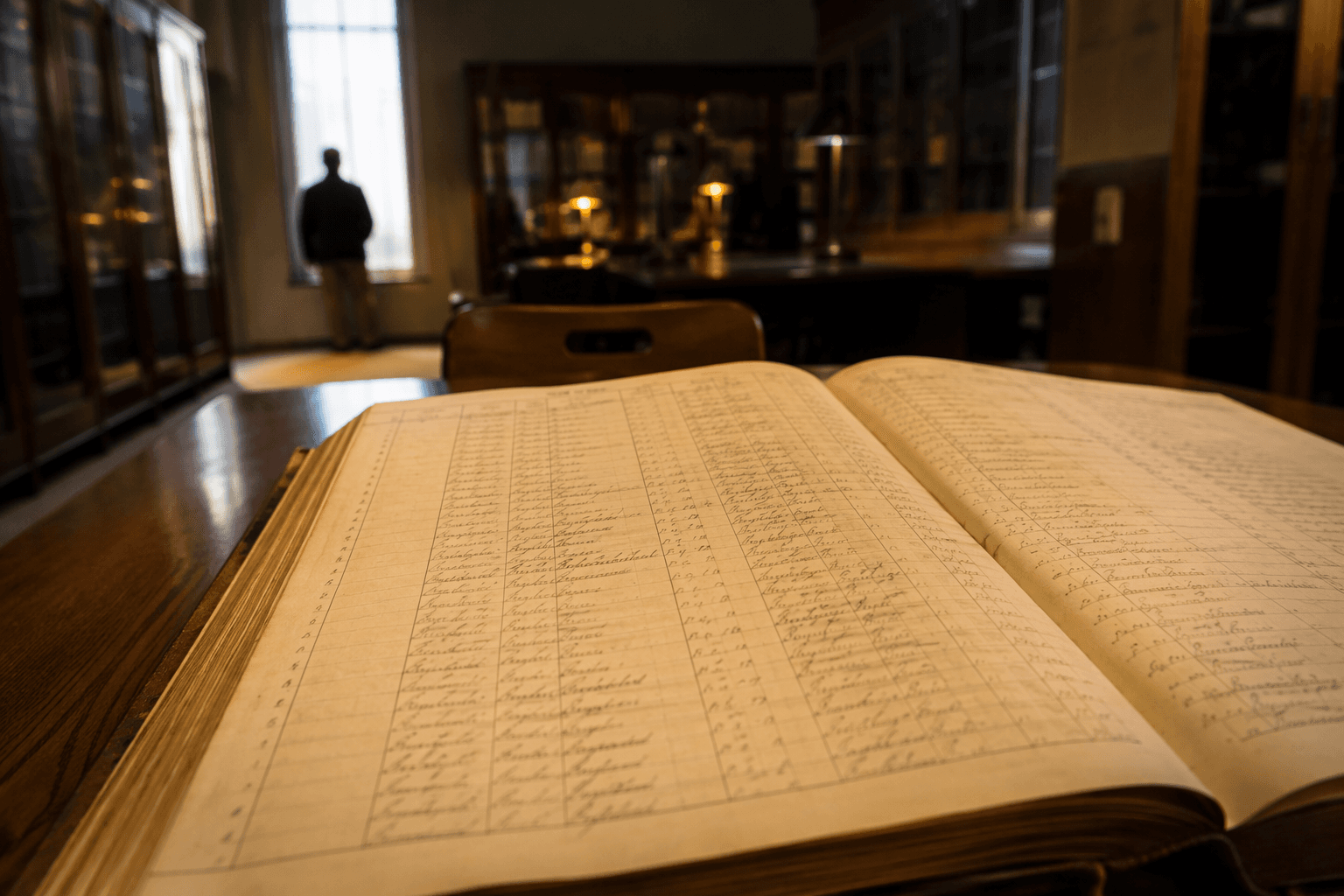
On microfilm roll MFILM County Roll: 3881, the Arkansas State Archives holds Phillips County Records: Soldiers & Sailors Discharge Records, Book A, 1919-1955. In Phillips County, that county set can help families verify service, track burial leads, and rebuild a relative’s story across Helena-West Helena, Marvell, Elaine, Lake View and nearby rural communities.
What this Phillips County book contains
The Phillips County volume reaches from the post-World War I years into the mid-1950s, which makes it more useful than a single-war file. The Arkansas State Archives finding aid lists it in the Phillips County Microfilm collection.
Families often do not know which conflict a relative served in, or whether the person returned home, moved away, or died somewhere else. A discharge record can bridge those gaps by tying a veteran to a county, a date, and a military separation document that sits between wartime service and civilian life.
What families can learn from a discharge record
Military records often solve problems that censuses, obituaries and family memories leave open. In FamilySearch’s Arkansas Military Records wiki, military records include birth dates, marriage dates, death dates, spouse and children names, and localities of residence throughout the life of the family. For a Phillips County family, that kind of detail can turn a vague story about “grandpa serving” into a usable timeline.
These records can also help confirm a burial location or support benefits paperwork when a family needs proof of service dates and identifying details. A discharge record may not tell the whole battlefield story, but it can establish the basic facts that other records build on, including a veteran’s home address, family connections and the period when the person was separated from service.
For World War I researchers, Fold3’s Arkansas WWI discharge records are official military separation documents for soldiers, sailors and Marines from Arkansas who served in that war.
How to search the Phillips County records
Start with the veteran’s full name, then try nicknames, initials and spelling variations. Family names in Phillips County records can appear differently across generations, especially when descendants are looking for relatives who lived in Helena-West Helena, Marvell, Elaine, Lake View or the county’s unincorporated areas.
A practical search usually follows this path:
1. Look for the exact county title in the Arkansas State Archives finding aid, Phillips County Records: Soldiers & Sailors Discharge Records, Book A, 1919-1955.
2. Note the microfilm roll, MFILM County Roll: 3881, so you can identify the correct county reel.
3. Use the Arkansas State Archives subject pages for broader wartime groupings, including World War 1914-1918 and World War 1939-1945, to understand where a record may sit in the statewide system.
4. Cross-check the name against obituary columns, cemetery records, school alumni notes, church programs and county newspapers to confirm residence, family members and burial clues.
County records often preserve a local trail that broader federal collections do not emphasize. The National Archives and Records Administration treats state archives and county records as key tools for military research, and Arkansas State Archives houses county records and military records as the official repository for Arkansas historical materials in Little Rock.
Why the county version still matters in the age of online databases
FamilySearch’s catalog lists Arkansas military discharge records for various counties from approximately 1917 to 1969. That wider range shows the Phillips County book is part of a larger statewide record system, not a one-off file. If a relative served before 1919 or after 1955, another county volume or related Arkansas military record may be the better fit.
A veteran’s return may have shaped a farm, a store, a church congregation or a neighborhood in Helena-West Helena or one of the smaller towns around it. The discharge book can be matched to family papers and cemetery markers.
What the record can and cannot do
A discharge book can anchor a person to service, but it is rarely the whole story. It may not list every deployment, every injury, or every later move, and families should expect gaps when records were never filed, were indexed under a different name, or belong to another county file.
The Phillips County discharge book works best as a starting point. It can confirm a veteran’s identity, point toward family members, and supply the kind of concrete facts that help descendants in Phillips County distinguish one relative from another when obituaries are brief and census records go silent.
This article was produced by Prism’s automated news system from verified source data, official records, and press releases, then run through automated quality and moderation checks before publishing. The system is built and supervised by the people who set the standards it runs under. Read our full AI policy.
Did this article answer your question?