Lake View: From Turkey Scratch to Historic Black Farming Community
Built for Black farm families in 1937, Lake View carries one of Arkansas's most intentional civil rights histories in a town of just a few hundred people.
Few towns in Phillips County carry as much deliberate history as Lake View. What began in the 1850s as a settlement called Turkey Scratch grew into something far more significant: a federally engineered community created specifically to give Black farm families a foothold in the Arkansas Delta. That origin story, rooted in both government policy and African American resilience, defines Lake View as much today as it did nearly a century ago.
From Turkey Scratch to Lake View
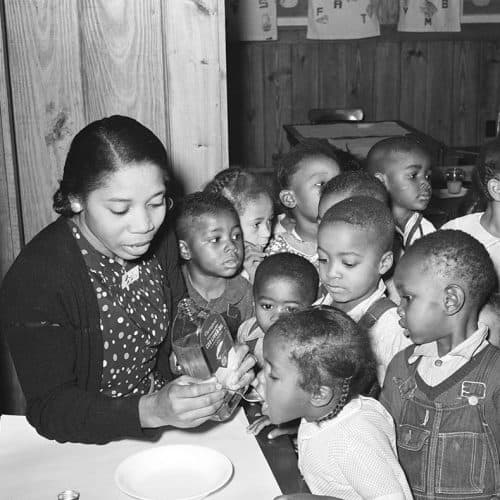
The settlement that would become Lake View first appeared on the map under the name Turkey Scratch in the 1850s, a name common to the rough-and-ready frontier geography of the Delta. The rename to Lake View came in the 1920s, reflecting a shift in the community's self-presentation as the Delta's agricultural economy matured. But the most consequential chapter arrived in 1937, when the federal Resettlement Administration, one of the New Deal-era programs designed to address rural poverty and displacement, reestablished Lake View as a planned community for Black farm families.
That designation was not incidental. During the 1930s, as sharecropping systems collapsed and displacement accelerated across the South, the Resettlement Administration identified specific localities where African American families could own and work land with federal support. Lake View was one of those localities, making it a rare and deliberate act of federal investment in Black agrarian life at a time when such investment was the exception, not the rule. The Encyclopedia of Arkansas documents this founding chapter as central to understanding the town's identity.
A Community Built on Land and Legacy
The population of Lake View today sits in the low hundreds, a figure that reflects broader patterns of rural depopulation across the Delta but does not diminish the town's civic weight. The community has maintained a predominantly African American population across many decades, a demographic continuity that traces directly back to the resettlement mission of 1937. That consistency shapes how county agencies approach service delivery, how regional nonprofits target outreach, and how Lake View participates in Phillips County's broader planning conversations.
The town's history as a Black farming community is not archived and forgotten; it is woven into the daily life and institutional memory of the people who live there. Understanding that context is essential for anyone seeking to engage meaningfully with Lake View, whether as a visitor, a policymaker, or a neighbor from elsewhere in Phillips County.
Civic Institutions and Local Government
Lake View operates under a mayor-council form of government, the standard municipal structure that gives residents a direct channel to elected leadership. The city website posts the municipal calendar and council meeting minutes, which cover the full range of local governance: ordinance readings, public comments, and administrative reports. For residents who want to stay engaged with decisions affecting streets, zoning, or local services, those posted minutes are the most direct window into how the town is run.
Beyond city hall, Lake View maintains a small public library branch, which serves as a community anchor for information access, programming, and civic gathering in a town where such spaces carry outsized importance. A local medical clinic provides primary care services close to home, a detail that matters enormously in rural Phillips County, where the distance to a larger hospital can translate directly into delayed care or foregone treatment. The presence of a clinic in Lake View addresses one of the most persistent health equity challenges in the rural Delta.

Rounding out the town's social services infrastructure is an office for Mid-Delta Community Services, a regional organization that delivers social programs and support across the rural Delta. That office gives Lake View residents a local contact point for assistance programs, reducing the logistical burden of accessing services that would otherwise require travel to larger centers.
The Delta Heritage Trail and Cultural Tourism
Lake View sits along the Delta Heritage Trail, positioning the town as a stop on one of Arkansas's most historically rich recreational corridors. The trail draws visitors interested in outdoor recreation as well as the layered cultural and agricultural history of the Delta, and Lake View's founding story as a Black resettlement community adds a dimension to that trail experience that few other stops can match.
For visitors arriving via the trail, the town and surrounding areas in Phillips County offer memorials, small museums, and interpretive markers that document the Black farming resettlement period, migratory labor history, and local civil rights developments. These sites ground the Delta's 20th-century history in specific places and specific lives rather than abstraction. Visitors planning a stop should check the Delta Heritage Trail and Phillips County tourism pages in advance for trailhead access points, parking, and any scheduled events that might enrich the visit.
State and nonprofit programs focused on rural development, health access, and cultural tourism have all identified Lake View as a target community, reflecting both its needs and its significance. That combination of vulnerability and historical importance makes the town a recurring focus for regional investment conversations.
Why Lake View Matters to Phillips County
Lake View is not simply a data point in a county demographic profile. It is evidence that federal policy, when deliberately applied, can create lasting community structures, structures that survive economic downturns, population shifts, and decades of benign neglect. The Resettlement Administration's 1937 intervention did not solve every challenge Black farm families in the Delta faced, but it created a place with its own government, its own library, its own civic calendar, and its own identity.
For Phillips County as a whole, Lake View represents both the promise and the fragility of small rural communities. Its continued civic function, from council meetings to clinic hours to Mid-Delta Community Services programming, depends on residents staying connected to local institutions and on county and regional agencies treating small towns as worthy of sustained investment. The history that makes Lake View remarkable is also the clearest argument for making sure it endures.
This article was produced by Prism’s automated news system from verified source data, official records, and press releases, then run through automated quality and moderation checks before publishing. The system is built and supervised by the people who set the standards it runs under. Read our full AI policy.
Did this article answer your question?