Phillips County Offers Delta Music, River History, and Civil War Heritage
Phillips County holds the birthplace of America's longest-running daily radio show, a Civil War battlefield fought on the Fourth of July, and the site of the deadliest racial massacre in Arkansas history.
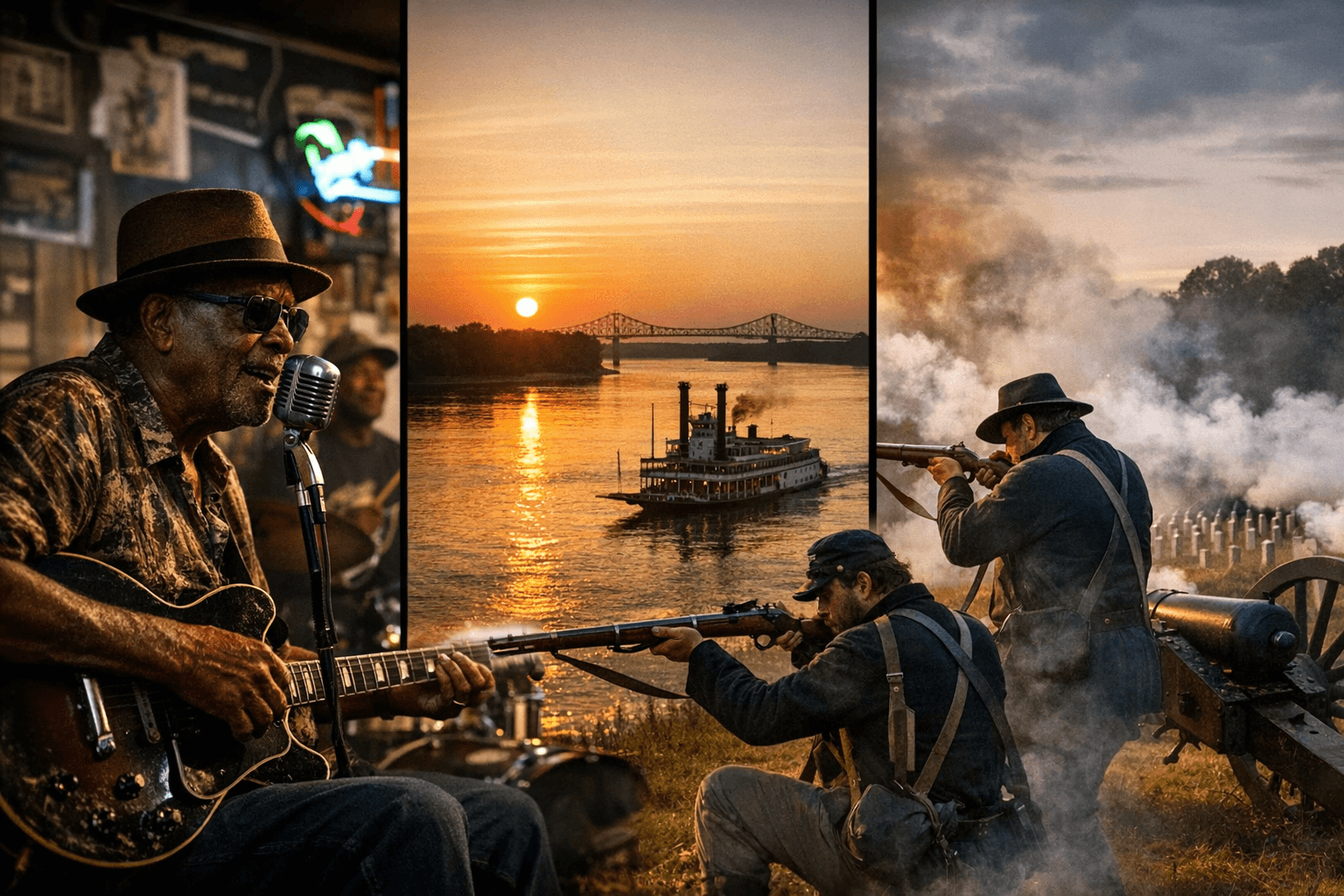
Few places in the Arkansas Delta pack as much history into as compact a geography as Phillips County. Part of the Delta region, the county sits where the St. Francis River empties into the Mississippi River, and its significance touches on nearly every aspect of the state's history. The cities of Helena-West Helena, Marvell, Elaine, and Lake View each carry distinct chapters of that story, ranging from blues radio pioneering and Civil War combat to one of the most consequential racial atrocities in American history.
The Delta Cultural Center: Where Every Story Begins
The Delta Cultural Center in historic downtown Helena-West Helena is a museum dedicated to the history of the Arkansas Delta, and it opened in 1990 with the mission of preserving, interpreting, and presenting the cultural heritage of a twenty-seven-county region. It is the essential first stop for anyone trying to understand Phillips County.
The center features two museum locations: the restored 1912 Union Pacific Railroad Depot and the Visitors Center. The Visitors Center is located at 141 Cherry Street, while the Depot facility is a block away at 95 Missouri Street. The Depot houses staff offices and features the museum's permanent music exhibit, temporary exhibits, and the museum store.
The Depot features two permanent exhibits: "Heritage of Determination" and "The Civil War in the Arkansas Delta." The Heritage exhibits tell the story of the Arkansas Delta from prehistoric times to the present through words, photographs, and artifacts, including a multimedia, searchable, computerized "scrapbook" of Delta memories, while the Civil War exhibit focuses on the Battle of Helena, fought on July 4, 1863.
The Delta Cultural Center also includes the Moore-Hornor House, six blocks west from the Visitors Center, the "Miller Hotel" building at 223 Cherry Street, the Cherry Street Pavilion, and the Temple Beth El, Helena-West Helena's synagogue. The Moore-Hornor House was built in 1859 and is listed on the National Register of Historic Places. It is an example of asymmetrical Greek Revival and Italianate architecture, and standing in front of it, one can view Graveyard Hill, the site of one of the bloodiest fights of the Battle of Helena.
King Biscuit Time: The Radio Show That Changed American Music
King Biscuit Time is the longest-running daily American radio broadcast in history, airing on KFFA in Helena and winning the George Foster Peabody Award for broadcasting excellence. Its origin story is inseparable from Helena itself.
In November 1941, KFFA, 1360 AM, the first local radio station in Helena, went on the air. Soon after its first broadcast, blues musicians Robert Lockwood Jr. and Sonny Boy Williamson approached owner Sam Anderson with a proposal to air a local blues radio show. With a corporate sponsor secured, the King Biscuit Time radio program went on the air on November 21, 1941. The name came from the show's sponsor, King Biscuit Flour, the house brand of Helena's Interstate Grocer Company.
King Biscuit Time was the first regular radio show to feature the blues and the first regular radio show to feature live blues performances. It was also one of the earliest examples of integrated radio in the South. The makeup of the King Biscuit Entertainers, Williamson's amplification of the harmonica, and Lockwood's jazz-influenced style are often cited as the prototype for the modern blues band.
The show inspired blues musicians including B.B. King, Robert Nighthawk, James Cotton, and Ike Turner. In 2018, certain selections of King Biscuit Time from 1965 were selected for preservation in the National Recording Registry by the Library of Congress as being "culturally, historically, or aesthetically significant."
Thomas Jacques now broadcasts live from the Delta Cultural Center weekdays at 12:15 p.m., and the Peabody Award-winning program has a worldwide audience via the web. Admission to watch the broadcast is free.
The King Biscuit Blues Festival
Every October, that same blues energy spills into the streets. The Arkansas Blues and Heritage Festival began in Helena as a one-day celebration in 1986 and grew to become an annual three-day event drawing more than 100,000 people. The city holds an annual King Biscuit Blues Festival each October, a name it has carried since 2010, when it was renamed at a 25th-anniversary performance by musician B.B. King.
The King Biscuit Blues Festival attracts tens of thousands of blues enthusiasts from all over the world to the banks of the Mississippi River in Helena. The Cherry Street Pavilion, an outdoor performance stage on the south end of Cherry Street, has been the home of the Arkansas Delta Family Gospel Festival, the King Biscuit Blues Festival, and other community performances and events since 2004.
The Musicians Phillips County Produced
The county's musical legacy extends far beyond one radio show. Country music icon Conway Twitty grew up in Helena. Born Harold Lloyd Jenkins on September 1, 1933, in rural Friars Point, Mississippi, he formed his first band, the Phillips County Ramblers, when he was 10, after the family had moved to Helena, Arkansas. Helena-West Helena celebrated the first ever "Conway Twitty Day" in June 2019.
The gospel tradition runs equally deep. Exhibits at the Delta Cultural Center highlight the sacred music of the Arkansas Delta and the performers who gained recognition in the genre, including Helena-born Roberta Martin, who formed the Roberta Martin Singers and became a dominant force in gospel music for more than 35 years.
Civil War Helena: A Fourth of July That Changed the War
Often obscured by the Confederate surrender of Vicksburg and the Union victory at the Battle of Gettysburg, the Battle of Helena, fought on July 4, 1863, was the last major Confederate offensive launched in Arkansas during the Civil War.
During the Civil War, the Union Army occupied Helena prior to the battle. In the early morning hours of July 4, 1863, Confederate forces attempted to retake Helena in order to help relieve pressure on the strategic river town of Vicksburg, Mississippi. Nearly 8,000 Confederate troops failed in their attempt to recapture Helena, which had served as a base for Union operations aimed at breaking Confederate control of the Mississippi River and for Union raids of Delta plantations.
Among the key attractions in Helena-West Helena tied to this history is the Helena Confederate Cemetery, which holds the remains of seven Confederate Army generals. The Helena Confederate Cemetery includes burials of Confederate soldiers killed during the battle and is listed on the National Register of Historic Places, as are the remains of the Union batteries. Civil War artifacts and period paintings of the generals can be viewed at the Phillips County Museum.
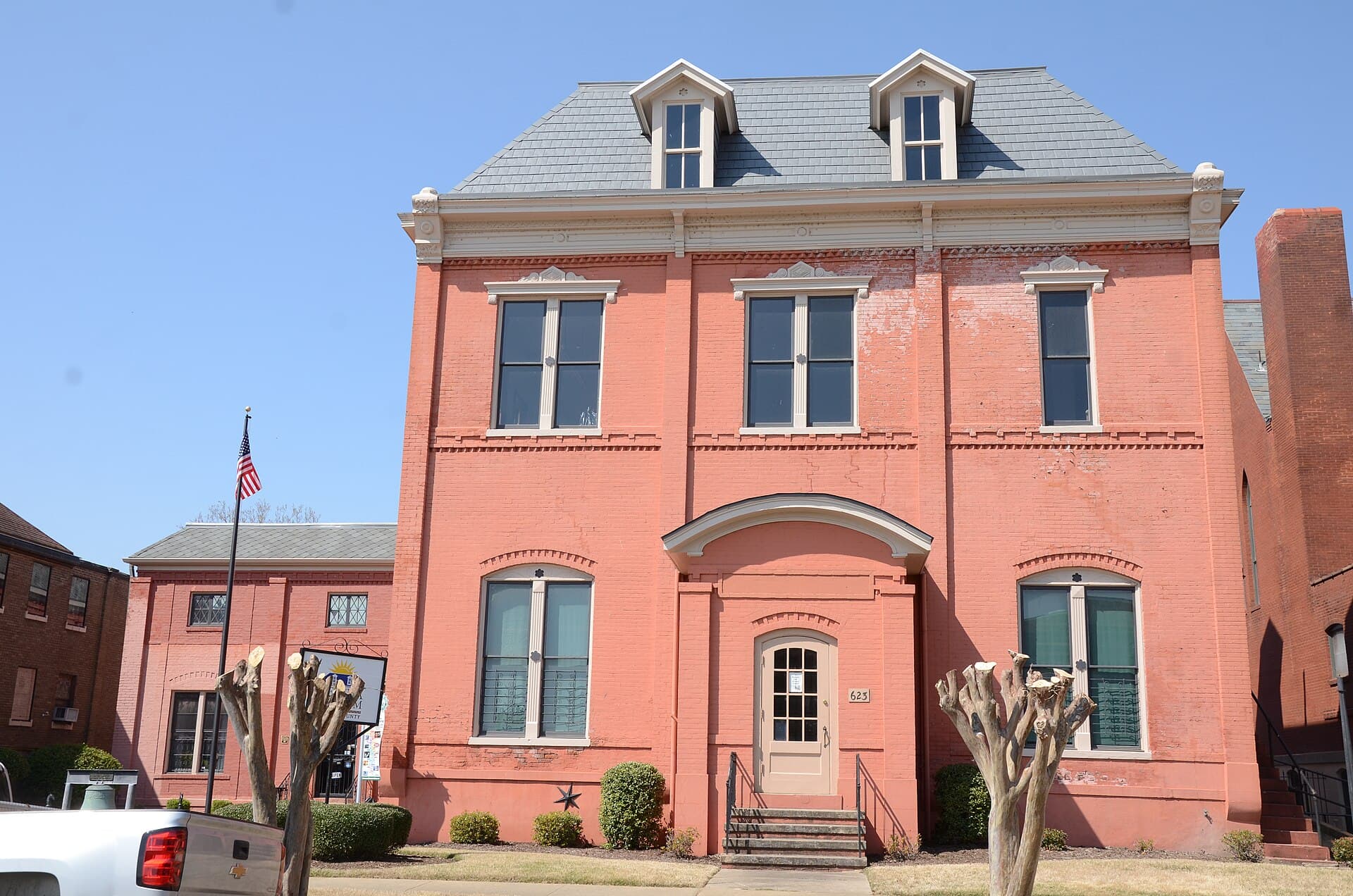
Other Helena attractions include a large collection of antebellum and Victorian homes, including the Pillow-Thompson House (1896), one of the finest Queen Anne-style homes in the South. Built by Jerome B. Pillow, the home is the only house in Helena available for tours to the general public.
Elaine: The Massacre That Shaped a Nation's Civil Rights History
Twenty-five miles southwest of Helena, the small community of Elaine carries a history that reverberates well beyond Phillips County's borders. The Elaine Massacre was by far the deadliest racial confrontation in Arkansas history and possibly the bloodiest racial conflict in the history of the United States. While its deepest roots lay in the state's commitment to white supremacy, the events in and around Elaine stemmed from tense race relations and growing concerns about labor unions.
The Elaine Race Massacre occurred on September 30 through October 2, 1919, at Hoop Spur in the vicinity of Elaine, where African Americans were organizing against peonage and abuses in tenant farming. As many as several hundred African Americans were murdered and five white men were killed.
Twelve of the defendants, who became known as the "Arkansas Twelve" or "Elaine Twelve," were convicted and sentenced to death in the electric chair by all-white juries. On February 19, 1923, the U.S. Supreme Court handed down a 6-2 decision in favor of the Moore defendants, maintaining the Twelve had been denied "due process" and noting the judicial proceedings had been influenced by a mob that had assembled outside of the courthouse. That ruling, Moore v. Dempsey, became a foundational precedent for federal civil rights protections.
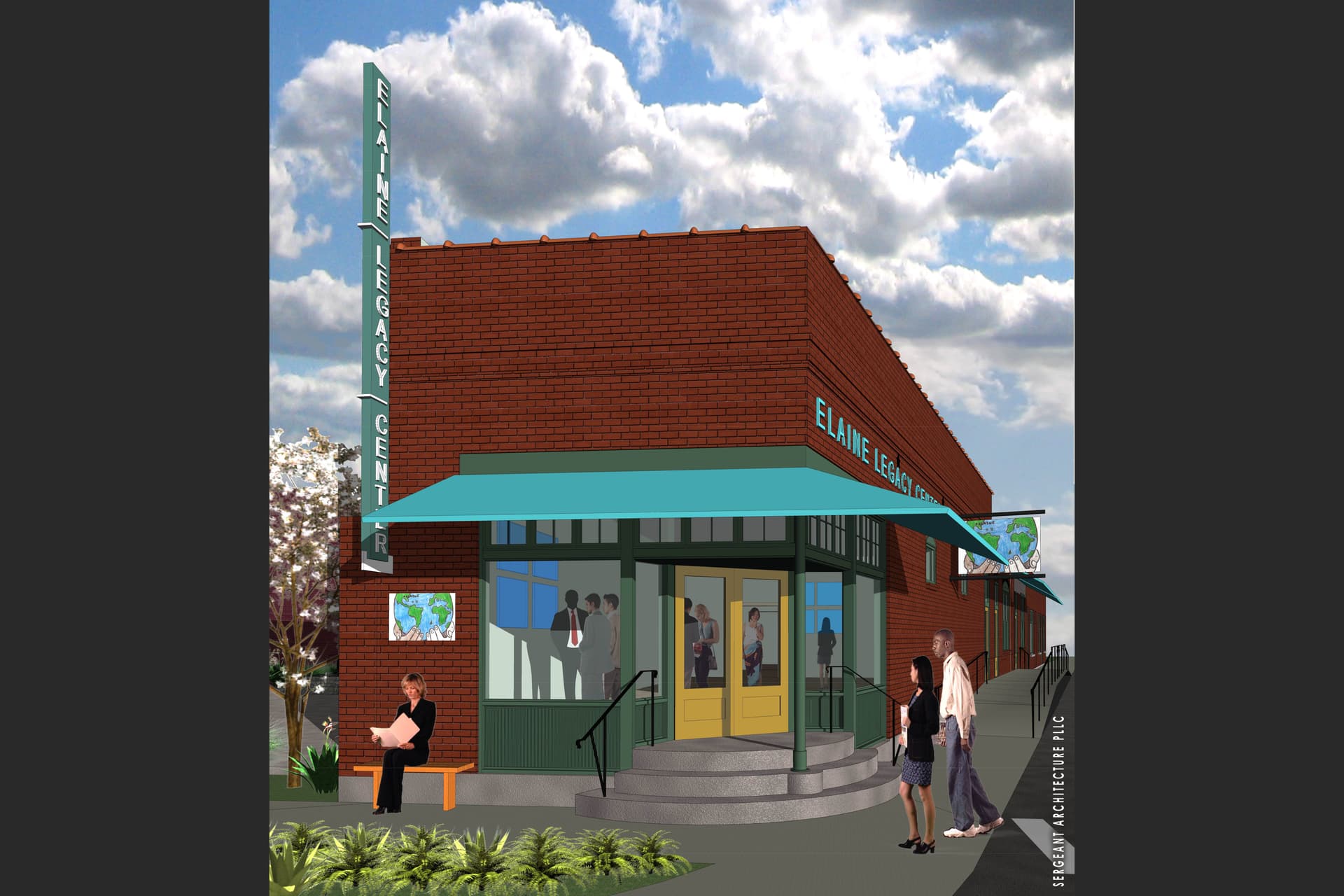
In February 2017, the Elaine Legacy Center opened in the town, its mission being to memorialize the victims of the Elaine Massacre and the local struggle for civil rights. On September 29, 2019, a memorial to those who died during the massacre was dedicated in downtown Helena-West Helena. Efforts are also underway to connect the memorial in Helena with the Legacy Center in Elaine as part of a broader heritage corridor running through the county.
Marvell and the Railroad Towns
Like much of the state, Phillips County was shaped by the growth of railroads. In 1875, the Arkansas Midland Railroad was built west from Helena, fulfilling plans that dated back to the 1850s. New cities were established along the railroad lines, including Marvell, where the Dade & Embry store opened in 1873, while the city itself was incorporated on October 19, 1876.
The city of Elaine was also established along the Missouri Pacific line south of Helena, named either for a famous actress of the time, the daughter of the developer, or a character in a poem by Tennyson. In 2006, the Elaine school system was consolidated with the Marvell schools, a reflection of the demographic challenges both communities have faced over decades of population loss common to the wider Delta region.
Planning Your Visit
Phillips County's cultural assets are clustered enough to cover in a long weekend, but rich enough to reward far more time. A practical starting framework:
- Delta Cultural Center (141 Cherry Street, Helena-West Helena): Free admission; King Biscuit Time broadcasts weekdays at 12:15 p.m.
- Pillow-Thompson House (Perry and Beech Streets): The county's only historic home open for public tours.
- Helena Confederate Cemetery: Open dawn to dusk; the cemetery was created by the Phillips County Memorial Association in 1869, with about 73 named and 29 unnamed gravestones, and more than half of the bodies are casualties of the July 4, 1863 Battle of Helena.
- Elaine Legacy Center (Elaine): The primary site for understanding the 1919 massacre and its ongoing legacy.
- King Biscuit Blues Festival (October, downtown Helena-West Helena): Plan well ahead; hotels fill early across the region.
In the twentieth century, Phillips County was known for devastating flooding, harsh racial confrontations, and the development of blues music. All three of those threads are still visible in the landscape, the institutions, and the communities that remain. Coming here with that knowledge transforms a visit from a scenic detour into something closer to a reckoning with the full weight of American history.
Know something we missed? Have a correction or additional information?
Submit a Tip