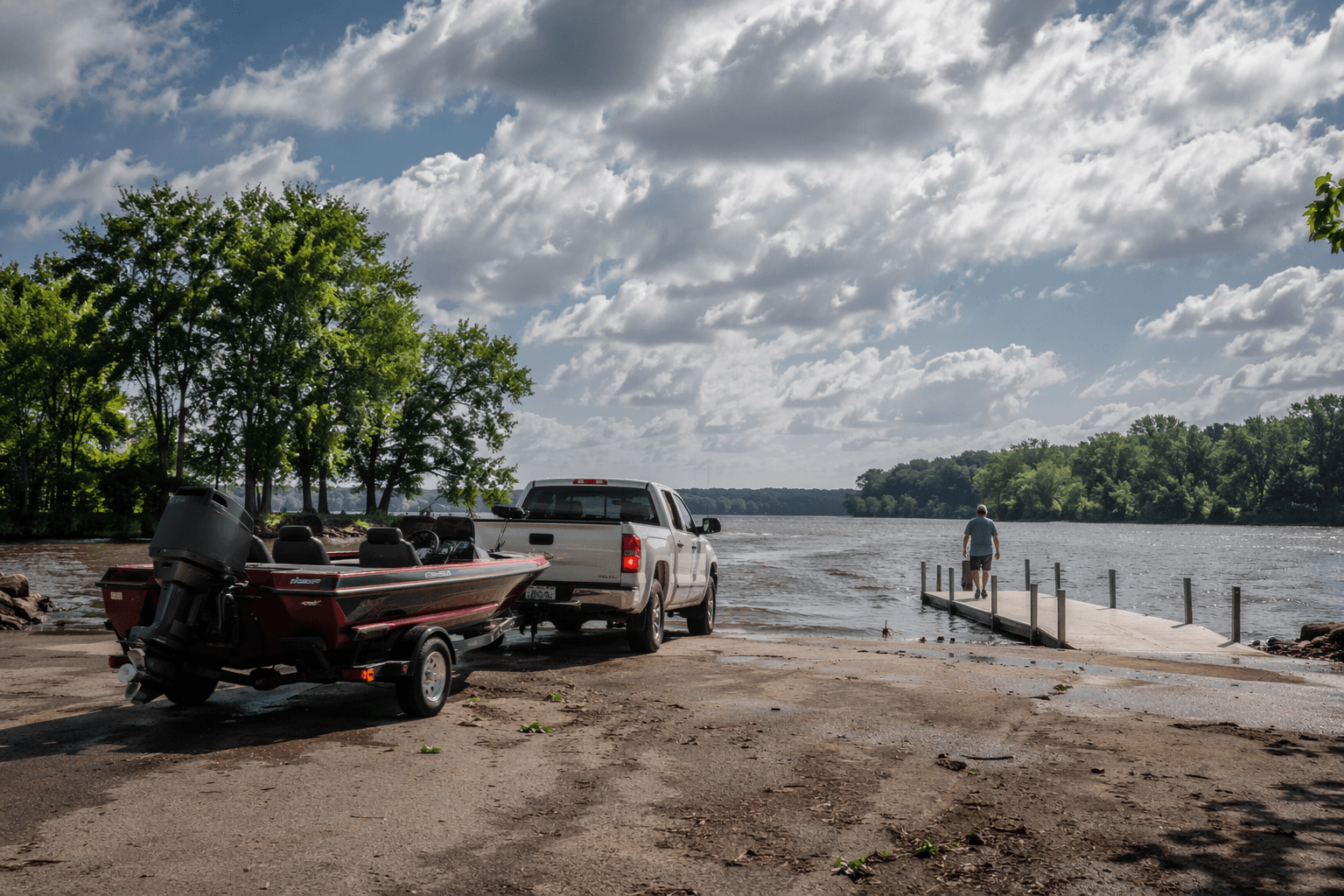
Phillips County River Access Guide Covers Launches, Fish, and Safety Tips
Conservation projects have opened Buck Island's sandbars to the public, giving Phillips County paddlers and anglers new river access points on the Mississippi.
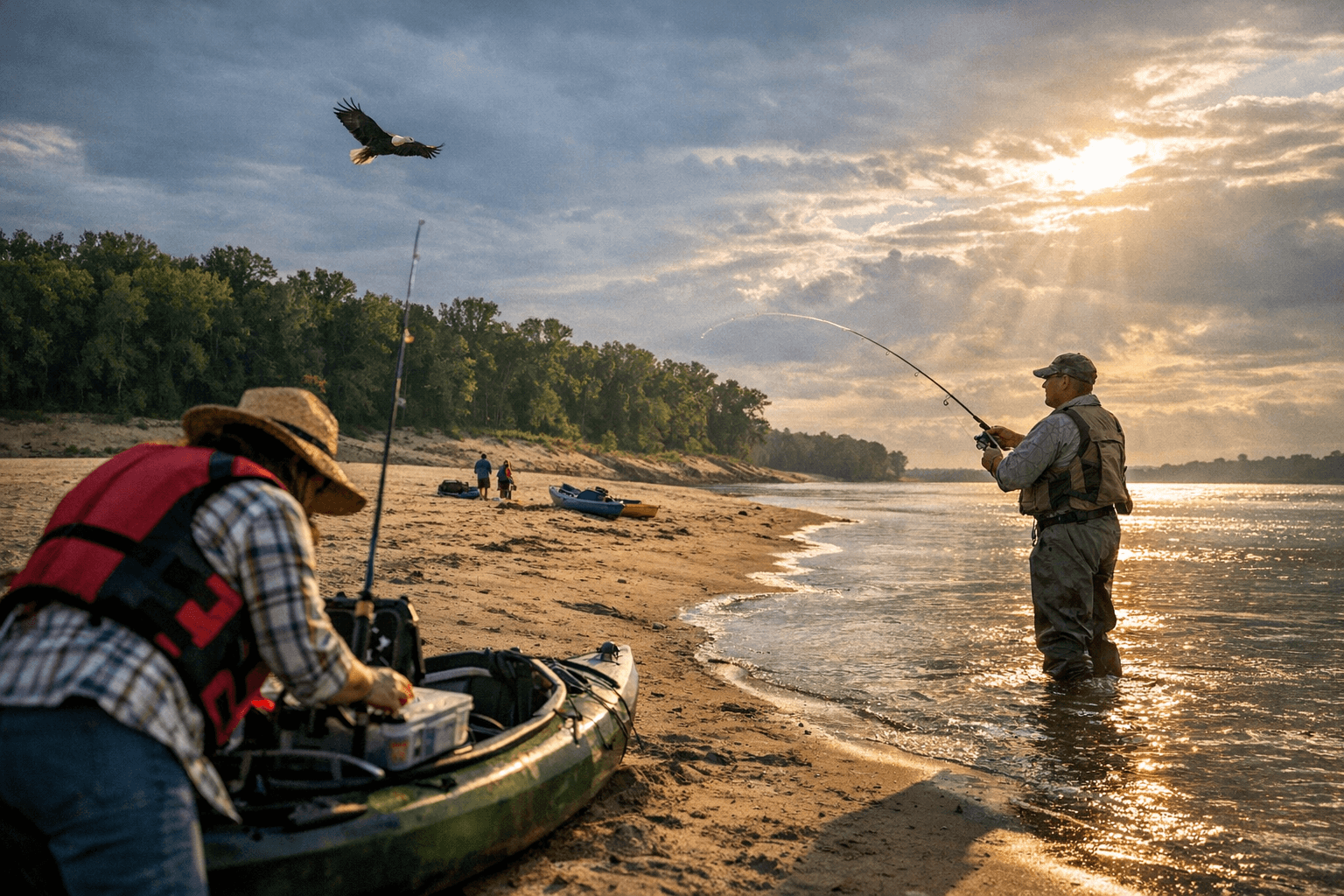
Three public access points in Phillips County put the Mississippi River within reach of kayakers, bass anglers, and weekend boaters, and each serves a distinctly different kind of trip. Whether launching from downtown Helena-West Helena, staging out of the slackwater harbor, or paddling to Buck Island's sandbars, the county's river corridor offers something most Arkansas waterways can't: direct access to one of the continent's great rivers, with the infrastructure to support it.
Where to Launch
Helena River Park and the Helena Levee Walk, located in the heart of downtown Helena-West Helena, provide one of the largest and most convenient public boat access points on the lower Mississippi in Arkansas. An elevated boardwalk, interpretive signage, and park facilities sit adjacent to a public ramp that recreational boaters and anglers use routinely for short trips, sandbar runs, and river-edge fishing. The setup suits family outings well and makes a practical base for guided paddling tours departing from the riverfront.
For small boats, kayaks, and anyone who wants to avoid the main channel's current, Helena Harbor is the preferred starting point. This slackwater harbor is sheltered from the Mississippi's main flow, giving easier and safer access into protected side channels, backwater fishing holes, and island destinations like Buck Island. Local outfitters stage their trips from here, and harbor operators can provide current conditions and real-time guidance before you push off.
Buck Island and the surrounding sandbars have become more accessible in recent years, thanks to conservation and river-access projects that have kept sections of these islands open for responsible public use. Best reached from Helena Harbor or by small craft from local ramps, Buck Island offers shallow bank fishing, day-use beaches for paddlers, and the kind of quiet, undeveloped river setting that is increasingly rare this close to a population center. Always check water levels before planning an island trip, as conditions shift quickly with river stage.
What You Can Catch
The Mississippi River corridor through Phillips County holds a strong mix of large-river species. Blue catfish, channel catfish, and flathead catfish are the backbone of the fishery; all run through the warm months and are often most active after dark. Back channels and oxbows produce largemouth and smallmouth bass, while slower side channels hold seasonal crappie and bream, especially in spring and early summer when both species move toward structure and shallow banks.
Timing matters considerably here. Spring and early summer offer the best crappie and bass activity near bank structure, while catfish fishing stays strong from late spring through fall. The Arkansas Game and Fish Commission manages statewide regulations across all of these species, so anglers must follow current AGFC bag limits, season dates, and size restrictions before heading out.
Licenses, Permits, and What the AGFC Requires
Anyone 16 or older fishing in Arkansas must carry a valid Arkansas fishing license. Licenses are available online through the Arkansas Game and Fish Commission or at local vendors throughout Phillips County. Before any trip, check current AGFC regulations for your target species and consult the commission's weekly fishing reports for up-to-date conditions, closures, or stocking updates.
The AGFC's maps and public fishing area listings are the authoritative resource for regulated access points across the region. If you are planning a multi-day trip covering multiple water bodies or island areas, consulting AGFC resources in advance can prevent surprises at the ramp.
Safety on the Mississippi
The Mississippi River demands respect. Variable flows, unpredictable currents, and steady commercial barge traffic make the main channel a serious environment, best reserved for experienced boaters who understand river navigation. For paddlers and small-boat anglers, slackwater harbors and back channels are the safer choice, and Helena Harbor exists precisely because of that reality.
Before you launch:
- Check local water levels and current conditions; river stage can change quickly and without warning.
- Wear a USCG-approved life jacket at all times on the water.
- File a float plan with someone onshore before departing.
- Bring a communication device; cell service is spotty in side channels and around islands.
- Pack a first-aid kit and plan shuttle logistics and parking before you arrive.
At public ramps, use rotation protocol: don't block other trailers while rigging, pack out all trash, and respect posted no-wake and restricted zones. These courtesies keep shared access points functional for every user.
Outfitters and Local Services
Quapaw Canoe Company operates guided trips out of the Helena Outpost at Helena Harbor, offering half- and full-day experiences that include equipment, instruction, and shuttle logistics. For paddlers new to the river or visiting from out of state, this is the most practical way to get on the water safely and learn the river's rhythms firsthand. Booking ahead is strongly recommended for spring and summer weekends, when demand for guided trips peaks.
Harbor operators at Helena Harbor can also advise on daily conditions and help first-time visitors understand which access routes are appropriate for their watercraft and skill level.
A Pre-Launch Checklist
1. Purchase your Arkansas fishing license online through the AGFC or at a local vendor before arriving at the ramp.
2. Review current AGFC regulations and the commission's weekly fishing report for conditions relevant to your target species.
3. Confirm ramp and harbor status by contacting Helena Harbor operators directly if you have any uncertainty about access or water conditions.
4. Pack all required safety gear: USCG-approved life jackets, a first-aid kit, and a communication device.
The Bigger Picture
Expanded public access along the Phillips County riverfront does more than create fishing and paddling opportunities. It connects Helena-West Helena and surrounding communities to a river that shaped the region's history and continues to define its geography. Conservation efforts that have opened Buck Island to public use represent a concrete outcome for groups working to balance recreation, wildlife protection, and economic development on the lower Mississippi.
Every guided trip booked through a local outfitter, every license purchased, and every overnight stay tied to a river visit supports the businesses, guide services, and riverfront infrastructure that make this access sustainable long term. Responsible visitor behavior, packing out trash, respecting restricted zones, and following AGFC regulations, keeps the Phillips County river corridor productive for the anglers and paddlers who will follow.
This article was produced by Prism’s automated news system from verified source data, official records, and press releases, then run through automated quality and moderation checks before publishing. The system is built and supervised by the people who set the standards it runs under. Read our full AI policy.
Did this article answer your question?