College Park Skips Lawn Mowing in April to Boost Native Pollinators
College Park waives grass citations all April, but a P.G. County master gardener warns tall lawns invite ticks; research shows bee populations can jump fivefold in an unmowed month.
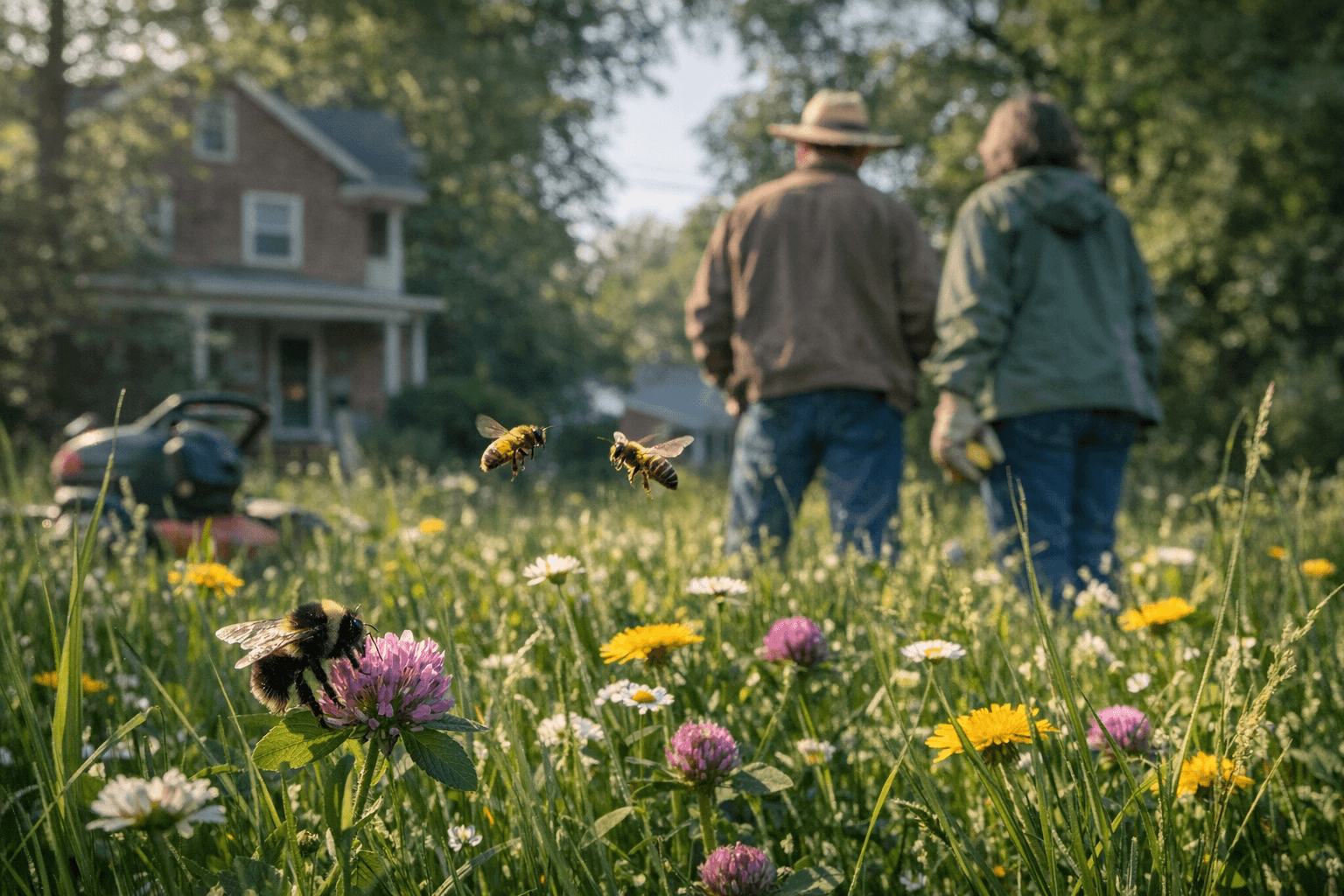
Three times the bee diversity. Five times the bee population. Research published in a peer-reviewed ecology journal is unambiguous about what happens when suburban lawns go unmowed for a month. Prince George's County Master Gardener Janice Wolf is not convinced that College Park's tiny, densely packed yards are the right place to test it.
College Park launched its annual No-Mow April this month under Resolution 22-R-13, a City Council measure that permanently designates April as No-Mow Month and suspends all tall-grass code enforcement for College Park properties through April 30. No registration is required to participate. Beginning May 1, code enforcement officers will resume issuing violation notices for grass and weeds exceeding 12 inches, and residents remain responsible for maintaining the city right-of-way strip between their property and the curb.
The city's rationale centers on a critical gap in the early spring food supply for native pollinators. Many bee, butterfly and beneficial insect species emerge from overwintering in March and April, when heavily managed suburban lawns offer almost nothing to eat. Dandelions, white clover and native flowering grasses, plants that weekly mowing typically kills before they bloom, are among the most reliable early-season nectar and pollen sources available. Roughly 70 percent of North America's native bees nest or overwinter just below the soil surface, and the mechanical vibration of a mower can collapse those structures, killing developing larvae before they emerge.
The science backing a monthlong pause is substantial. A study examining No Mow May participation found unmowed yards supported three times greater bee species richness and five times higher bee abundances compared to regularly mowed green spaces nearby, with the size of the unmowed area identified as the strongest single predictor of results.
Wolf and other skeptics are not disputing the pollinator benefits. Their objection is more local. Wolf recommends the no-mow technique for managed prairies or dedicated firefly sanctuaries rather than the small residential yards typical of College Park and the surrounding county, where tick populations are already a concern. When similar no-mow campaigns launched in other cities, community forums quickly filled with worries about ticks, rodents and allergen-producing weeds flourishing in unkempt neighboring yards. The city has not published a formal response to those objections beyond characterizing the program as a community health improvement measure with co-benefits for birds and beneficial insects.
To soften the neighbor friction the program can generate, the city is offering optional yard signs on a first-come, first-served basis at Davis Hall, 9217 51st Ave, during business hours. The signs are intended to signal intentional participation rather than neglect, a distinction that matters when a maintained-looking yard and an abandoned one can look identical by mid-April. The city's online guidance also includes native plant lists, local nursery recommendations and pesticide-reduction tips, with the explicit request that residents reduce or eliminate chemical applications during the month.
Anyone who picks up a sign keeps it. The city notes signs do not need to be returned at the end of the month.
This article was produced by Prism’s automated news system from verified source data, official records, and press releases, then run through automated quality and moderation checks before publishing. The system is built and supervised by the people who set the standards it runs under. Read our full AI policy.
Did this article answer your question?