Greenbelt Residents Question License Plate Readers, Police Defend Surveillance Use
Greenbelt residents demanded answers on license plate readers, including data retention and access, while police defended the cameras as a crime-fighting tool.

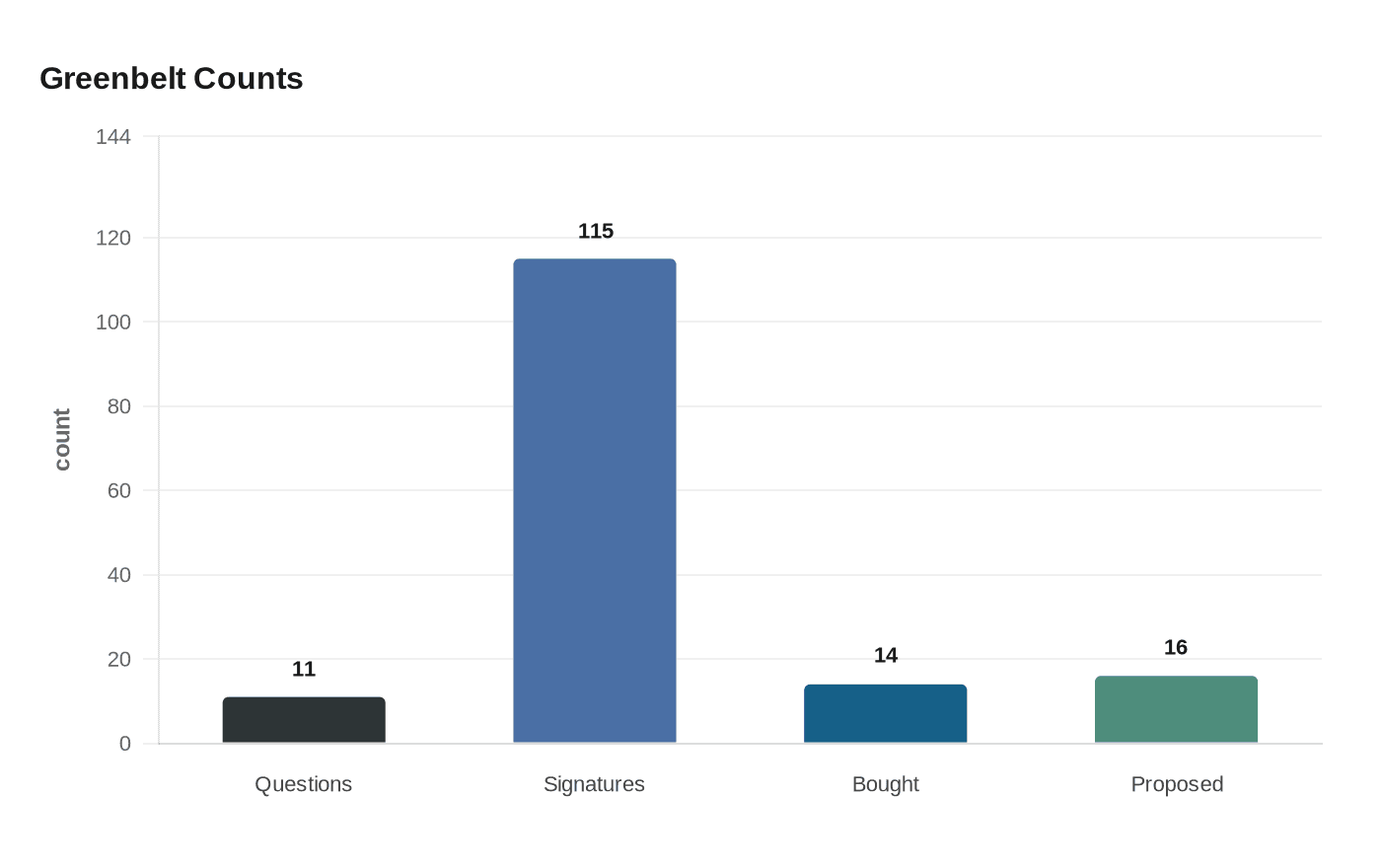
Greenbelt residents pressed city officials for measurable proof that license plate readers help solve crime, not just expand surveillance. The Greenbelt Resistance Network said it had submitted 11 questions without a response, then circulated a petition with about 115 signatures before the issue landed before the city council.
Police Chief Richard Bowers defended the system at the April 13 council meeting, arguing that the cameras help prevent crime, keep stolen vehicles out of the city and support investigations. He said the department bought 14 license plate readers in 2025 for more than $175,000, after earlier proposing about $174,000 for 16 readers at 12 sites plus related infrastructure.
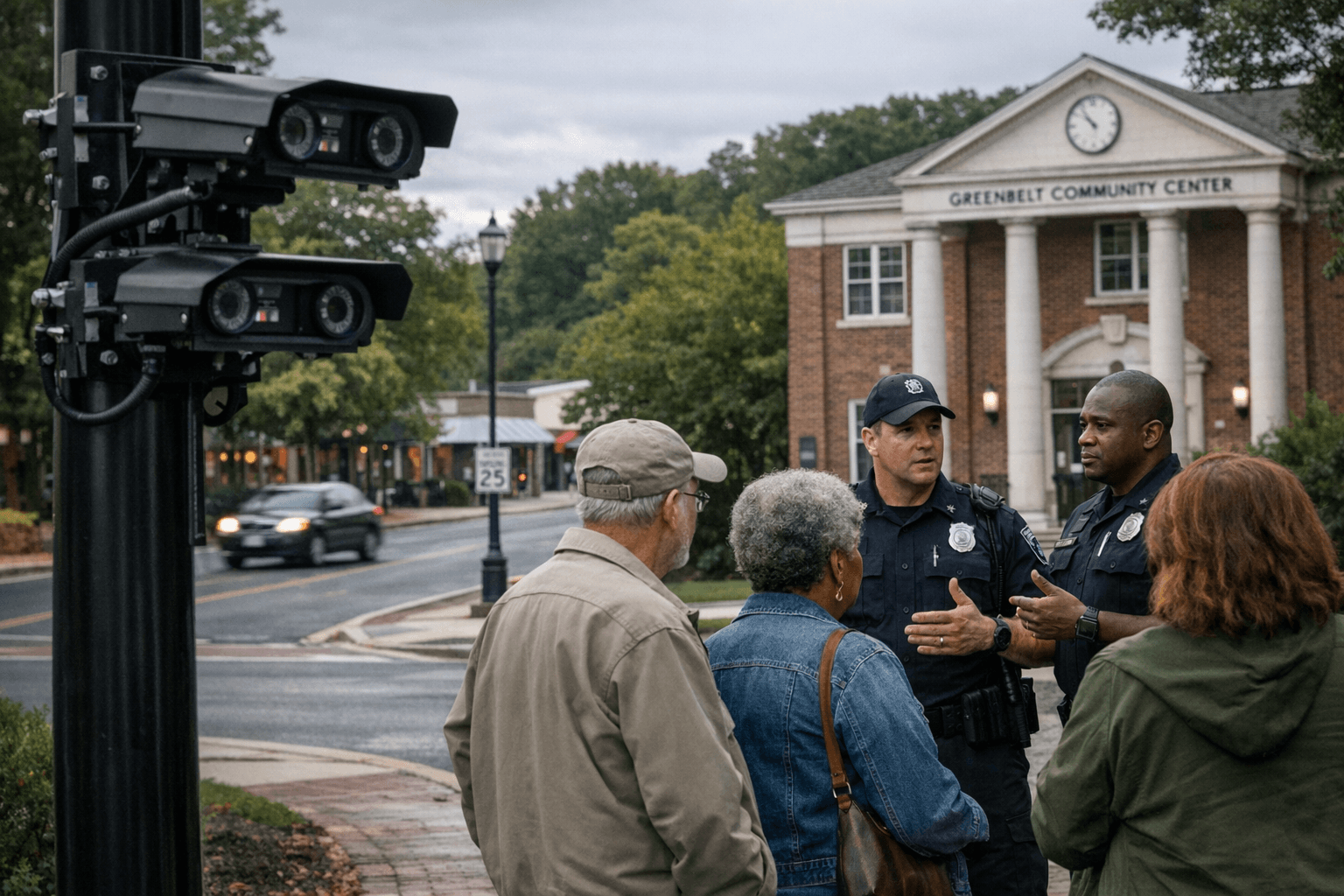
The fight in Greenbelt turned on what data the system collects and who can see it. Bowers said Maryland law limits the use of traffic camera data to traffic enforcement unless police subpoena a vendor for other uses. He also said the readers do not have facial-recognition capability, a point meant to ease fears that the cameras could be tied to broader tracking tools.
Even with those assurances, the most contentious questions centered on retention and sharing. According to the council discussion, license plate reader data is stored briefly before being transferred to the Maryland Coordination and Analysis Center, live-view hits are verified by a human, and context-camera data is kept for up to 30 days unless preserved as evidence. Critics in the room raised concerns about federal access, political targeting and the steady expansion of camera coverage across the city.
That combination of promised safeguards and still-unanswered questions has made the Greenbelt debate one of the more consequential local policy fights this spring. Residents are not only asking whether the cameras work, but what the city is willing to store, how long it will keep it and who will be allowed to use it once it leaves Greenbelt.
This article was produced by Prism’s automated news system from verified source data, official records, and press releases, then run through automated quality and moderation checks before publishing. The system is built and supervised by the people who set the standards it runs under. Read our full AI policy.
Did this article answer your question?