Greenbelt Standpipe Renovation Rattles Neighbors With Noise, Surprise Demolition
A Greenbelt resident woke to find a crane demolishing the house next door; sandblasting at the WSSC standpipe has since pushed outdoor noise past 100 decibels.
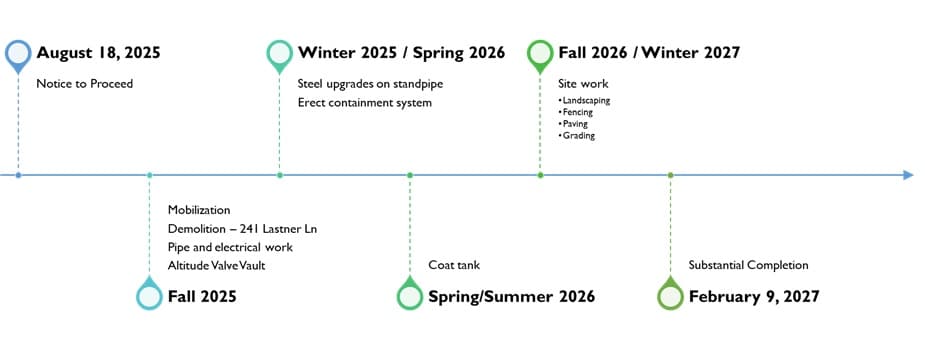
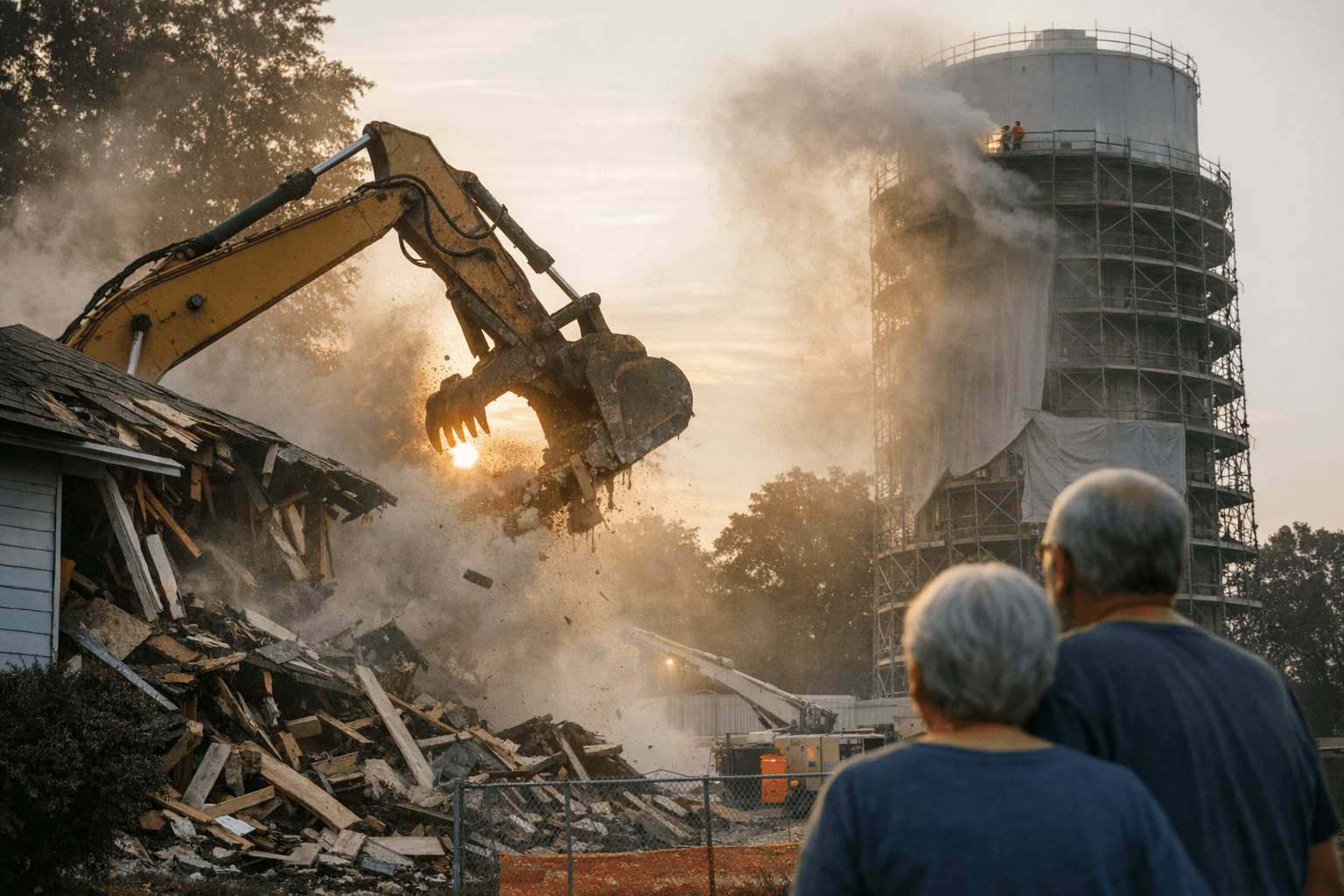
A Greenbelt resident woke one morning last week to find a crane actively tearing down the house next door. No notice had arrived. The Washington Suburban Sanitary Commission had demolished 241 Lastner Lane, a property it purchased as part of its Greenbelt Standpipe Rehabilitation Project, without warning the people who lived closest to it.
The demolition was just the opening shock. Sandblasting of the elevated tank that followed produced outdoor noise levels neighbors characterized as exceeding 100 decibels, with sustained indoor levels between 60 and 80 decibels for prolonged stretches, disrupting sleep, schoolwork, and daily life for dozens of households in the surrounding area.
The standpipe at the center of the dispute is a two-million-gallon steel elevated water storage tank built in 1936. WSSC's rehabilitation scope is extensive: demolition of the adjacent Lastner Lane dwelling to create a safer staging area, replacement of yard piping and valve vaults, structural steel upgrades, foundation repairs, and abrasive blasting followed by an epoxy coating to guard against corrosion. The utility describes the work as essential for system reliability and worker safety, with site paving, landscaping, and a pollinator garden planned for completion.
The rationale was documented in WSSC project materials. What it did not translate into was consistent advance communication with the immediate neighborhood.
"We voiced our concerns about getting prompt communication, because they had done various small staging tasks before without giving the community, the surrounding neighbors, any kind of notice," resident Kemari Legg told the Greenbelt News Review.
Neighbors said they understood the aging infrastructure required intervention; their frustration centered on being blindsided by a house demolition and then left without reliable channels to raise concerns as the noise continued. WSSC does list customer service contacts and project managers on its project page, and the city has received prior presentations on the work, but residents said responses from project staff had been inconsistent.
With the rehabilitation still ongoing, the pressure on WSSC to improve scheduling notices, establish clear noise mitigation windows, and create structured complaint handling will likely intensify before the pollinator garden gets planted.
This article was produced by Prism’s automated news system from verified source data, official records, and press releases, then run through automated quality and moderation checks before publishing. The system is built and supervised by the people who set the standards it runs under. Read our full AI policy.
Did this article answer your question?