Hyattsville Faces $4 Million Budget Gap, Eyes Property Tax Increases
Hyattsville's property tax rate hasn't changed in 20 years. A $4 million budget gap may finally end that streak.
Hyattsville city finance staff presented the council with an unambiguous fiscal problem in March: $33 million in projected revenue against $37 million in planned FY2027 expenditures, a $4 million gap that officials must close before the budget is finalized in April or May.
The shortfall has put two politically charged options at the center of council deliberations: targeted property tax increases on select property classes and spending reductions. Staff told the council that a detailed proposal scheduled for public review this month would recommend a combination of both.
At the core of the debate is Hyattsville's city property tax rate of 63 cents per $100 of assessed value, a figure that has not moved in two decades. The draft ordinance under consideration would allow the city to impose higher rates on specific classes, including vacant land, apartment buildings, and commercial and industrial properties, while preserving the existing base rate for single-family homeowners.
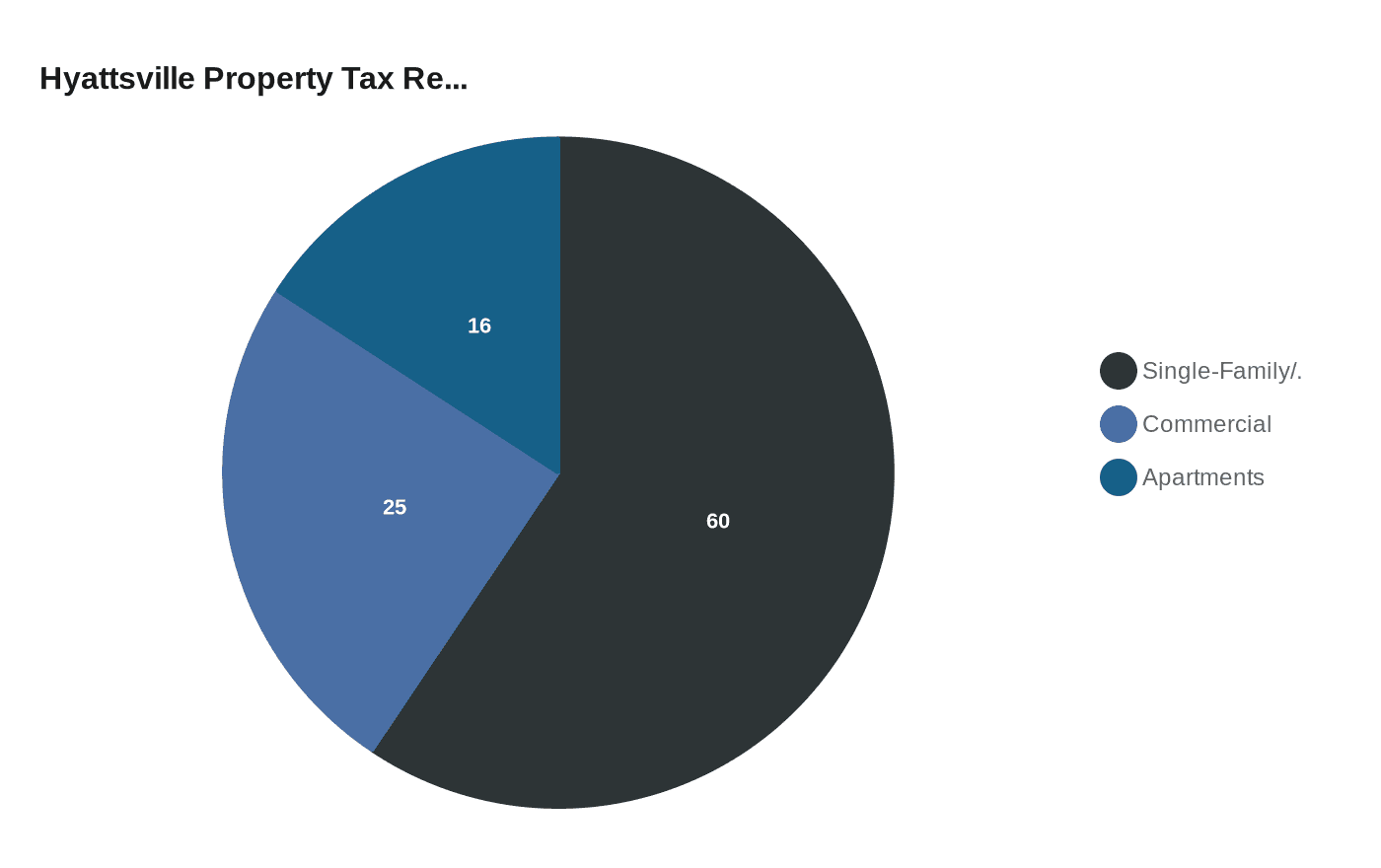
The distribution of where city property tax revenue originates underscores how much is at stake across each category. Single-family properties, including townhouses, generate roughly 60 percent of city property tax receipts. Commercial properties account for 25 percent, and apartments for 16 percent.
Not every councilmember is ready to accept the targeting framework. Councilmember Joanne Waszczak of Ward 1 raised concerns that raising taxes on apartment buildings would directly contradict the council's own stated goal of stabilizing rents and preserving housing affordability. Other councilmembers countered that spreading increases across commercial and certain multi-family property classes could distribute the fiscal burden more equitably without concentrating pressure on homeowners.
The tension Waszczak identified carries real consequences: landlords facing higher municipal taxes typically have the legal and practical ability to pass those costs to tenants, potentially displacing the lower-income renters the council has pledged to protect. Shielding rental properties entirely, however, concentrates the burden on commercial owners and shrinks the pool of revenue available to avoid deeper service cuts.
Hyattsville has experienced substantial property-value growth and new development in recent years, which raises assessed values but has not been enough to close the structural gap between what the city spends and what its current rate generates.
The April 8 and April 22 council meetings are scheduled as budget review sessions, with public comment opportunities expected at both.
This article was produced by Prism’s automated news system from verified source data, official records, and press releases, then run through automated quality and moderation checks before publishing. The system is built and supervised by the people who set the standards it runs under. Read our full AI policy.
Did this article answer your question?