Laurel mayor proposes balanced budget, holds property tax rates steady
Laurel’s proposed FY2027 budget stays balanced, keeps property tax rates flat and adds raises for city workers.
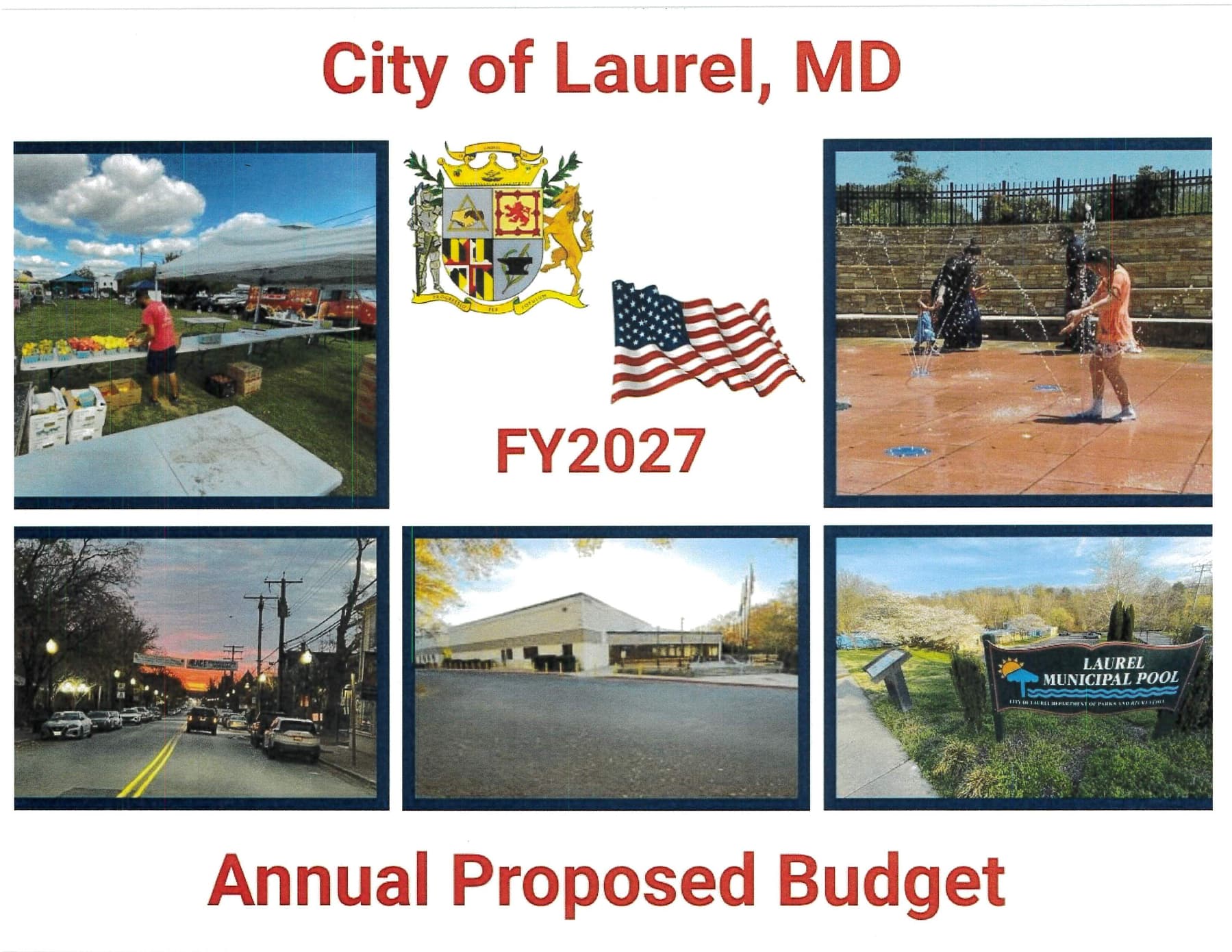
Laurel residents and businesses would not see a property tax rate increase under Mayor Keith Sydnor’s proposed FY2027 budget, which he presented to the Laurel City Council on May 1. The spending plan is balanced and keeps the city’s real property tax rate at $0.71 per $100 of assessed value, while leaving the personal property tax rate at $1.69 per $100 and the special taxing district rate at $0.03 per $100.
The proposal also sets aside money for city workers. It includes a 2.5% cost-of-living adjustment and a 2.5% merit increase, along with funding for the FOP Lodge No. 11 collective bargaining agreement and an anticipated agreement with UFCW Local 1994 for Department of Public Works employees. For city services, that means Laurel is choosing to protect payroll and labor commitments while keeping the tax rate unchanged.

Laurel’s fiscal year runs from July 1 through June 30, so the FY2027 plan will shape spending decisions across the next budget cycle. Sydnor said the budget is designed to maintain core services while accounting for possible reductions in federal, state and county funding, plus broader economic uncertainty. That combination points to the central tradeoff in the proposal: hold taxes steady, preserve services and raise employee pay without leaning on a higher property tax bill.

The budget discussion also sits inside Laurel’s broader housing and homelessness strategy. Laurel Advocacy and Referral Services CEO Shannon Mouton took part in the conversation, underscoring the pressure local nonprofits still face as the city manages crisis housing, basic needs and long-term stability. Laurel Advocacy and Referral Services is based at 311 Laurel Ave. in Laurel and serves homeless and low-income residents in crisis.
Sydnor has tied that policy work to the city’s recent investment in the Craig A. Moe Laurel Multiservice Center, which opened to the public on Sept. 10, 2024. The city said it bought the former SportFit building for $2.4 million in 2020, then spent two years renovating it with help from $10,825,000 in state grants. The center now offers meals, showers, clothing, laundry, mental health and basic medical services, workforce assistance, literacy and life-skills training, seasonal shelters and 19 transitional-housing bedrooms.
Laurel’s affordable housing rules also continue to shape development decisions. Multifamily projects approved after Nov. 23, 2020 must include workforce and moderate-income set-asides, with age-restricted units required in larger developments. Against that backdrop, the FY2027 plan signals continuity from FY2026, which was adopted by ordinance No. 2055, while leaving open the question of how long Laurel can keep balancing services, labor costs and community needs without stronger outside revenue.
This article was produced by Prism’s automated news system from verified source data, official records, and press releases, then run through automated quality and moderation checks before publishing. The system is built and supervised by the people who set the standards it runs under. Read our full AI policy.
Did this article answer your question?