Maryland MedTech Summit Draws 400 to College Park, Spotlighting UMD Innovation Hub
400+ innovators and FDA representatives gathered at UMD's Stamp Student Union in College Park as Maryland proclaimed March 24 MedTech Day.
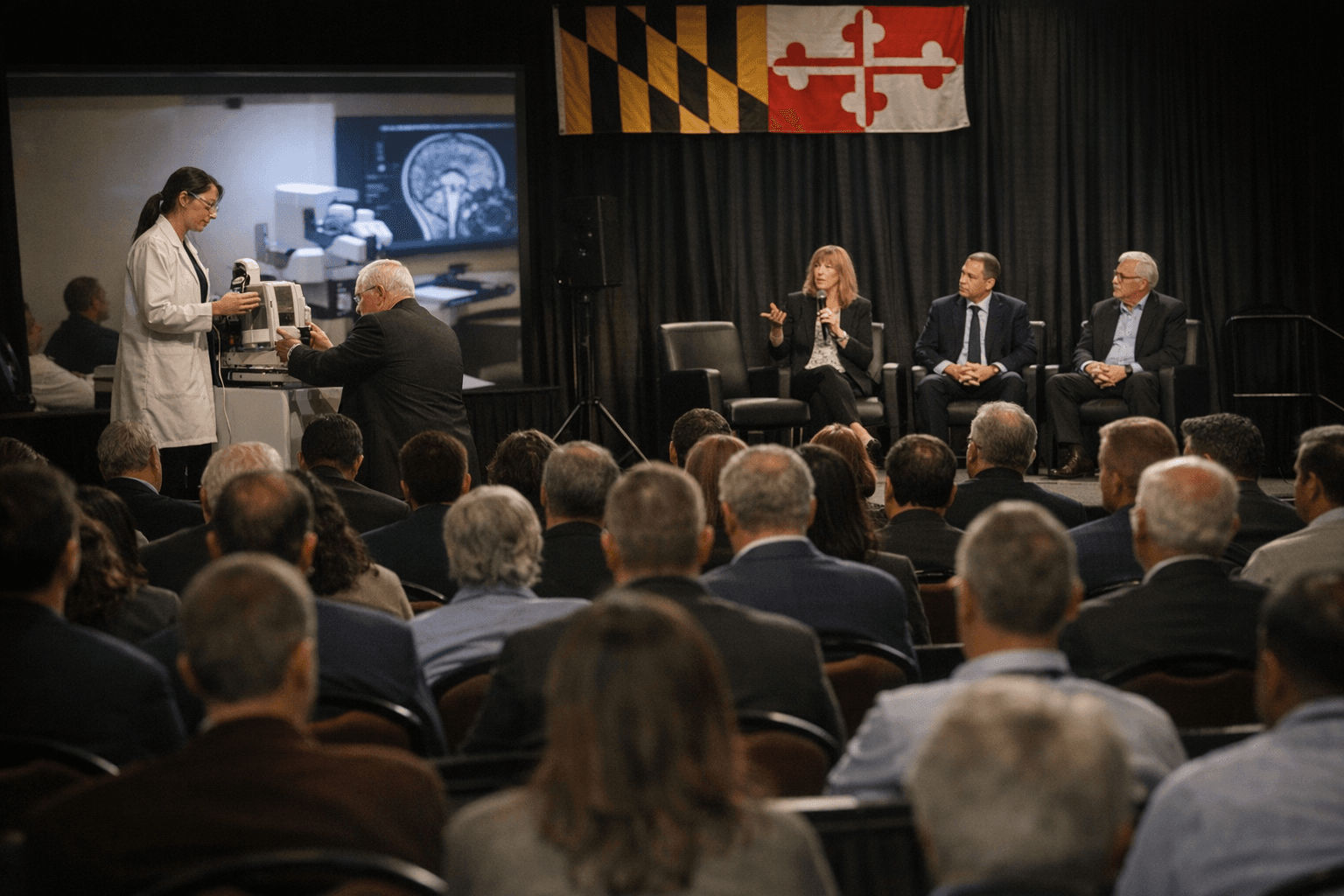
Maryland officially designated March 24 as MedTech Day last week, unveiling the state proclamation at the Stamp Student Union in College Park where more than 400 entrepreneurs, investors, clinicians and federal regulators had gathered for the third annual Maryland MedTech Summit. The Maryland Department of Commerce made the announcement at the event, marking the state's clearest signal yet that it intends to build lasting competitive advantage in the biomedical device sector.
Leaders from the Robert E. Fischell Institute for Biomedical Devices and the A. James Clark School of Engineering delivered opening remarks, launching a program that featured roughly 69 speakers across panels and breakout sessions. Panelists representing the University of Maryland Medical System, Johns Hopkins Health System and LifeBridge Health joined federal partners to examine how medtech companies bridge the gap between clinical validation and commercial adoption.
Two panels framed the day's central tensions: "Innovation at Scale" addressed how promising devices reach broad clinical markets, while "Bottom-Up Innovation in Health Systems" explored how procurement realities inside hospitals shape which technologies gain a foothold. Regulatory alignment and commercialization strategy ran as connecting threads through both.
U.S. Food and Drug Administration representatives participated directly in the discussions, giving early-stage startups structured access to regulatory expectations before committing to costly development timelines. Compressing the distance between a working prototype and FDA approval is often the difference between a company surviving long enough to close a funding round and folding before a product reaches patients.
Quick-pitch sessions gave founders direct exposure to procurement decision-makers from regional health systems, a connection that university spinouts typically struggle to build on their own. Breakout discussions ranged across digital health and artificial intelligence applications, international partnership development and early-stage funding strategy.
The summit's presence at UMD's Stamp Student Union put Prince George's County at the center of a statewide economic argument: that the region's university research infrastructure can anchor a medtech industry, not simply produce patents that migrate elsewhere. Connecting inventors, health system executives and investors in a single building in College Park creates the coordination that can translate laboratory research into jobs, contracts and locally anchored capital.
UMD and partner organizations committed to continuing the programming that helps entrepreneurs move from lab prototype to market deployment, a commitment that suggests the work that converged in College Park on March 24 will extend well beyond a single summit day.
This article was produced by Prism’s automated news system from verified source data, official records, and press releases, then run through automated quality and moderation checks before publishing. The system is built and supervised by the people who set the standards it runs under. Read our full AI policy.
Did this article answer your question?