UMD Beekeeping Club expands hives, checks colony health this spring
UMD students grew their campus apiary to five hives after low mite counts, a small spring check that matters for local food systems and Prince George's County green spaces.
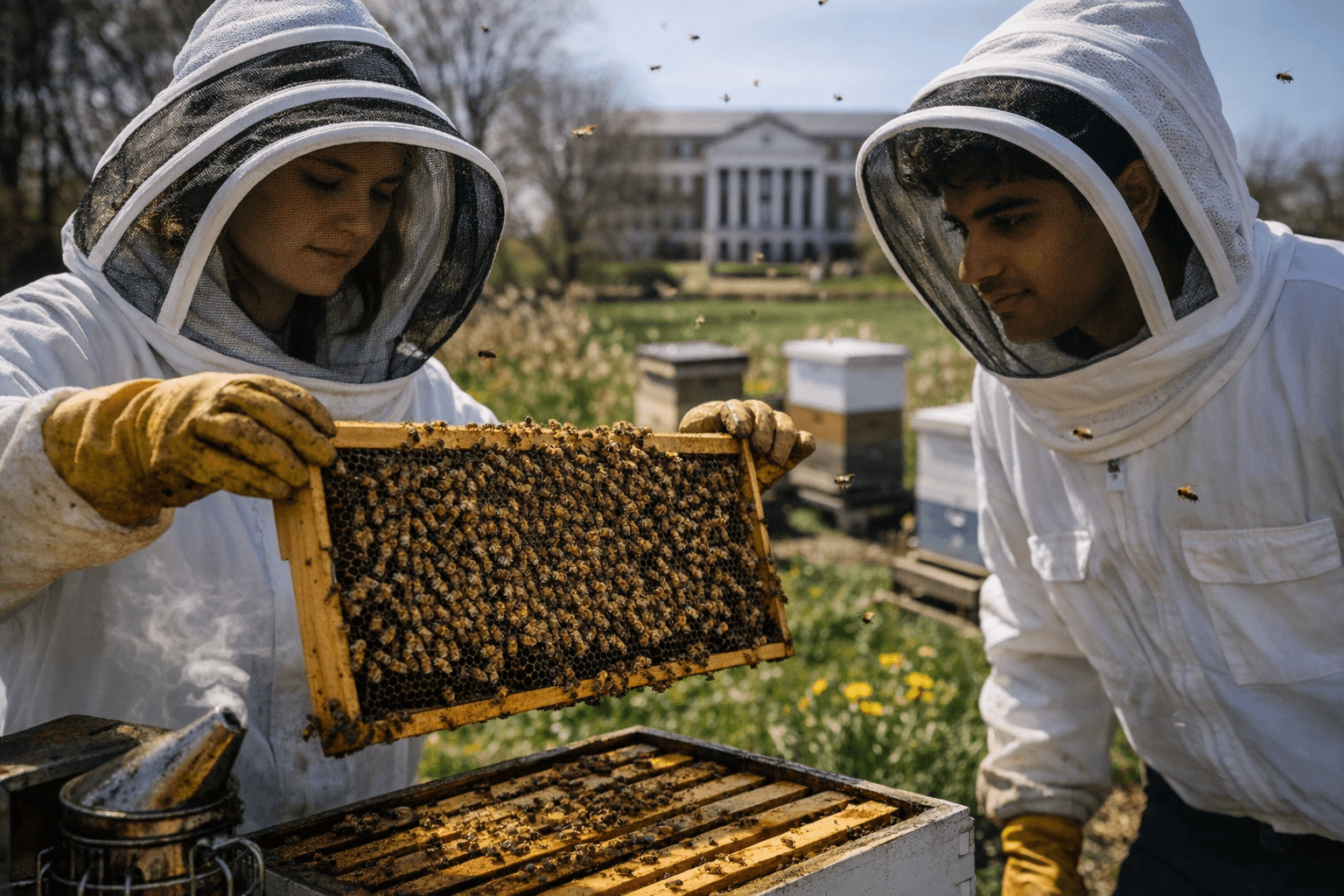
The University of Maryland Beekeeping Club opened spring with a health check that carried outsized meaning for campus ecology: students expanded their apiary from three hives to five after finding strong colony growth and an impressively low mite count at the Research Greenhouse Complex in College Park.
Members gathered to inspect Deadbeet Dad, Amalgam and Baby Beeku, breaking the propolis seal bees use to close the hive, checking for population growth and washing samples to look for varroa mites. The low count suggested the colonies were in solid shape, a welcome sign at a time when beekeepers across the country are still watching for the pests that weaken hives and can wipe out colonies.
For Prince George’s County, the stakes reach beyond the campus fence. Honey bees and other pollinators help support food systems, backyard gardens and the native plants that anchor local green spaces. The club’s work at the University of Maryland, College Park ties student learning directly to that larger environmental network, where pollinator loss can ripple into fewer fruits, vegetables and flowering plants.
Ariel Zang, the club president, said the group gives students a hands-on way to learn bee care and helps demystify a hobby that can feel intimidating or expensive. Michael Lynch said the club’s shared equipment and collective expertise let students work with bees without buying every piece of gear upfront. That access matters in a county where sustainability efforts often depend on practical, lower-cost ways for residents and institutions to protect habitat.
The club has been part of campus life for more than a decade and is open to students, staff and faculty with no prior experience required. Members meet on Tuesdays for instruction and social learning, then head out on warm Saturdays to monitor the hives in person. The group once kept hives in the woods behind Xfinity Center before moving them to a more accessible spot outside the Research Greenhouse, making the work easier to manage and more visible to the campus community.
Eric Malcolm, the club adviser, apicultural extension educator and apiary manager of the UMD Bee Lab, has helped guide that education. The broader warning from University of Maryland Extension is clear: honey bee populations face pressure from varroa mites, disease, habitat loss, loss of nectar plants and pesticides. USDA researchers reported in 2025 that amitraz-resistant Varroa destructor mites were implicated in recent honey-bee colony collapses, and USDA’s National Agricultural Statistics Service said varroa mites were the top stressor for larger operations during all quarters surveyed in 2024. The highest share of affected colonies, 36.6%, came during April through June 2024.
That backdrop gives the club’s spring checks added weight. These students are not just tending campus bees; they are practicing the same monitoring that increasingly helps determine whether colonies survive the season.
This article was produced by Prism’s automated news system from verified source data, official records, and press releases, then run through automated quality and moderation checks before publishing. The system is built and supervised by the people who set the standards it runs under. Read our full AI policy.
Did this article answer your question?


