Quitman County courthouse anchors civic life in Marks
At 220 Chestnut Street, Quitman County’s 1910-11 courthouse still handles records, clerks and court business in Marks. A $400,000 restoration aims to keep it accessible.
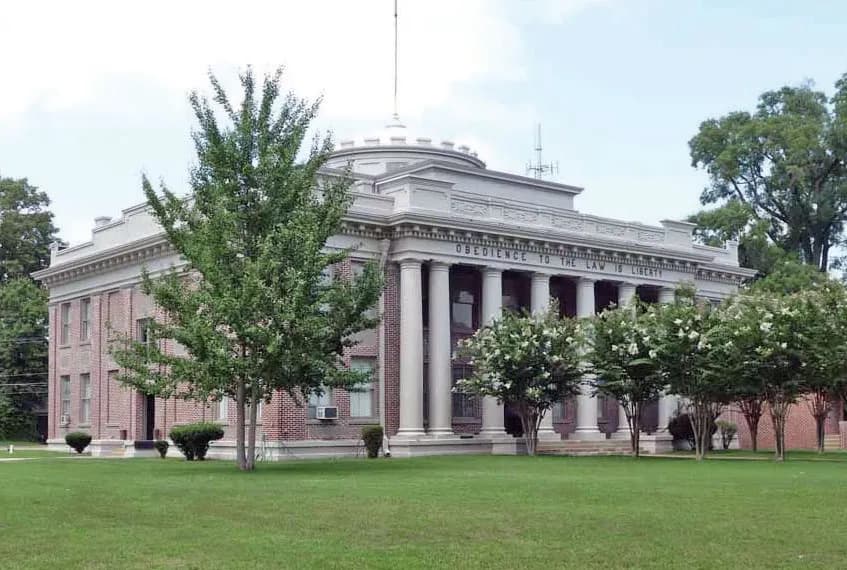
The Quitman County Courthouse at 220 Chestnut Street is where county government in Marks still becomes real for residents who need records, court dates, clerk services, or public meetings. Built in 1910-11 in the Neoclassical style by Chamberlin & Associates, it remains the county’s most visible civic address and a working center of daily business.
The county seat still runs through the courthouse
Quitman County’s website places county offices inside the courthouse, including the County Administrator/Comptroller, the Chancery Clerk, and the Circuit Clerk. Those offices are listed at 220 Chestnut Street, with the county’s contact address given as 220 Chestnut Street, Suite 2, Marks, MS 38646. That means the building is not simply a preserved landmark on a downtown block. It is where residents go when government paperwork, court matters, and official records cannot be handled anywhere else.
The county court systems page adds two more names to that civic map: County Prosecuting Attorney Micheal Roy and District Attorney Brenda F. Mitchell. Their roles connect the courthouse to the county’s formal legal life, from filings and prosecutions to the ordinary court work that shapes day-to-day access to justice in a rural county. For families, attorneys, business owners, and local officials, the building is part of the routine infrastructure of county government.
Why the building still matters for access
The courthouse’s age has become part of the public conversation around preservation and service. A county article said Quitman County received $400,000 to restore the historic courthouse, and the project was meant to add an elevator so citizens could reach the second floor for public meetings and court proceedings. The same report described the building as 110 years old at the time, underscoring that preservation here is tied directly to whether people can actually use the building.
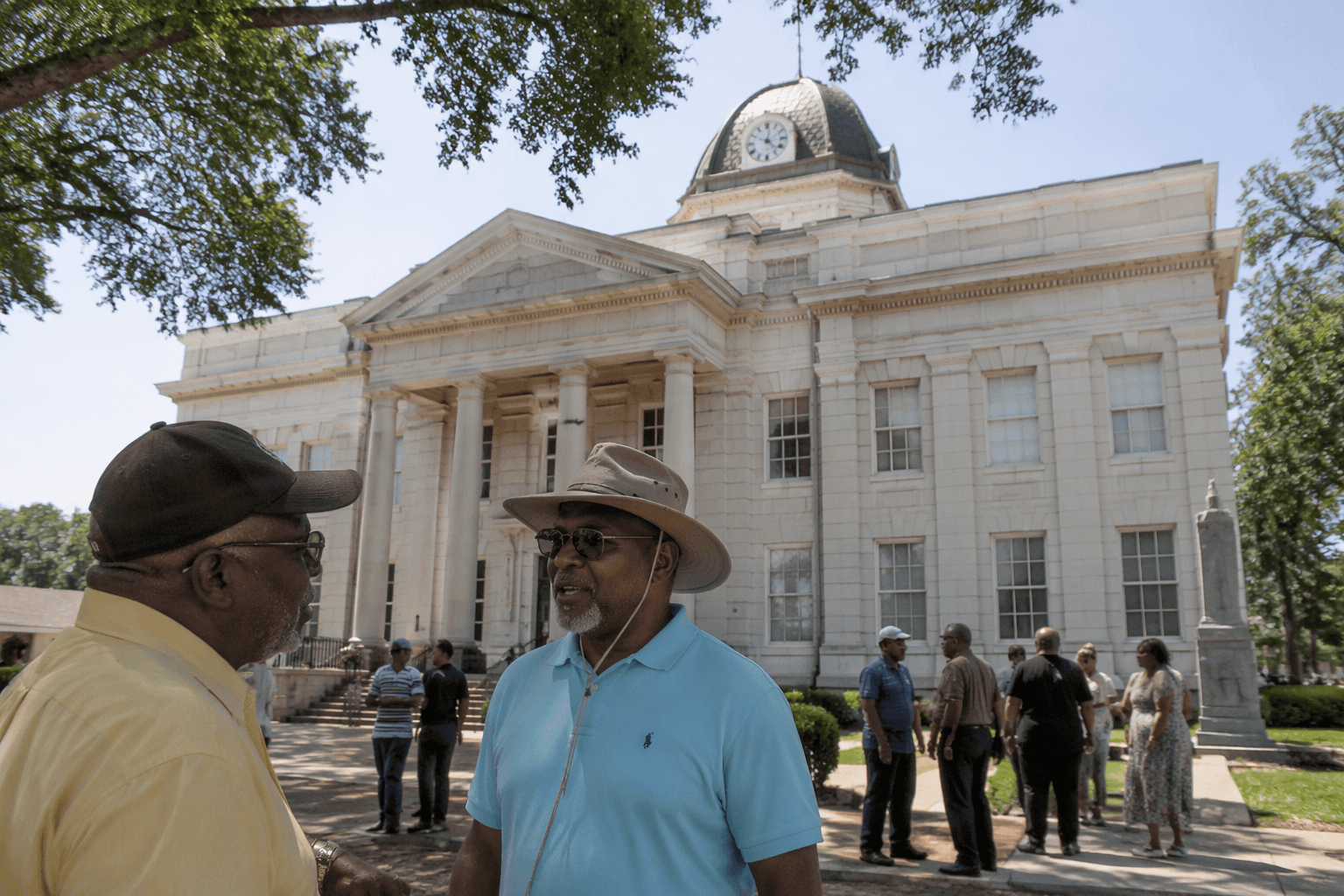
That detail matters in a county where government services are concentrated in one place. If residents cannot get to the second floor, the courthouse stops functioning as a full civic building no matter how well it is maintained outside. The restoration project shows that accessibility is not a side issue in Quitman County. It is part of keeping the courthouse open to the public it is supposed to serve.
The Mississippi Department of Archives and History also maintains a property record for the Quitman County Courthouse in Marks, reinforcing its standing as a documented historic site. The building’s status is not only local or symbolic. It is part of the formal record of Mississippi’s public architecture and county history.
A Neoclassical landmark in downtown Marks
The courthouse’s design helps explain why it has remained such a strong civic marker. Chamberlin & Associates gave it a Neoclassical form, a style often associated with permanence, order, and public authority. In a county seat like Marks, that visual language matters because it tells residents and visitors where civic life is centered.
That role extends beyond the courthouse walls. A National Park Service National Register nomination PDF hosted by the county notes the Marks Downtown Historic District and identifies public local resources within it. The courthouse fits into that larger historic civic core, where downtown is not just a commercial strip but the setting for government, legal process, and public memory.
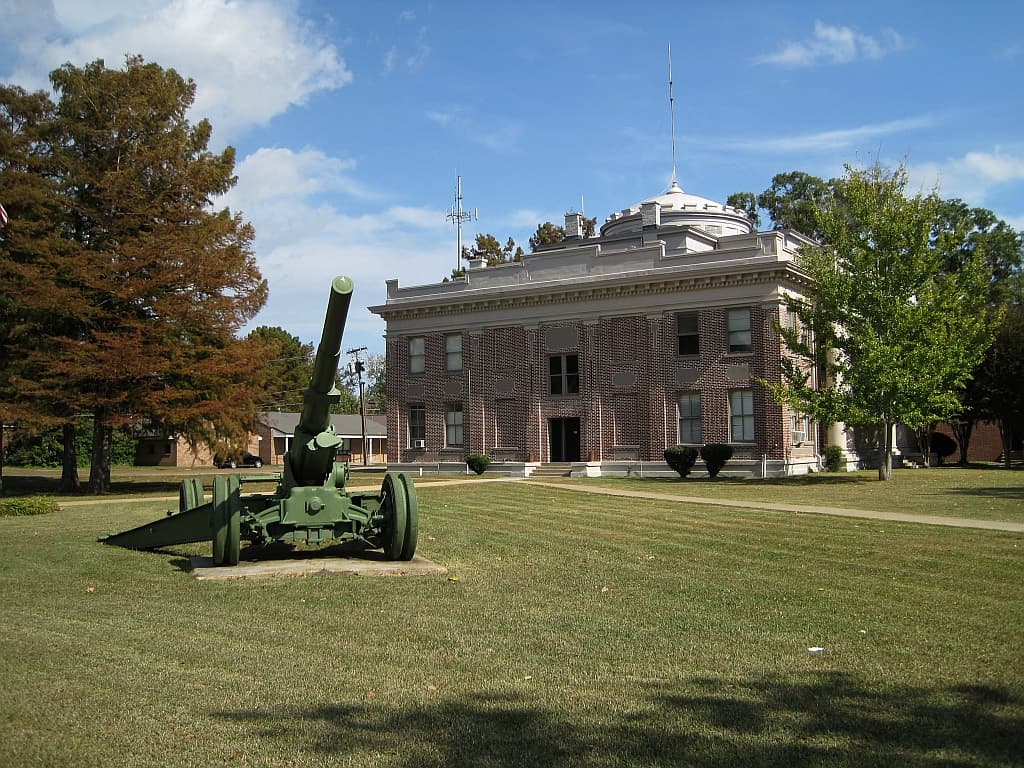
The building’s address on Chestnut Street also makes it part of the daily geography of Marks. When county offices, court staff, and residents share the same block, the courthouse becomes more than a monument. It becomes the place where public business is visible, reachable, and tied to the downtown identity of the county seat.
Why the history of Quitman County still runs through Marks
Quitman County itself was established in 1877 from parts of Tallahatchie, Tunica, Panola, and Coahoma counties. The county seat, Marks, takes its name from Leopold Marks, the legislator who introduced the bill to create the county. The county was named for Mississippi governor John A. Quitman. Those details place the courthouse inside a Reconstruction-era county structure that has continued to operate from Marks ever since.
That history helps explain the courthouse’s importance now. The building sits at the center of a county created through legislative action and still governed through a physical seat of power that residents can find on Chestnut Street. It is where records are kept, officials work, and legal matters move forward, which is why a restoration project and an elevator are not abstract improvements but practical safeguards for civic access.
In Quitman County, the courthouse is both the archive of the past and the front door to government. Its preservation is a matter of keeping Marks’ downtown civic core functional for the residents who still rely on it every day.
This article was produced by Prism’s automated news system from verified source data, official records, and press releases, then run through automated quality and moderation checks before publishing. The system is built and supervised by the people who set the standards it runs under. Read our full AI policy.
Did this article answer your question?