Quitman County promotes industrial park to attract new business investment
Quitman County is marketing its industrial park as a jobs-and-tax-base play, with rail access, 300 acres and Delta branding aimed at keeping opportunity local.
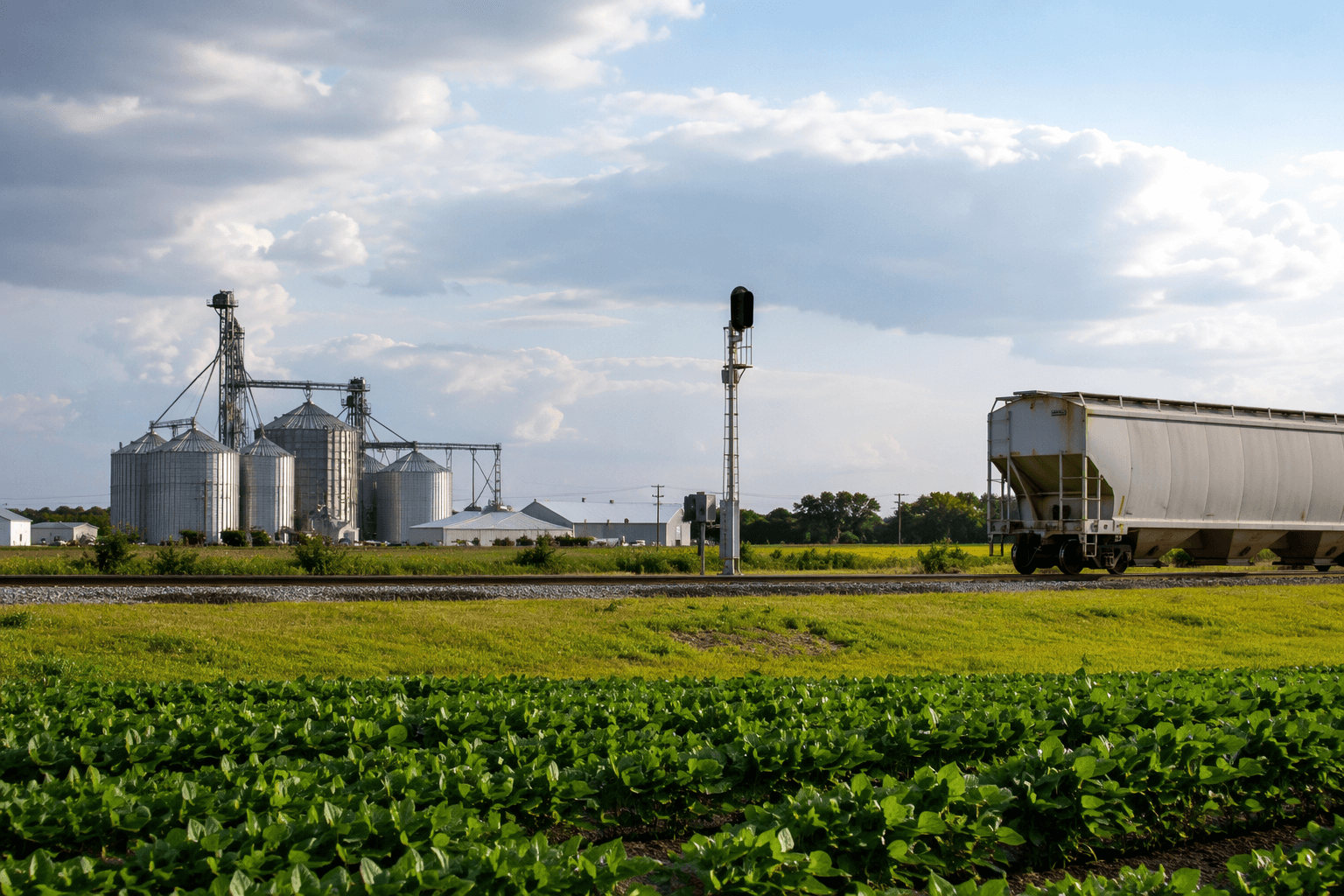
Quitman County is using its industrial park to answer a bigger question than where the next warehouse goes: can a Delta county turn land, freight access and business recruitment into local payrolls before its population keeps sliding? The county’s own economic-development page says the site is reachable by freight rail and trucking, and the public branding around it says the county is “open for business and tourism.”
What the county is putting on the map
The county does not treat the industrial park like a hidden backlot. Quitman County’s website keeps a gallery page for economic development, including a Delta Regional Mule Train Market Planning Session dated March 6, 2016, which shows the county has been documenting and promoting development work for years. Its economic-development page asks, “Looking for an ideal location for business or industry?” and then points to the park as a place that can help answer that question.
That public-facing pitch matters because it tells residents how county leaders want this land to function. The county says Quitman County is part of the Mississippi Delta and “welcomes and supports business ventures that create new opportunities for its people.” In practice, that means the industrial park is not just being presented as empty acreage. It is being framed as a tool for jobs, taxes and a stronger local economy.
How big the site is, and how it moves goods
The clearest site details come from a Mid-Mississippi Development District property sheet for the Quitman/Clarke County Industrial Park. It describes a 300-acre site south of Quitman on Highway 145 South, with the land available for sale or lease as a single tract or divided into parcels. The same sheet says Interstate 59 is about 12 miles away and U.S. Highway 45 is about 1 mile away, a combination that makes road access one of the park’s biggest selling points.
Those logistics are the point. Rural industrial parks usually succeed when they can offer enough acreage, enough access and enough certainty for a company to build without starting from scratch. The Quitman/Clarke County site’s rolling topography, freight rail access, trucking access and proximity to major highways give it the basic infrastructure that manufacturers, warehouses, repair operations and agricultural processors often want before they commit capital.
The physical location also places the site inside the region’s transportation network rather than off to the side of it. Quitman sits about 28 miles south of Meridian, so the park is close enough to tap a larger commercial center while still offering the lower-cost land base rural counties usually have to sell.
Why the branding is about more than business cards
The county’s broader messaging shows that leaders are trying to sell more than industrial land. One county home page slogan says, “Agriculture. Civil Rights. Music Legends. Sportsman’s Haven. All in one place,” a reminder that economic development is being packaged alongside the county’s cultural identity. Discover Quitman County pushes the same logic with the line “Invest in the Delta Renaissance,” then says the county is “open for business and tourism” and looking for “innovative, progressive partners” to realize the region’s potential.
That combination tells you what the county thinks the industrial park is for: not only outside investors, but also local stability. In a place where farming still anchors the landscape, the county is trying to add nonfarm employers without losing the identity that already defines the Delta. The industrial park becomes a way to keep economic activity closer to home instead of exporting workers, taxes and spending to larger cities.
The local economy behind the pitch
Quitman County’s economic pressure makes that strategy easy to understand. Mississippi State University Extension Service’s County Economic Profile says the county’s population changed by -17.1% from 2018 to 2022. The same profile says 47.4% of people under 18 were in poverty in 2022, while 71.0% of residents age 25 and older had at least a high school diploma or equivalent and 21.1% had a bachelor’s degree or more.
Those numbers show a county where the job question is also a family question. Population loss, child poverty and a smaller share of adults with four-year degrees all shape whether young people stay, return or leave. A site that can attract employers with stable wages and a predictable location becomes part of the county’s answer to that problem.
Agriculture still dominates the economic base. USDA’s 2022 county profile lists 224 farms in Quitman County, covering 182,110 acres, with an average farm size of 813 acres and total market value of products sold at $84,764,000. That is a substantial farm economy, and it helps explain why county leaders would want industrial development to complement agriculture rather than replace it. A local industrial park can support farm-adjacent businesses, storage, transport and processing that keep more value inside the county.
What regional job announcements suggest
Quitman County’s development pitch also sits in a wider Delta competition for investment. Nearby Quitman, in Clarke County, has already been part of a major Howard Industries expansion story. A 2023 report said the company was adding roughly 200 jobs in a new 170,000-square-foot building in Quitman, and Michael Howard said, “We are very excited about being here in Quitman, Mississippi.” A later 2025 expansion announcement put Howard Industries’ broader Mississippi project at $236.95 million and 450 jobs across Clarke, Jones and Simpson counties.
That kind of investment is a reminder that rural sites are judged by their readiness, not just by their price. When employers are willing to build in the Delta, they are usually looking for land, access and a county that can move quickly. Quitman County’s industrial park is designed to advertise exactly that.
What residents can watch next
The industrial park’s real value will show up in a few visible markers that anyone in the county can assess:
- Occupancy, including whether a tenant or end user is named for the site
- Infrastructure, especially freight rail, trucking access and highway proximity
- Workforce pipeline, including how local education and training line up with industrial jobs
- Who benefits, from farm families and young workers to the county tax base itself
Quitman County has already signaled that it wants the park to be part of a larger development strategy. The remaining question is whether that public land, freight access and county branding turn into permanent jobs and taxable activity, or stay mostly as a promise on the county website.
This article was produced by Prism’s automated news system from verified source data, official records, and press releases, then run through automated quality and moderation checks before publishing. The system is built and supervised by the people who set the standards it runs under. Read our full AI policy.
Did this article answer your question?