Quitman County supervisors set budget, taxes and policy decisions
The five supervisors in Marks decide Quitman County’s budget, tax rate and day-to-day priorities. Their first-Monday meetings are where road, service and courthouse decisions turn public.
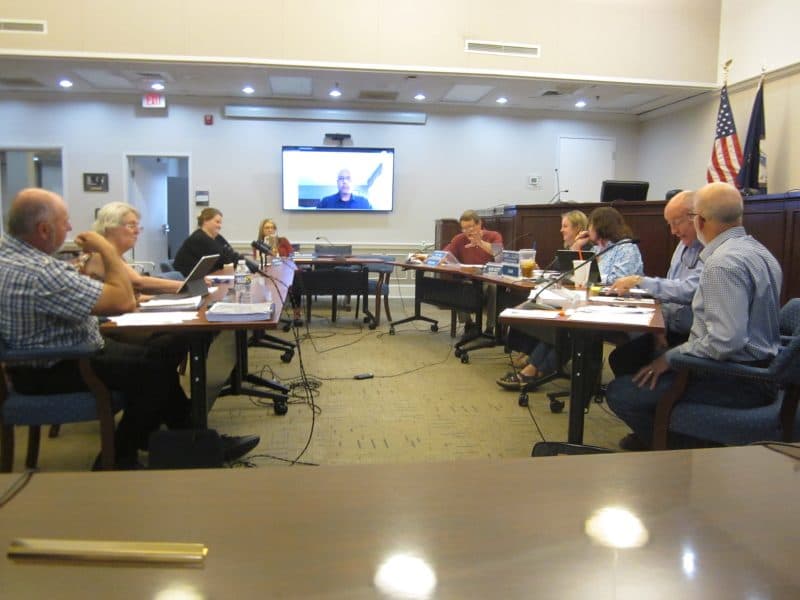
Where Quitman County power is decided
Quitman County residents do not have to guess where the county’s biggest decisions are made. The five-member Board of Supervisors, with one supervisor elected from each district, is the body that adopts the annual budget, sets the annual property-tax rate, and writes the policies that steer county growth and development. It also appoints the county administrator who manages daily operations, which makes the board the point where abstract county government turns into real-world service on the ground.

That matters in a county where a road repair, a drainage fix, a courthouse project, or a delay in county services can affect daily life in Marks, Lambert, Crowder, and Falcon all at once. When supervisors act, the effects can show up in what gets paved, what gets funded, how fast county offices respond, and how much households pay in taxes.
What the board controls, and why it reaches every neighborhood
The board’s power is broad because county government is broad. Budget votes shape whether a project moves ahead or waits another year. Tax-rate decisions affect household costs. Policy choices guide how the county handles growth, development, and the basic services people rely on without much notice until something goes wrong.
That is why a board meeting is not just a formality. In a county of this size, with limited resources and a small staff, the five supervisors help decide whether local needs are treated as priorities or postponed. For residents, the practical question is simple: if a road, building, or service problem is tied to county government, the board is one of the first places where the fix can be approved.
When and where residents can speak up
Quitman County holds Board of Supervisors meetings at 9 a.m. on the first Monday of each month at 220 Chestnut St. in Marks, Mississippi. Public participation and involvement are highly encouraged, which makes these meetings one of the clearest opportunities for residents to watch county government work in public and raise concerns directly.
The meeting location is the same civic center of county life where the courthouse sits at 220 Chestnut Street in Marks. That concentration of power matters. It means residents can connect a complaint about a road, a question about taxes, or a concern about county services to one place, one schedule, and one governing board.
Who runs the courthouse day to day
The board sets the direction, but county offices carry out the work. Quitman County government lists Beatrice Pryor as county administrator and comptroller, T.H. (Butch) Scipper as chancery clerk, Teareathrea Keeler as circuit clerk, Oliver Parker Jr. as sheriff, and Alice Crowder-Smith as tax assessor and tax collector.
For residents, those names are more than a directory. They are the people most likely to be involved when you need records, law enforcement, tax information, or other courthouse business. The board’s decisions shape the framework those offices work within, which is why supervision meetings and courthouse services are tied together in daily county life.
The local stakes are bigger than the county’s size suggests
Quitman County is a small county by any measure, and the numbers explain why each budget choice carries weight. The U.S. Census Bureau lists the county’s 2020 population at 6,176, down from 8,223 in 2010, with a July 1, 2024 estimate of 5,542. The county covers 405.0 square miles of land area, so services have to stretch across a wide rural footprint with a relatively small tax base.
The economic picture shows similar pressure. The county’s median household income is $32,412, and about 17.1% of adults have a bachelor’s degree or higher. In a place where many households live on tight margins, the annual property-tax rate and the county budget can affect everything from household bills to the pace of infrastructure work. A supervisor’s vote is not abstract here. It lands in the cost of living and the quality of services people see every day.
The county’s demographic profile adds another layer. About 73.1% of residents are Black alone and 24.4% are White alone. In a county with an older population share as well, decisions about roads, public buildings, and service delivery carry extra weight because access and reliability matter when people need to reach county offices, travel safely, or depend on local systems that cannot afford long delays.
How Quitman County got here
Quitman County was established in 1877 from parts of Tallahatchie, Tunica, Panola, and Coahoma counties. The bill to create it was introduced by Leopold Marks, and the county itself was named for Mississippi governor John A. Quitman. That history still shows up in the geography of public life: the county seat is Marks, the courthouse stands there, and the county’s main civic decisions still run through the same place that helped give the county its identity.
That historical setup helps explain why Marks remains the center of county government. It is where the board meets, where the courthouse is located, and where residents can most directly watch local authority at work. The county’s structure is simple, but its reach is wide. Five supervisors, elected from five districts and serving four-year terms, control the choices that shape the county’s budget, taxes, policies, and priorities.
What to watch next
If you live in Quitman County, the most important thing to know is that the board’s first-Monday meeting is where county priorities become official. A road project can move forward, a tax rate can be set, and a policy can be adopted in a single vote. That is how decisions made in Marks reach homes, farms, businesses, and public buildings across the county.
For a county this small, transparency is not a slogan. It is the difference between decisions made in public and problems left to drift.
This article was produced by Prism’s automated news system from verified source data, official records, and press releases, then run through automated quality and moderation checks before publishing. The system is built and supervised by the people who set the standards it runs under. Read our full AI policy.
Did this article answer your question?

