Rockwall backs downtown square with Main Street preservation tools
Rockwall’s square is managed like an economic district, with Main Street tools, recurring events and grants designed to keep shoppers coming downtown.

Rockwall treats its historic square as an operating district, not a souvenir from the past. The city’s Main Street program gives downtown a formal structure, a monthly advisory board, and a set of tools aimed at keeping the block safe, attractive, and commercially active while preserving its historic character.
Main Street as the district’s operating system
Rockwall was designated an official Texas Main Street City in 2008 by the Texas Historical Commission, placing the square inside the state’s preservation-and-revitalization framework. The Rockwall Main Street Advisory Board meets monthly on the third Tuesday at City Hall, and its stated vision is straightforward: maintain a safe, attractive, and thriving historic downtown district while balancing residential and commercial uses.
That matters because downtown is being managed as a place where people live, shop, and spend time in the same footprint. The city backs that goal with concrete tools, including Downtown Rockwall Dollars, a façade reimbursement grant, and a historic walking tour. Taken together, those programs are meant to turn preservation into visible consumer activity, from improved storefronts to reasons for residents to make repeat trips to the square.
Rockwall Main Street is also a member of the Texas Downtown Association, which the city uses as a source of advocacy, education, and connections for district development. That places Rockwall inside a broader statewide network that treats downtown management as a practical economic function, not just a historic-pedestrian amenity.
A preservation framework built around active storefronts
The city’s historical preservation handbook describes downtown as a blend of historic structures and “historic 19th Century storefronts” around the town square. It also shows that the protective framework did not begin recently: Rockwall’s Historic District was created by ordinance in May 2002. In other words, the square has been managed as a protected district for more than two decades.
That long timeline helps explain why the downtown story in Rockwall is about continuity and use, not nostalgia. The square is protected, but it is also expected to function, with storefronts, public spaces, and adjacent residential and civic uses all folded into the same policy structure. The city’s Main Street approach gives officials a way to support businesses without losing the small-scale character that makes the district recognizable in the first place.
The national Main Street model itself dates to 1980, when the National Trust for Historic Preservation established the effort. Rockwall’s version follows that same idea: preservation succeeds when downtown remains commercially useful, visually maintained, and busy enough that the square feels like part of daily life rather than a special-occasion backdrop.
Events that keep foot traffic moving
The clearest sign that downtown is being treated as an active economic center is the calendar. The Rockwall Farmers Market has been a Saturday-morning staple since 2008, when it was established by the Friends of Downtown Rockwall. It is run by volunteers with help from the City of Rockwall and Rockwall County, and the market says it has grown to more than 45 vendors per season.
That vendor count matters because markets work best when they are more than a handful of stalls. More vendors create more reasons to linger, and lingering is what turns a square into a shopping district. The market also adds live music, which the city calendar says features local talent at its markets, reinforcing the square as a place where people can buy produce, browse, and stay awhile.
The city calendar also gives downtown a rhythm beyond the farmers market. The San Jacinto Music Series runs Friday and Saturday nights from May to October, and the recurring lineup includes Concert by the Lake at The Harbor, Founders Day, Scare on the Square, and Hometown Christmas. Each of those events creates a different kind of customer traffic, from summer evening outings to holiday visits, and each helps keep the area active outside the one-off festival season.
- Spring and summer bring regular music nights downtown.
- Fall adds Scare on the Square.
- The holiday calendar ends with Hometown Christmas.
That steady cadence is what makes the district feel usable across the year, not just photogenic in one season.
Where the square sits in Rockwall’s civic map
The geographic center of the story is still the historic square itself. A visitor-facing map places downtown Rockwall around Hwy 205, N. Goliad, Rusk Street, Washington Street, and San Jacinto Street. That is the footprint residents know when they park for an event, meet friends for dinner, or walk through the storefronts that make the square work as a destination.
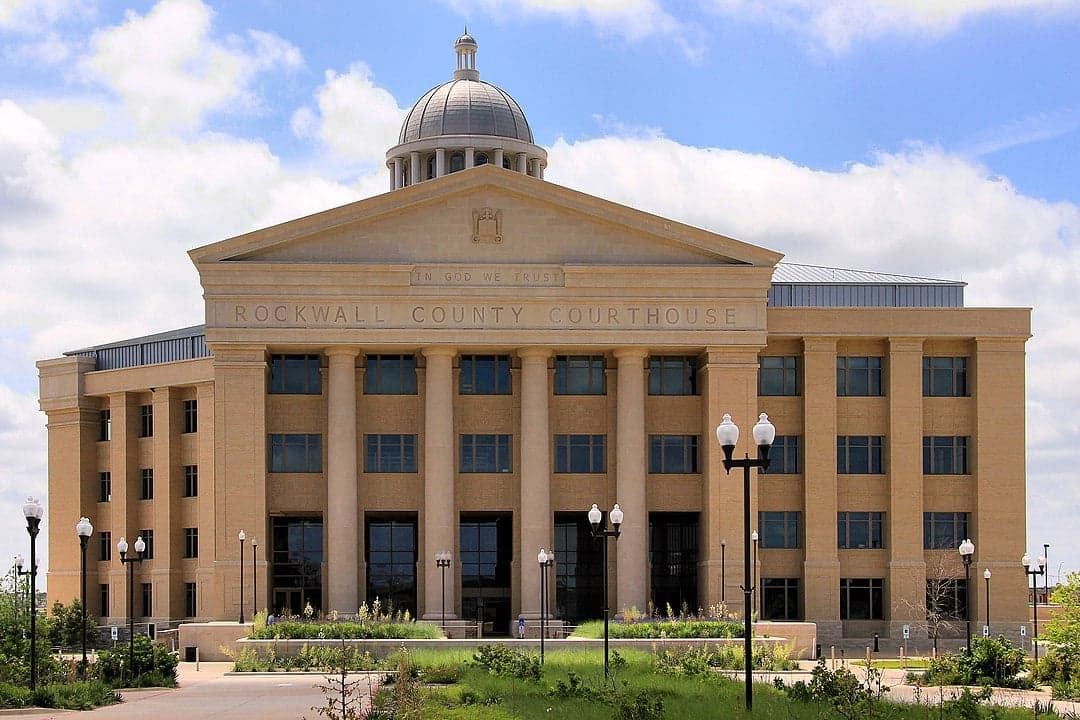
The county courthouse strengthens that civic role. Rockwall County was created in 1873, and Rockwall was selected as the county seat, making the square the seat of county government as well as the retail core. The Rockwall County Historic Courthouse sits at 101 E. Rusk Street, right in the district that has been managed as the center of civic life since the county’s earliest years.
That history matters because the square did not grow up as an afterthought. The first courthouse was a frame building on the southeast corner of the square, and it was destroyed by fire in 1875. Even after that loss, the square remained the place where public life and commercial life met, which is why the downtown plan still centers on the same blocks more than 150 years later.
The preservation handbook says the present-day atmosphere still reflects the “courtesies and small town atmosphere” of early merchants. In practice, Rockwall has turned that inherited character into a management strategy: preserve the square, program it often, support the storefronts, and keep the district busy enough that residents have reasons to come back long after the headlines fade.
This article was produced by Prism’s automated news system from verified source data, official records, and press releases, then run through automated quality and moderation checks before publishing. The system is built and supervised by the people who set the standards it runs under. Read our full AI policy.
Did this article answer your question?