Bath arts center survives on neighbor-to-neighbor support
The Chocolate Church survives on neighbor-to-neighbor support, not one big patron. In Bath, that means volunteer labor, small gifts, school ties, and local rescue work that keep the doors open.

How the Chocolate Church survives
The Chocolate Church Arts Center survives in Bath because its support base looks less like a donor class and more like a working neighborhood. Its operating model depends on small acts of reciprocity, from volunteers and local gifts to practical help that keeps a building, a program calendar, and a community space alive.
That matters because the center is not just preserving performances. It is preserving a civic habit in Sagadahoc County, one where neighbors lend time, skills, and money to keep a shared institution functioning. In a city like Bath, that kind of support is not decorative. It is the economics of cultural survival.
A building saved more than once
The center’s own history makes that clear. The building’s origins date to 1846, when The Third Parish appointed a building committee, and the church was completed in 1847. Boston architect Arthur Gilman designed it in the Greek Revival style, and it was first known as Central Church before becoming Central Congregational Church.
By the mid-1960s, the building faced demolition, along with the nearby Winter Street Church. Civic-minded residents formed Sagadahoc Preservation, Inc. to stop that from happening, turning preservation into a local act of resistance rather than a top-down rescue. In the late 1960s, Jack Doepp bought the vacant church and formed the Performing Arts Center of Bath, which was incorporated in 1977 and granted 501(c)(3) status the same year.
That sequence matters because it shows how the institution was built. The Chocolate Church did not begin as a polished arts brand with deep institutional backing. It emerged through civic pressure, private risk, and community persistence, and that origin still shapes how it operates.
What support looks like in practice
The center’s current model depends on a mix of programming, volunteer labor, and local giving that looks very different from the funding patterns of larger urban arts institutions. Its website describes a 300-seat proscenium theater and an 80-seat Annex, plus a free public Art Lab. It also points to music education led by Dr. Jane Clukey, waterfront concerts, and large-scale community parades.
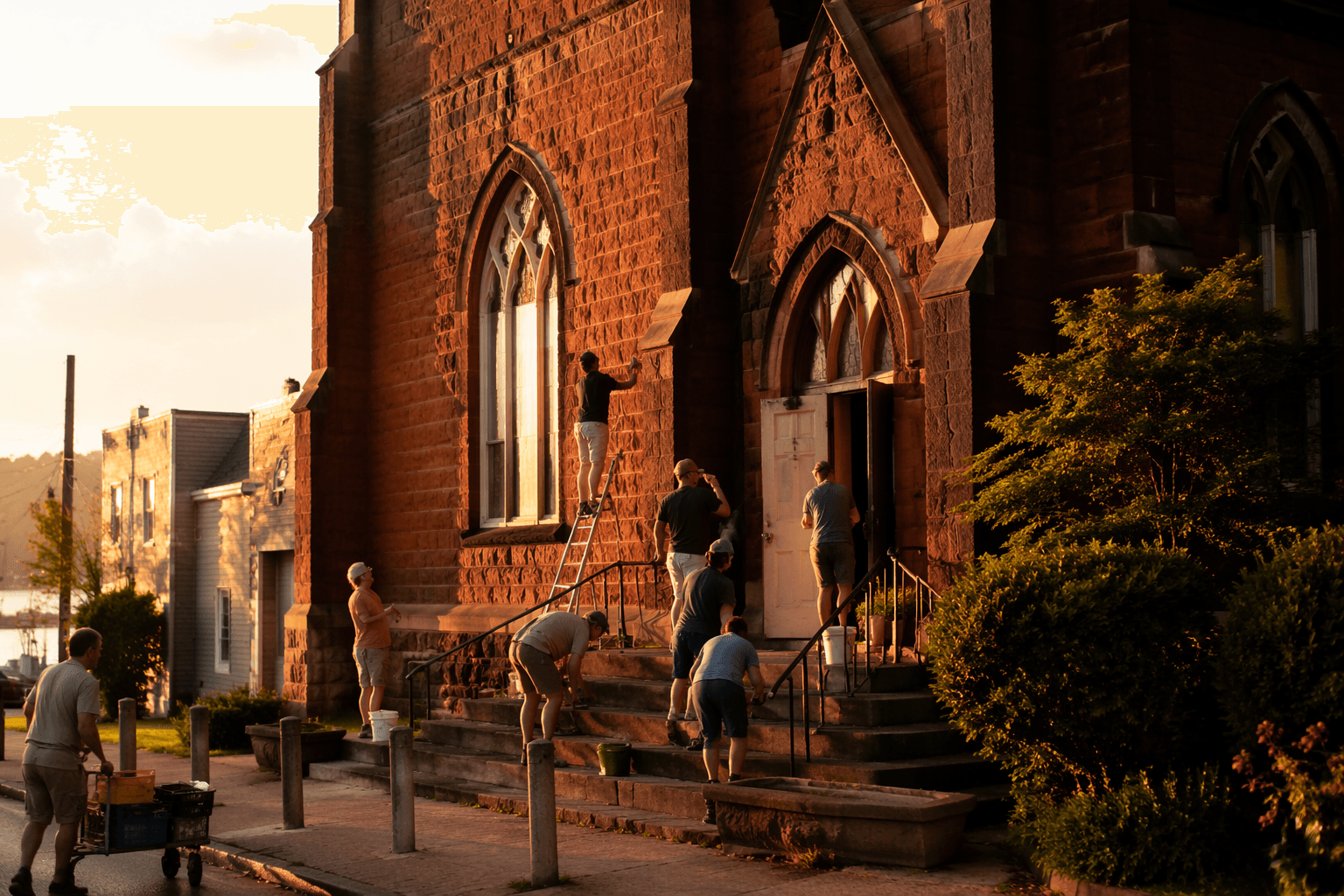
That range of activity requires more than ticket sales. It relies on people who show up to do the unglamorous work that keeps a place open:
- Volunteers who help with events, repairs, and daily operations.
- Donors who cover emergency costs when the building takes damage.
- Community partners who connect the center to schools and local families.
- Staff and board members who keep programming aligned with Bath’s needs.
The center’s volunteer page is blunt about the point. Volunteering is “vital,” it says, because it helps people meet neighbors, reconnect with friends, learn skills, and pass those skills to the next generation. That is not a side benefit. It is part of the operating system.
A real example of local rescue
That system was visible after vandalism in October 2022 damaged 10 windows in the Annex. Local reporting showed the center received more than $15,000 in donations over two months, including a $13,500 donation from the Bath Rotary Club. Volunteers also helped hang tarps and fit the windows with Styrofoam to keep rain out while repairs were arranged.
That response says as much about Bath as it does about the building. The money was important, but so was the labor, and so was the speed. In a smaller city, a cultural institution can be vulnerable to one bad night, one weather event, or one repair bill. What keeps it alive is not a single grant cycle or a single wealthy benefactor. It is the willingness of local people to step in fast.
Why the economics matter now
Executive and Artistic Director Matthew Glassman has said the organization is re-centering around community creativity, and in December 2025 he outlined 2026 plans that include partnerships with Bath elementary schools, a children’s variety show, a youth multidisciplinary arts program, and a large-scale summer spectacle. That is a programming strategy, but it is also a funding strategy: build relevance by embedding the center in the daily life of the city.
The board listed on the center’s website reinforces that local character. It includes John Mullaney, Justin Coffin, Greta Atchinson, Kimberly Becker, Brett Johnson, Steve Kent, Shane McKenna, Michael Cato, Miriam Jamison, Jane Clukey, Shannon Els, Ken Brill, and others. Along with Glassman and Art Director Jeremy Eaton, that leadership structure reflects a community institution run through local ties rather than distant control.
The larger lesson for Bath is simple: the Chocolate Church survives because many small builders keep rebuilding it. That means donated labor when the building needs protection, modest gifts when repairs hit, partners when children need arts access, and volunteers when the calendar fills up. In Sagadahoc County, that may be the difference between a cultural landmark and an empty shell.
This article was produced by Prism’s automated news system from verified source data, official records, and press releases, then run through automated quality and moderation checks before publishing. The system is built and supervised by the people who set the standards it runs under. Read our full AI policy.
Know something we missed? Have a correction or additional information?
Submit a Tip