Bath podcast guide spotlights Maine history, boatbuilding stories
Bath’s best history podcasts turn the riverfront and wooden boatbuilding stories into an easy self-guided tour of Sagadahoc County.
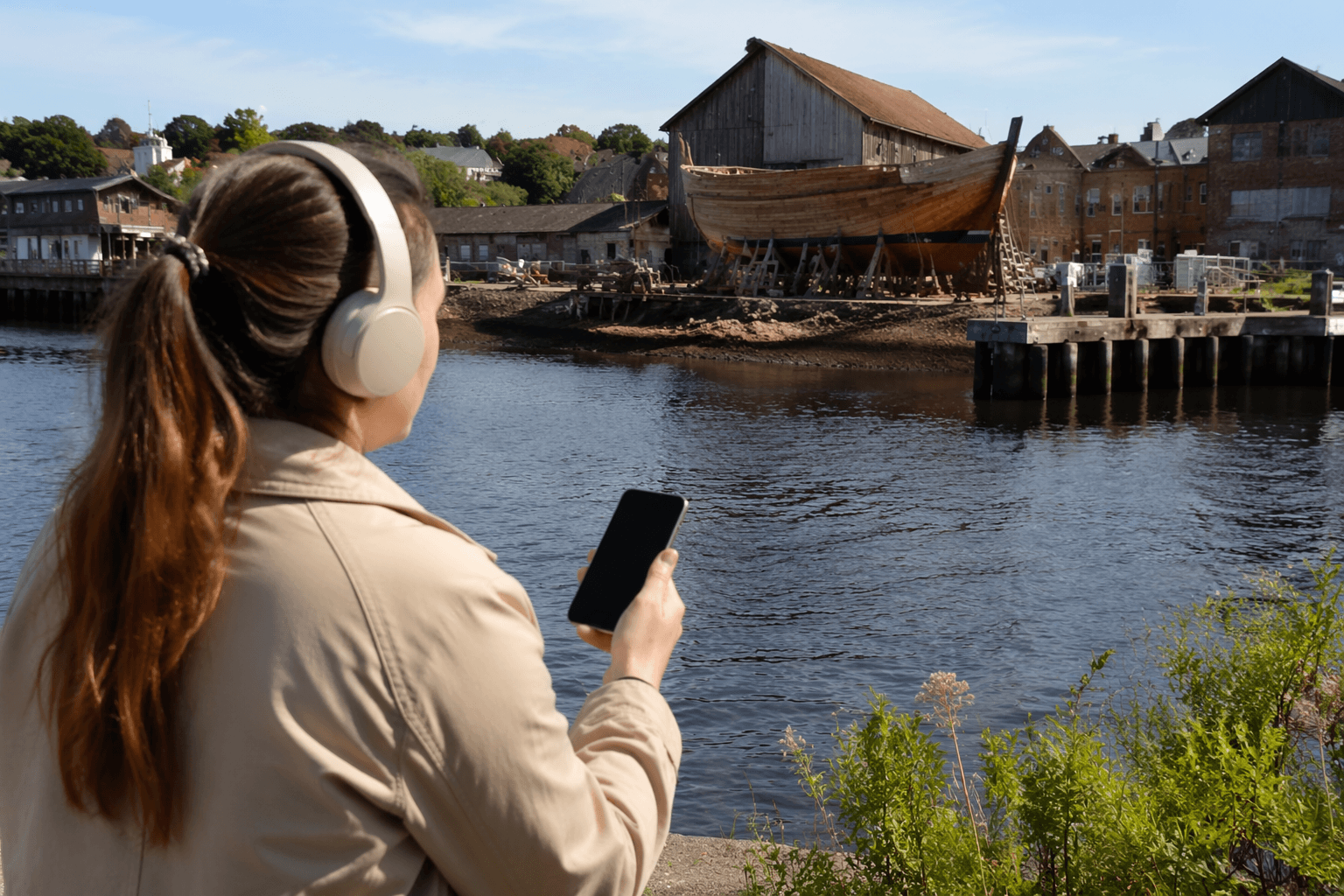
Bath’s past is already built into the streets, the riverfront and the shipyard. The newest reason to notice it is in your headphones: Maine-centered history podcasts that make downtown Bath and the wider Midcoast feel like an open-air archive.
Start with the series that makes Maine history feel close
One of the most useful entry points is *Mainely History*, a show with 79 episodes that uses informal conversations with historians, writers, curators and other experts to connect local stories to larger regional themes. That format matters because it keeps the subject approachable. Instead of sounding like a lecture, it feels like a conversation that can follow you while you drive, walk or run errands through Sagadahoc County.
Maine Historical Society places *Mainely History* inside its broader podcasts and online programming, which gives the show an institutional backbone and a deep bench of related material. The society also says the program is part of its semiquincentennial effort tied to the United States’ 250th anniversary, a reminder that Maine’s local stories are being folded into a much larger public-history moment. Kerstin Keeton, who co-hosts the podcast, joined the staff at Maine Historical Society in 2013 as a reference librarian and later worked as a research librarian, so the show comes from someone who knows how to translate archives into plain language.
That combination makes *Mainely History* especially useful for listeners who want history that feels current rather than distant. It is not just about who lived here. It is about how the state’s people, places and past still shape the way Maine towns understand themselves today.
The Bath connection runs straight through wooden boatbuilding
For Bath readers, the strongest single hook is *Salts and Water: Stories from the Maine Coast*, a six-episode series from 2017 that still lands because it is rooted so firmly in place. The standout for Sagadahoc County is “Bath to Bristol: 400 Years of Wooden Boatbuilding,” an episode that explores why Maine remains such a center for wooden boatbuilding and follows the story from a workshop to the Maine Boatbuilders Show to a teen program, with help from a museum curator.
That arc matters because it does more than celebrate a craft tradition. It shows how boatbuilding is passed along as labor, training and community knowledge, not just as nostalgia. In a county where the river, the working waterfront and downtown identity have long been tied together, that episode gives listeners a direct line from local streets to a broader maritime economy and culture.
The episode also makes Bath feel like a starting point rather than a stop on the way to somewhere else. Bristol enters the story, but Bath is where the maritime context is already visible in the built landscape, the museum campus and the continuing local conversation about shipbuilding history.
Pair the podcasts with Maine Maritime Museum
No Bath listening guide is complete without Maine Maritime Museum. Founded in 1962, the museum sits on a 20-acre waterfront campus on the Kennebec River in Bath, and it preserves the country’s only surviving shipyard where large wooden sailing vessels were once built. That alone gives podcast listeners a powerful reason to step off the sidewalk and onto the grounds with a fresh set of ears.
The museum’s core exhibit, *A Maritime History of Maine*, uses more than 240 objects and covers wooden and steel shipbuilding, fishing, coastal trades, war, coastal travel and recreation. In other words, it gives physical form to the same themes that the podcasts are unpacking in audio. If an episode mentions boatbuilding, labor or the long maritime economy of the coast, the museum turns those ideas into objects, spaces and shoreline views.
The museum’s broader offerings, including a lighthouse cruise and trolley tours, extend that experience beyond a single gallery visit. For anyone using the podcasts as a self-guided history outing, that means you can listen first, then see how the same themes show up on the river and in the city that calls itself the “City of Ships.”
The range goes far beyond Bath, but the Maine lens stays sharp
What makes these podcasts useful for Midcoast listeners is that they do not stop at one neighborhood or one industry. The same Maine-centered approach reaches episodes about dogsledding in Maine, Stephen King’s Maine, logging, sled dogs and colonial history in the Fryeburg area. The geography changes, but the method stays the same: each story is anchored in a place, a tradition or a specific set of Maine voices.
That breadth is part of the appeal for people in Bath, Brunswick and the rest of Sagadahoc County. A listener can start with the city’s wooden boatbuilding history and then move outward to winter travel, literary Maine or the woods-and-water economy that shaped other parts of the state. The result is a fuller picture of how Maine communities developed around work, weather, tourism, industry and storytelling.
It also makes the podcasts easy to use in everyday life. They fit into commutes over the bridge, chores at home, or a slow afternoon downtown when a museum stop is part of the plan. Instead of demanding a formal block of time, they turn ordinary moments into a chance to connect with the state’s past.
Bath’s archives show how deep the local record runs
The podcast guide lands especially well in Bath because the city already has a strong archival base. According to Maine State Archives, Bath Historical Society holdings include photographs, documents, oral histories, maps, ledgers, minutes and town reports tied to people, businesses, transportation and events. That is the kind of material that helps explain why the city keeps producing stories worth revisiting.
Together, the podcasts, the museum and the historical society point to the same conclusion: Bath’s history is not locked away in one institution or one era. It lives in the waterfront, in the records and in the working memory of a place that still understands itself through ships, labor and the river.
For Sagadahoc County readers, that is the real value of this podcast trail. It does not just preserve the past. It sends you back into downtown Bath with better context, and the city looks different when the shipyard, the museum and the archives all start talking to one another.
This article was produced by Prism’s automated news system from verified source data, official records, and press releases, then run through automated quality and moderation checks before publishing. The system is built and supervised by the people who set the standards it runs under. Read our full AI policy.
Know something we missed? Have a correction or additional information?
Submit a Tip