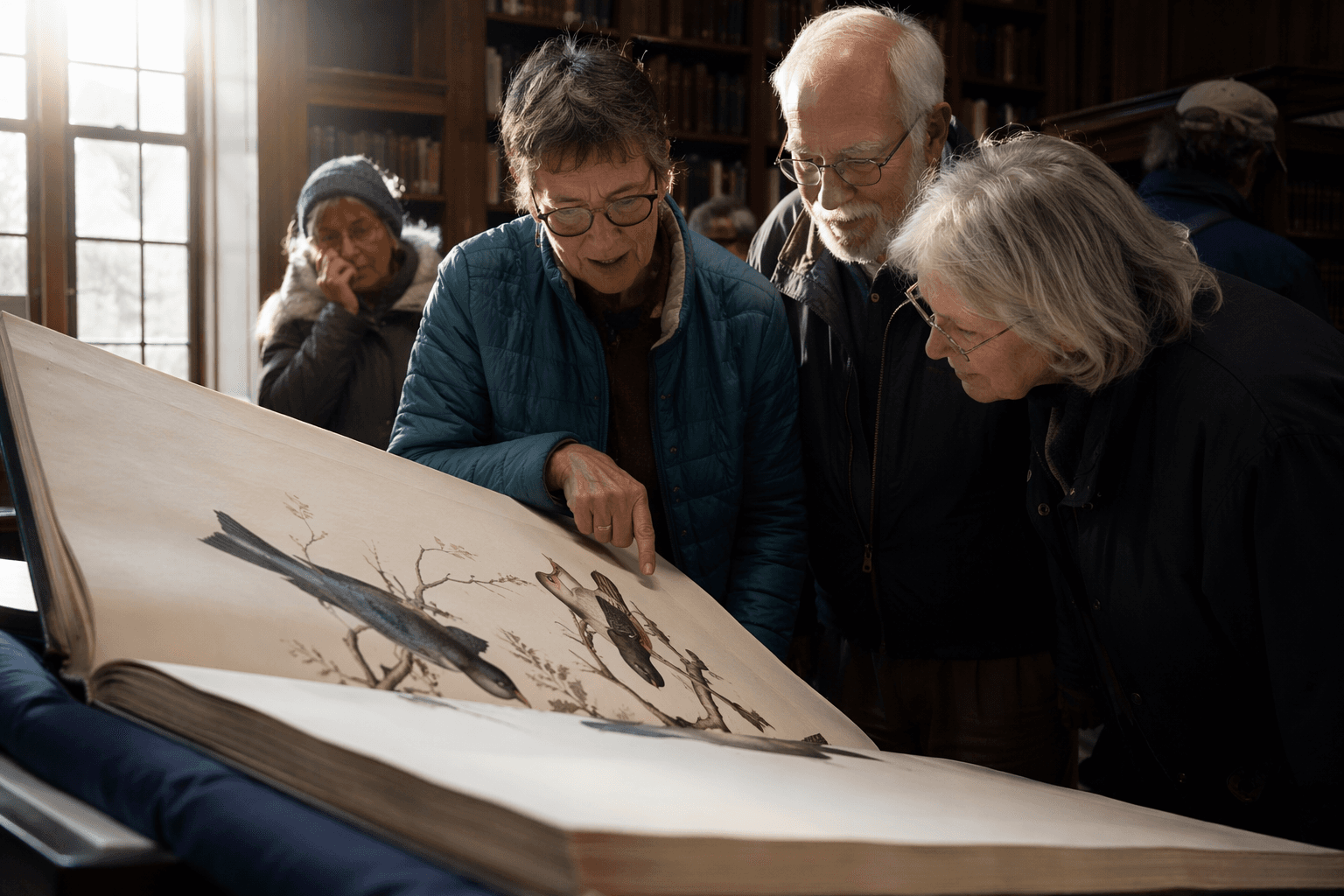
Bath librarian turns summer historian with historic walking tours
Meg Barker’s Bath walking tours show how Maine teachers patch together summer income, even as lawmakers raise the state salary floor and schools fight to keep staff.
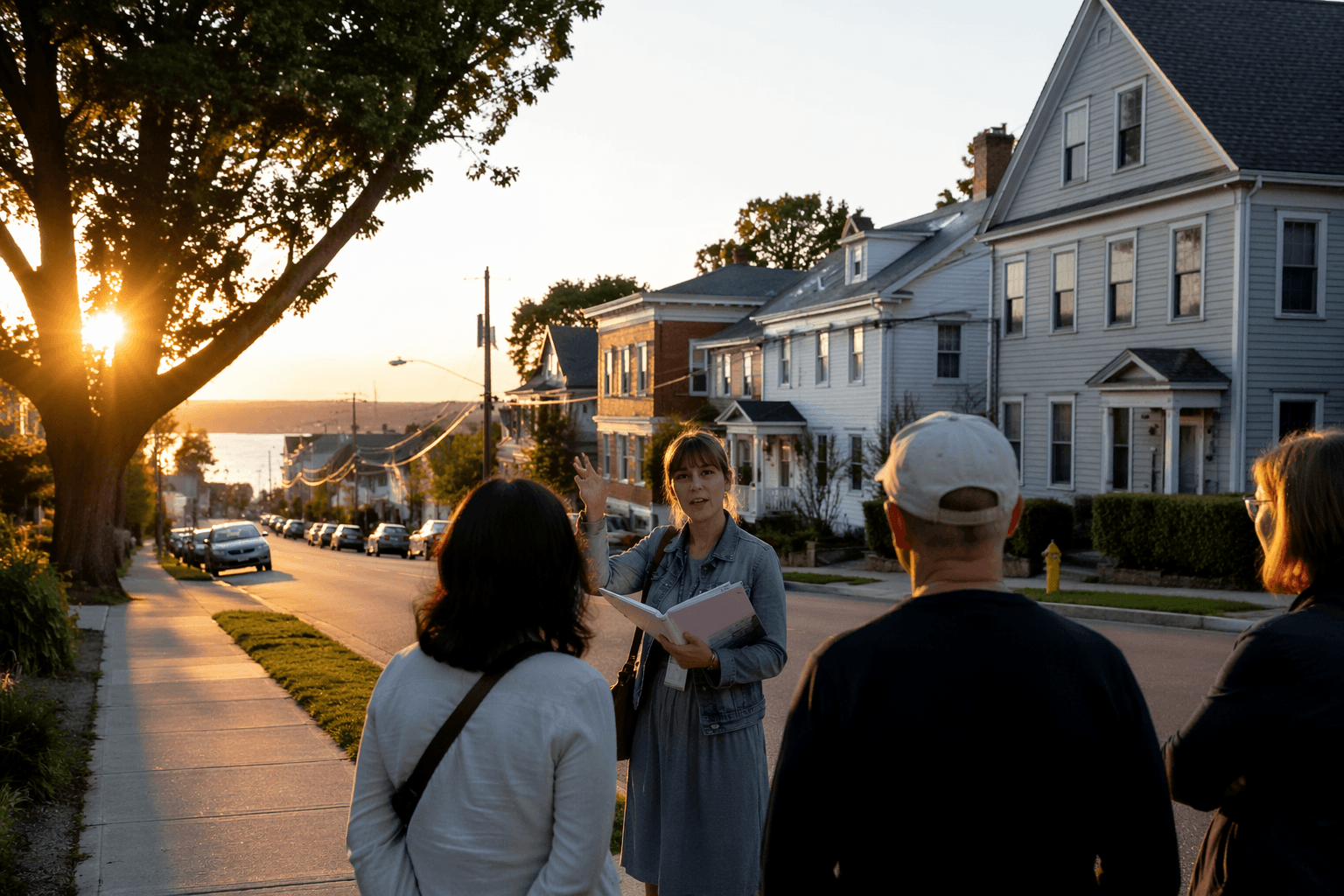
Meg Barker spends her summers telling Bath’s story on foot, but the bigger story is why a school librarian needs the extra work at all. In a state where teacher pay still trails the cost of living, her second job at Embark Maine Tours sits squarely in the middle of the economics of staying in education, and in the local tourism economy that helps make Sagadahoc County feel alive after the school year ends.
A summer job that doubles as a local history lesson
Barker, a librarian at Fisher Mitchell School, founded Embark Maine Tours in 2021 during the COVID-19 pandemic. The business is now in its fifth season and offers guided walking tours of historic Bath, with routes built around more than 400 years of city history. The tours center the downtown streetscape, shipbuilders and sea captains, women’s history and Oak Grove Cemetery, all pieces of a city shaped by the Kennebec River and by the maritime industries that made Bath one of Maine’s defining shipbuilding communities.
That makes Barker’s summer work more than a side hustle. It turns local history into a service visitors will pay for, while giving her a way to keep using the skills she builds during the school year. In Bath, where museums, preservation groups and Main Street businesses all depend on seasonal foot traffic, a walking tour is part education, part economic exchange, and part public-facing civic memory.
What Barker’s work says about teaching pay in Maine
The pressure behind those summer jobs starts with teacher salaries. The Maine Education Association puts the average public school teacher salary in Maine at $68,820, with the average starting salary at $45,830. Those numbers matter because they sit alongside the real expenses of living in Maine, where housing, transportation, childcare and groceries can quickly swallow a paycheck, especially for newer educators.
Lawmakers have tried to move the floor upward. Under legislation approved this spring, the state minimum teacher salary is rising from $40,000 to $50,000 over three years. Governor Janet Mills ceremonially signed the budget provision, making the change part of the state’s response to recruitment and retention pressure in public schools. The Department of Education estimated the law would cost $5,733,838 in fiscal year 2026-27, $8,519,189 in fiscal year 2027-28 and $11,014,116 in fiscal year 2028-29.
An earlier version of the idea, LD 34, would have set out a progressive salary schedule that began at $45,000 in 2026-27 and reached $52,500 by 2029-30. The final version landed differently, but the underlying problem remains the same: even with a higher minimum, many teachers will still need extra income to make summer work disappear. For districts in Sagadahoc County and beyond, that means the question is not only how to hire teachers, but how to keep them in place year after year.
The tours connect classroom work to Bath’s preservation network
Barker’s tour business is tied closely to the institutions that keep Bath’s history visible. She is a trustee of the Bath Historical Society and Sagadahoc Preservation, Inc., and volunteers with Main Street Bath and Maine’s First Ship. Those connections matter because they show how historical interpretation in a small city often depends on the same people moving between schools, nonprofits, preservation work and tourism.
The Bath Historical Society has also documented a Fisher Mitchell School fifth grade History Club tour led by trustee Joe Minott at Oak Grove Cemetery. That detail underscores how local history in Bath reaches students where they already are, then spills outward into the public spaces tourists visit in summer. It is a reminder that the same cemetery, streets and waterfront sites that attract visitors also serve as outdoor classrooms for children growing up in Sagadahoc County.
For Barker, that overlap is the point. Her walking tours do not treat Bath as a static museum piece; they present it as a lived-in city with layers of labor, migration, women’s leadership, shipbuilding and civic preservation. That approach fits a place where the past is still visible in the streetscape, the waterfront and the institutions that keep recording it.
The second-job pattern is wider than one librarian
Barker is one example in a larger pattern. Eight educators described summer work that ranged from history tours and waiting tables to working Portland Sea Dogs games and lobstering. Those jobs are different, but they point to the same reality: teachers often move into seasonal work when school is out, either to cover basic expenses or to seek the variety that comes from doing something outside the classroom.
That mix of necessity and choice says a lot about the state of the profession in Maine. Some summer jobs are tied to local culture, like Barker’s tours in Bath. Others are tied to the service economy or the working waterfront, which means educators are often making do across the very sectors that shape community life in Sagadahoc County. The result is a labor pattern that keeps money circulating locally, while also exposing how much of the burden for sustaining a teaching career still falls on the individual worker.
What it means for Bath, Sagadahoc County and the schools that serve them
Bath’s walking-tour season may look like a small, pleasant corner of summer, but it points to something larger about the region’s future. If teachers need second jobs to stay afloat, then school districts, parents and town leaders have to reckon with retention as an economic issue, not just an education problem. A higher salary floor helps, but it does not erase the gap between what many educators earn and what it costs to live and work in Maine.
In Bath, that gap is visible on the sidewalk, where a Fisher Mitchell librarian can also be the person introducing visitors to shipbuilders, sea captains and Oak Grove Cemetery. It is a practical example of how Sagadahoc County’s history, tourism and public schools are tied together, and why keeping educators in the profession will depend on more than applause for their summer hustle.
This article was produced by Prism’s automated news system from verified source data, official records, and press releases, then run through automated quality and moderation checks before publishing. The system is built and supervised by the people who set the standards it runs under. Read our full AI policy.
Did this article answer your question?