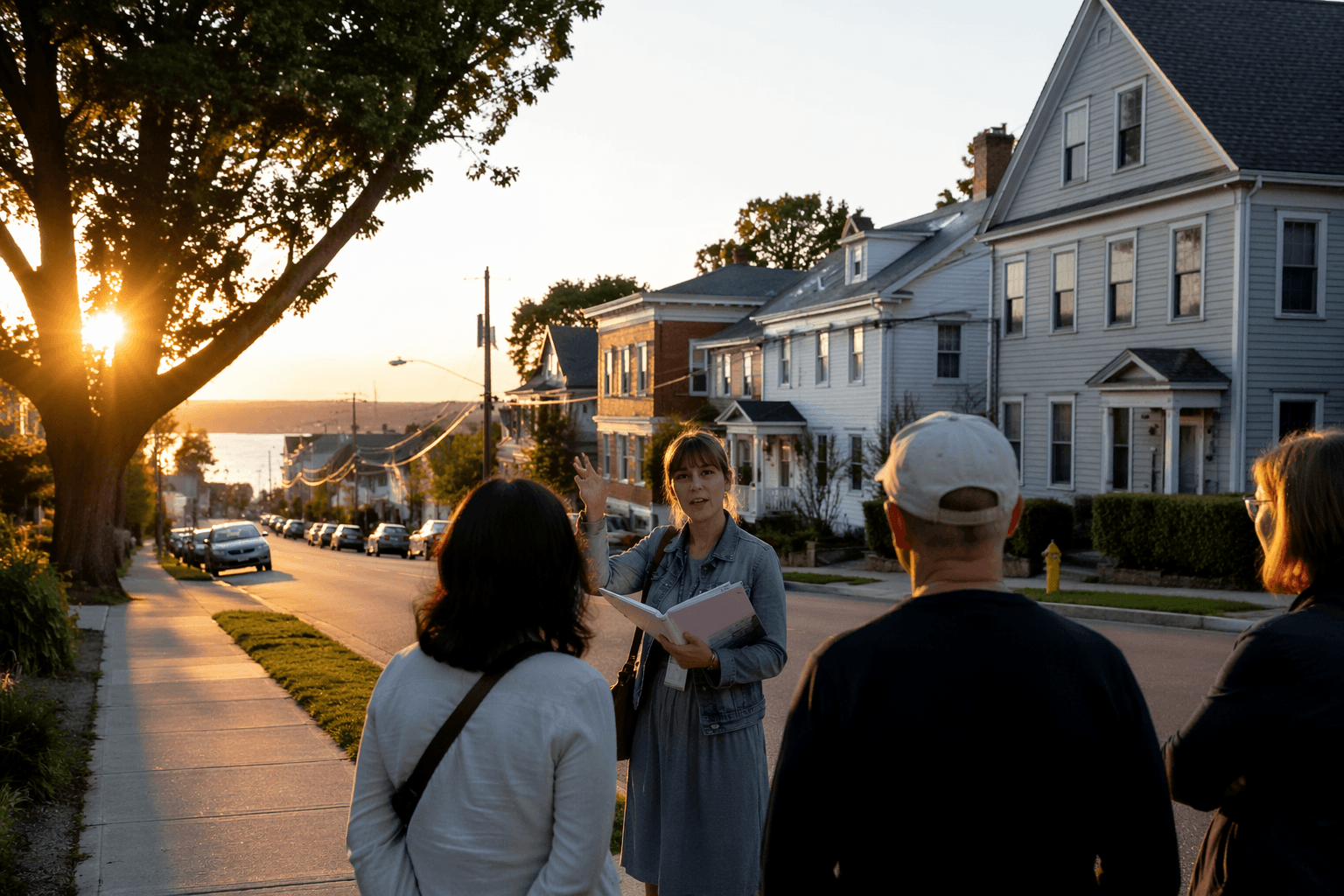
Bowdoin College's monthly Audubon page turn draws bird lovers to Brunswick
Once a month in Brunswick, Bowdoin opens its rare Audubon volume to the public, turning one page at a time in a ritual that blends preservation, scholarship and birdwatching appeal.
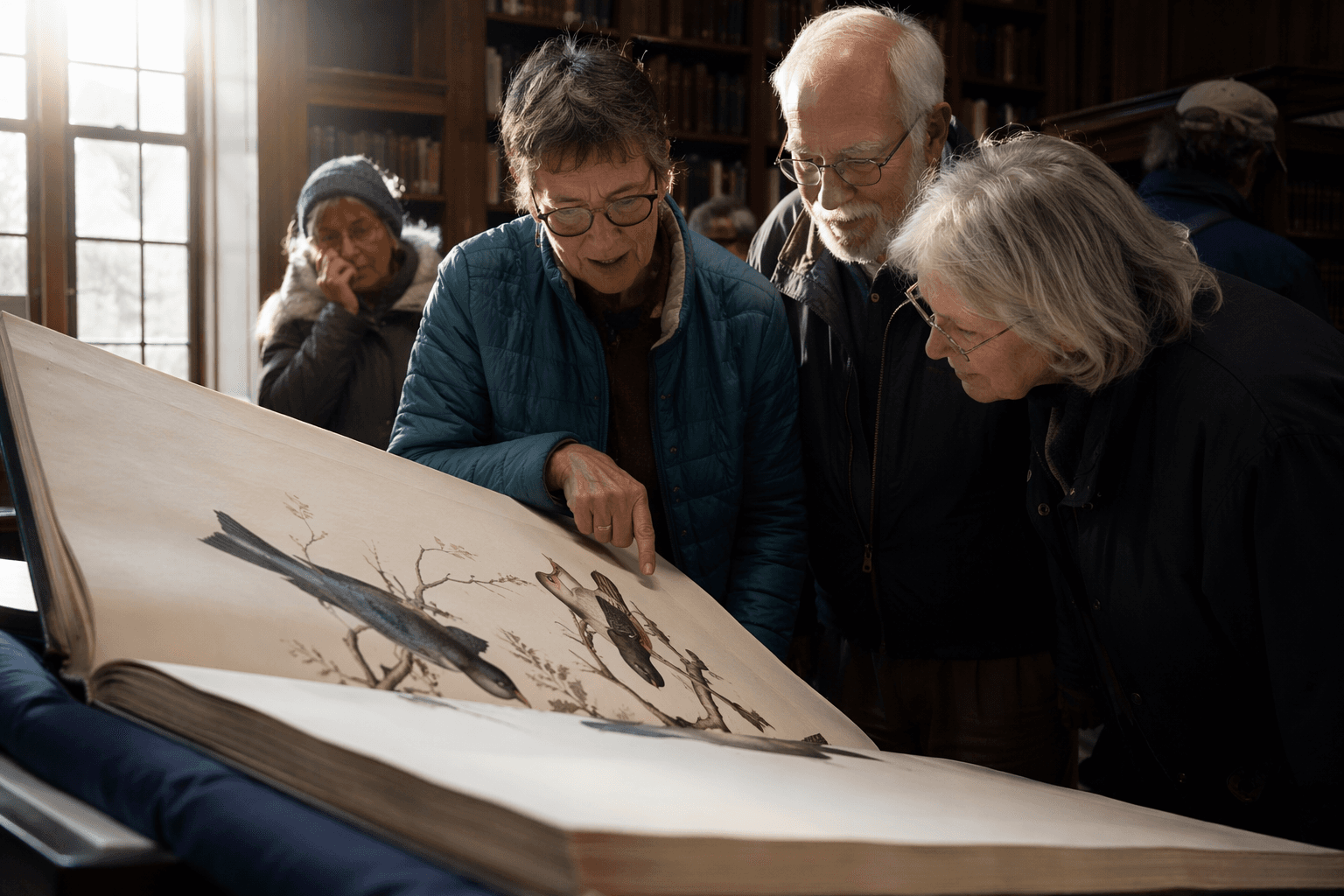
Bowdoin College’s monthly Audubon page turn is one of those rare local rituals that people plan around. On the first Friday of the month during the academic year, visitors can gather in the reading room of the George J. Mitchell Department of Special Collections & Archives at Hawthorne-Longfellow Library and watch staff turn a single page of John James Audubon’s The Birds of America.
What makes the draw stronger than the gesture itself is the sense that this is both access and restraint. The page turn is open to students, staff, visitors and the broader public, but it is also carefully limited, with librarians rotating only one page at a time to protect the prints from sunlight. That balance has helped turn a conservation practice into a small but enduring Brunswick tradition.
When to go and how the ritual works
The monthly page turn began as a public invitation in January 2016, but the book itself has been at the center of Bowdoin life for far longer. The college says the volume has been on permanent display since 1956, first in Hubbard Hall and then, after the library move, in Hawthorne-Longfellow Library in 1965. Today, the rare-book display sits in the George J. Mitchell Department of Special Collections & Archives, where the public can observe the turning during the reading room’s open hours.
For anyone hoping to experience it, the key detail is simple: arrive on a first Friday during the academic year. The event is not a large performance or lecture hall spectacle. It is a quiet, close-up encounter with a book so large and fragile that the act of turning a page has become the event itself.
Why the crowd keeps coming back
Part of the appeal is the tension between rarity and routine. Audubon’s images are startlingly large, printed at a scale closer to a poster than a conventional page, and the work contains more than 400 bird images. The book’s size and the delicacy of its prints make every viewing feel consequential, even though the action is small and deliberate.
That is also what gives the ritual its unusual emotional pull. The page turn is almost anticlimactic by design, yet the room fills with anticipation as visitors wait for the next bird image to appear. What began as a practical way to safeguard the book has, over time, become a shared public moment that brings together bird enthusiasts, campus regulars and people from Brunswick who might never otherwise step into a rare-book room.
Bowdoin’s own framing helps explain why the event resonates beyond a simple display. The college describes the monthly page turn as a way to open discussion of American ornithology, print history, climate change and related topics. In other words, the event is not just about looking at a beautiful artifact. It is a doorway into how people have studied birds, made books and understood the natural world over time.

The book behind the ritual
The copy Bowdoin displays is not just rare. It is singular in the deepest sense of the word. Bowdoin describes it as a double-elephant folio printed in London between 1827 and 1838, and the Bowdoin Orient has noted that the college’s copy is one of eight unique editions in existence. Audubon edited those copies himself after the initial publication, which adds another layer to the object’s status as both artwork and historical record.
The volume also has a documented chain of custody that ties it to Bowdoin’s own history. In 1955, Roscoe H. Hupper, Class of 1907, gave the college a unique copy of The Birds of America in memory of his mother, Mary Alden Hupper, who lived from 1854 to 1944. That gift set the stage for the permanent display that followed a year later, making the book part of the college’s public life well before the monthly page turn became a tradition.
That history matters because it explains why the ritual carries more weight than a novelty event. This is not a borrowed exhibit or a temporary attraction. It is a preserved college possession, anchored in a gift made nearly 70 years ago and maintained through successive library homes, from Hubbard Hall to Hawthorne-Longfellow Library.
What it means for Brunswick and the county
Bowdoin’s Audubon page turn stands out in a county where so much of the daily news is about budgets, roads, schools or elections. It is a reminder that local institutions can still create experiences that feel both intimate and public at the same time. The event draws people back not because it is flashy, but because it offers a dependable, monthly chance to see something genuinely unusual in a setting that is open to the community.
For Brunswick, the tradition also reinforces Bowdoin’s role as a cultural anchor, not just an academic one. The college is not simply preserving a rare object behind closed doors. It is using that object to create a recurring moment of public access, where the community can gather around scholarship, preservation and wonder without losing sight of the artifact’s fragility.
That is the larger lesson of the page turn. In an era when attention is scattered and civic life often feels fragmented, Bowdoin has built a ritual that asks people to slow down, look closely and share the experience of discovery. The page changes, the birds change and the gathering continues, month after month, because the combination of rarity, care and public access still has the power to hold a room.
This article was produced by Prism’s automated news system from verified source data, official records, and press releases, then run through automated quality and moderation checks before publishing. The system is built and supervised by the people who set the standards it runs under. Read our full AI policy.
Did this article answer your question?