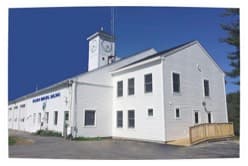
Bath moves ahead with Harward Street sewer upgrade to curb pollution
Bath is replacing a key Harward Street sewer main and pump station to cut overflow discharges into the Kennebec River. Voters backed the work with a $24.653 million bond.

Bath is moving ahead with a Harward Street sewer upgrade meant to stop repeated pollution events that send untreated wastewater toward the Kennebec River during heavy rain. The project will replace and upgrade a major sewer main and pump station in the city’s largest drainage area, where stormwater can overwhelm the Water Pollution Control Facility’s ability to pump and treat flow.
For residents on and around Harward Street, the payoff is cleaner water and fewer sewer failures, but the work is the kind of disruptive underground utility project that usually comes with excavation, heavy equipment and a street built around pipes rather than pavement. City plans call for a new gravity sewer interceptor, pump-station process equipment upgrades, floodproofing and other ancillary systems, all aimed at fixing a part of Bath’s system that has struggled for years under intense rain.
The project is being paid for through part of a $24,653,000 general obligation bond that Bath voters approved in the November 7, 2023 municipal election. That bond was set aside for upgrades to the Water Pollution Control Facility, pump stations, the wastewater collection system and the removal of combined sewer overflows. The broader sewer effort has been described as a roughly $24.6 million upgrade program, with the Harward-area package carrying an engineer’s estimate of about $8 million.

Bath’s sewer division operates 13 pumping stations citywide and responds to more than 250 automated alarms tied to process or equipment problems, underscoring how much strain the system already carries. Local reporting has described parts of Bath’s sewer network as more than 50 years old, with some sections over 100 years old, making Harward Street part of a larger push to replace legacy infrastructure before it fails outright.
The stakes are not abstract. Maine Department of Environmental Protection says combined sewer overflows are discharges of diluted untreated wastewater and violate state and federal water-pollution laws. Bath materials have cited about 2.9 million gallons of overflow entering the Kennebec River in 2020 and about 3 million gallons in 2024. Statewide, Maine reported 745 million gallons of combined sewer overflow in 2023, a reminder that Bath’s local fix is part of a much bigger water-quality problem.

Bath’s 2023 Comprehensive Plan puts reinvestment in legacy assets and climate resilience at the center of city policy. On Harward Street, that means spending taxpayer money now to reduce pollution, protect the river and keep one of the city’s most important utility corridors from becoming a larger and more expensive failure later.
This article was produced by Prism’s automated news system from verified source data, official records, and press releases, then run through automated quality and moderation checks before publishing. The system is built and supervised by the people who set the standards it runs under. Read our full AI policy.
Did this article answer your question?