Brunswick woman, 95, still plays piano and protests weekly
At 95, Sally Hoople shows Brunswick what active aging can look like: piano every day, protests every Saturday, and a life still rooted in purpose.
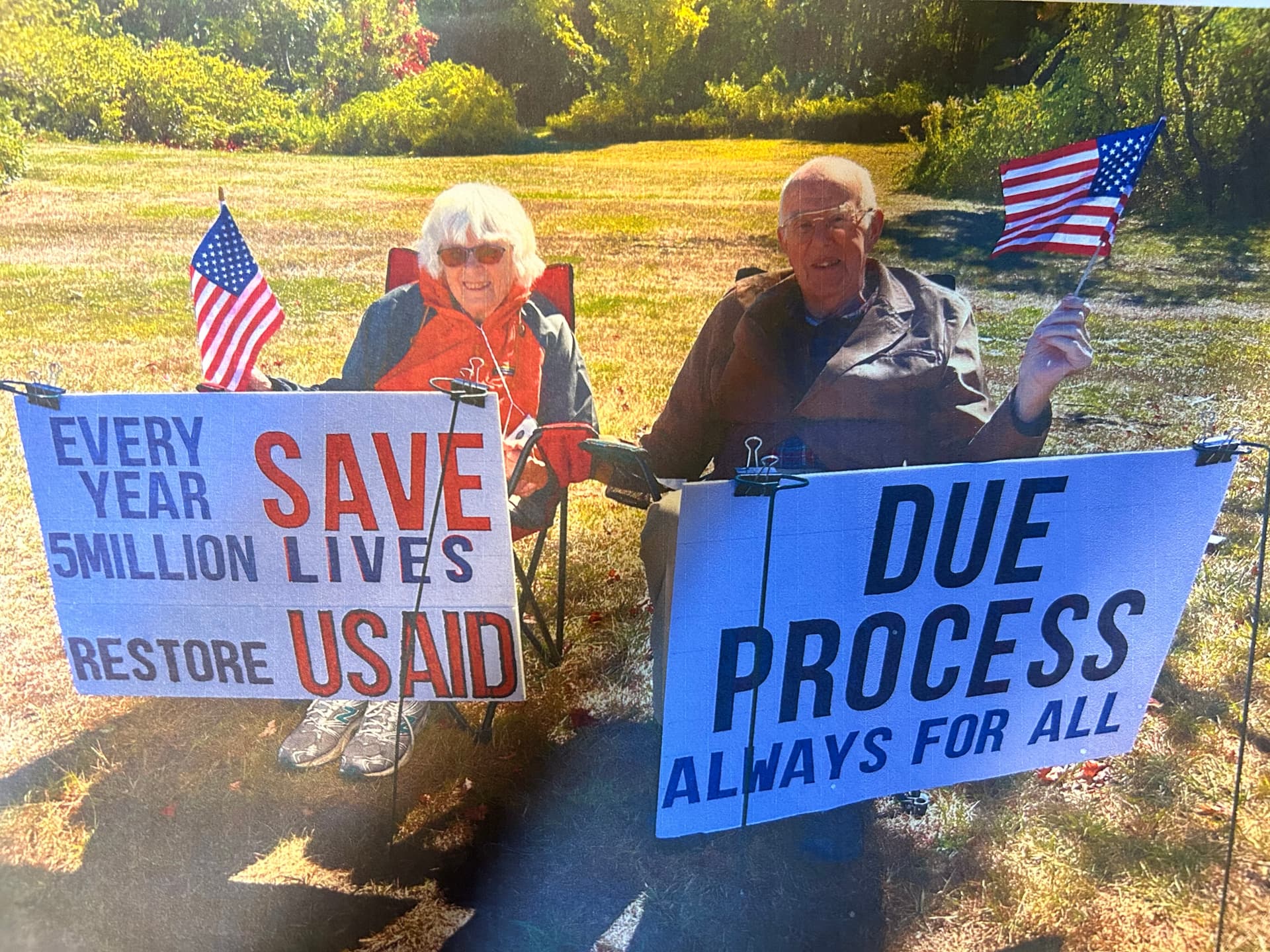
Sally Hoople’s weekly walk into public life starts at Thornton Oaks, where retirement is built around motion rather than retreat. The Brunswick community sits on 29 wooded acres and includes apartments, cottages, walking trails, and a community garden, a setting that fits a resident who still keeps a full calendar at 95. Her routine reaches beyond the grounds, too: every Saturday she heads to a political protest in Freeport, turning retirement living into a visible part of Midcoast Maine’s civic life.
Thornton Oaks gives shape to that independence. The mix of apartments and cottages allows older residents to stay close to one another while still keeping their own pace, and the trails and garden make daily movement part of ordinary life. In Hoople’s case, that environment supports a style of aging that is active, social, and public. Brunswick has many institutions that anchor community life, but Thornton Oaks adds another kind of civic space, one built around older adults who still want routines, friendships, and reasons to leave the apartment.
Her story is also a record of steady work and long commitment. Hoople, born Oct. 23, 1930, is a humanities and communications educator who earned four degrees after high school. She taught English for nearly three decades in New York, later taught at Maine Maritime Academy in Castine, and also spent teaching time in China. That arc matters because it shows how her present-day energy rests on decades of discipline, travel, and classroom work rather than a sudden burst of late-life activity.

The family life behind that career is just as substantial. Hoople and her husband, Donald, were married for 62 years and raised four children. That kind of long shared life helps explain why the profile of a 95-year-old protester and pianist lands so strongly in Brunswick: it is not a story of novelty, but of a life that kept accumulating roles, obligations, and habits across generations. Her biography also places her in the professional world of the Modern Language Association and Phi Beta Kappa, further underscoring the academic identity that has traveled with her through retirement.
Music is the daily practice that keeps that identity visible. Hoople took piano lessons as a child, then returned to piano in her 50s, and now keeps a grand piano in her apartment. She plays classical music for about an hour every day and takes Sunday off, a detail that says as much about discipline as talent. In a county where retirement is often discussed in terms of services and support, her piano routine shows another side of aging: a self-directed schedule, sustained practice, and a personal standard she still chooses to meet.

Her Saturday protest habit connects that private discipline to public action. Hoople does not stay on the sidelines; she shows up in Freeport week after week, adding her presence to a broader wave of civic demonstrations in Maine. Hundreds turned out in Portland, Freeport and other communities for the first No Kings protest on June 14, 2025, and later No Kings protests on Oct. 18, 2025 were part of more than 2,600 rallies nationwide. Those gatherings were organized in response to federal actions and policies that organizers said threatened democracy, and Hoople’s regular attendance places her within that larger democratic moment.
For Brunswick and the surrounding Midcoast, the local meaning is plain. Hoople’s life illustrates how retirement communities can be places of continuing participation, not disengagement. Thornton Oaks provides the physical setting, her musical practice shows the daily structure, and her Saturdays in Freeport show that civic engagement can remain a habit well into the nineties. In a region where community life is often measured through town meetings, school budgets, and public hearings, her example shows another measure: people who are still learning, still practicing, and still willing to stand in public with their neighbors.
This article was produced by Prism’s automated news system from verified source data, official records, and press releases, then run through automated quality and moderation checks before publishing. The system is built and supervised by the people who set the standards it runs under. Read our full AI policy.
Did this article answer your question?