Maine Historical Society Exhibit Explores State's Revolutionary War Coastal Stories
Maine's original Dunlap Broadside of the Declaration of Independence arrives at Bath's Maritime Museum on July 17, tied to a Portland exhibit revealing the 1779 Penobscot Expedition as one of the Revolution's largest naval operations.
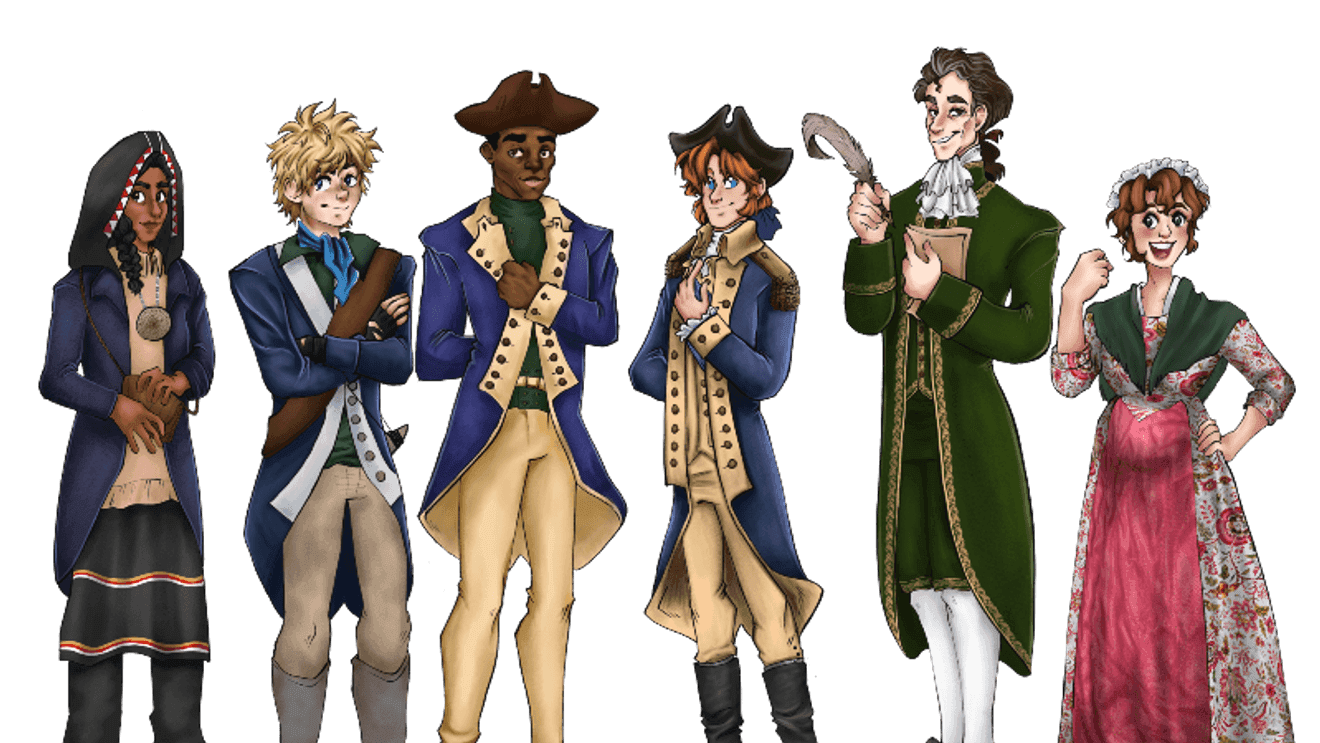
General Peleg Wadsworth, a leader of the 1779 Penobscot Expedition and grandfather of poet Henry Wadsworth Longfellow, is one of six named Mainers at the center of "Pathways to Freedom: Maine Stories of the American Revolution," on display at the Maine Historical Society in Portland through Dec. 31.
The Penobscot Expedition is among the episodes the exhibit uses to make an argument that tends to surprise visitors: Maine was not a bystander to the Revolution. The exhibit explores the conflict through the lens of Maine's geography, natural resources, and its contested border with British-controlled Canada. Bath's long shipbuilding identity, centered at the foot of the Kennebec, didn't materialize in the 19th century; the region's maritime capacity mattered directly to the colonial cause.
Curated by MHS Collections Curator Tiffany Link and Deputy Director Jamie Rice, the exhibition traces the Revolutionary era through the personal stories of six real individuals, called "Pathfinders," who navigated the war in different ways. Alongside Wadsworth, the profiles cover Mali Agat, a Wabanaki doctress and artist; William Bayley of Portland, who served in the Continental Army; Prince Dunsick, a formerly enslaved person who enlisted in the Massachusetts Regiment; Francis Waldo, a Loyalist and member of the affluent Waldo family; and Hannah Watts Weston, a pregnant 17-year-old who carried 30 to 40 pounds of powder, lead and pewter some 16 miles to resupply Colonial forces.
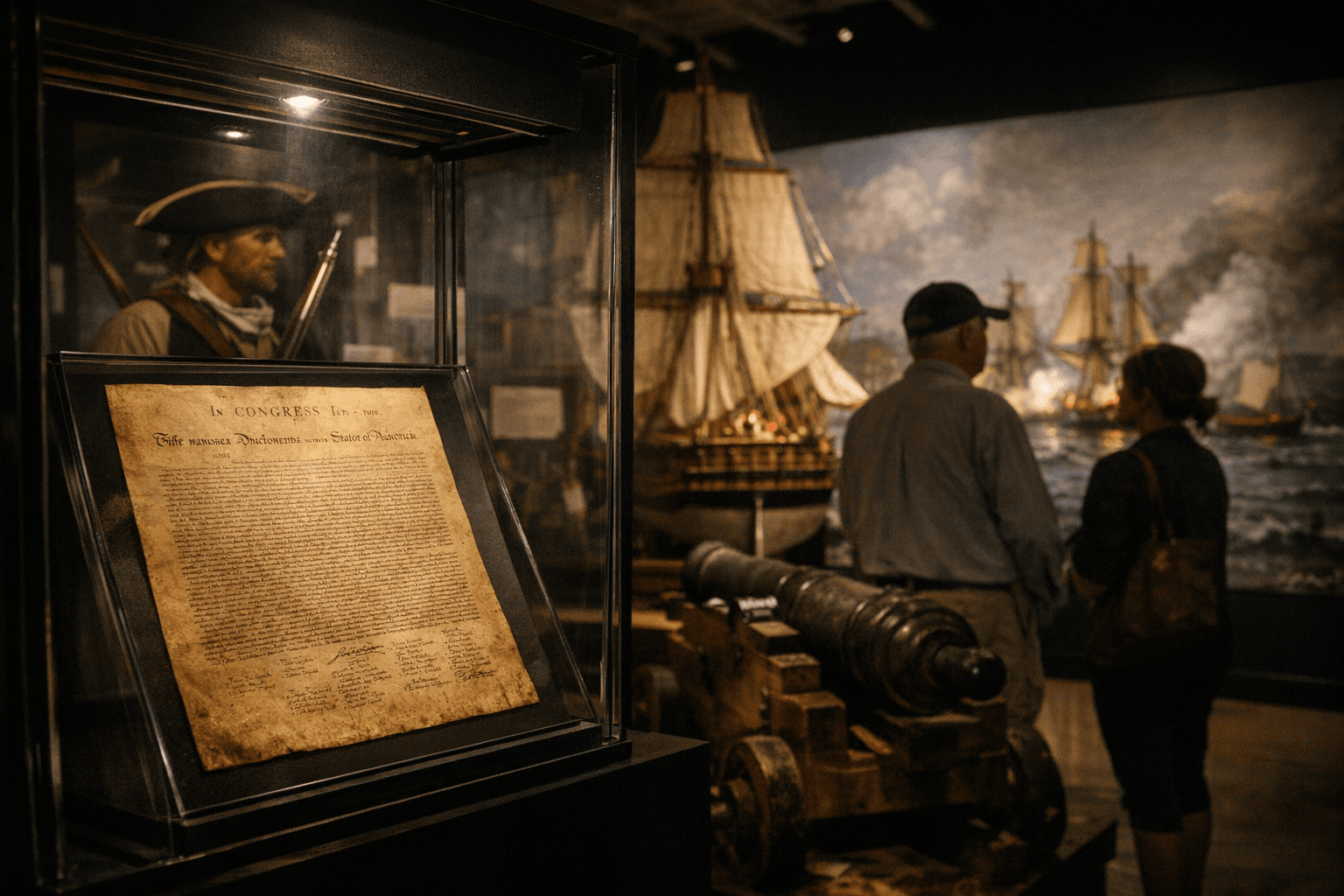
Physical artifacts in the show include a Revolutionary-era maritime flag bearing 13 stars and a Dunlap Broadside, a 250-year-old printed copy of the Declaration of Independence. The Broadside is on public view at the Maine Historical Society through July 4.
Beginning in mid-July, the Broadside goes on exhibit, for free, for two or three days at a time in locations in every Maine county. The tour starts July 17 at the Maine Maritime Museum in Bath and ends Oct. 31 at the Bowdoin College Museum of Art in Brunswick. Sagadahoc County residents who miss the Portland window have two chances to see the document without leaving the region.
The exhibit is located at 489 Congress Street, Portland. The adjacent Wadsworth-Longfellow House, built by General Wadsworth himself and now a historic house museum, deepens the visit considerably: the man whose story anchors the Sagadahoc connection also left a building still standing on the same block. The Maine Historical Society also offers companion K-12 educational programming and public lectures through the year.
Here is the formatted final output:
SUMMARY: Maine's original Dunlap Broadside of the Declaration of Independence arrives at Bath's Maritime Museum on July 17, tied to a Portland exhibit revealing the 1779 Penobscot Expedition as one of the Revolution's largest naval operations.
CONTENT:
General Peleg Wadsworth, a leader of the 1779 Penobscot Expedition and grandfather of poet Henry Wadsworth Longfellow, is one of six named Mainers at the center of "Pathways to Freedom: Maine Stories of the American Revolution," on display at the Maine Historical Society in Portland through Dec. 31.
The exhibit makes an argument that tends to surprise visitors: Maine was not a bystander to the Revolution. It explores the conflict through the lens of the state's geography, natural resources, and contested border with British-controlled Canada, a framing that lands differently in Sagadahoc County, where the Kennebec River's role in supplying timber and ships to the colonial cause predates Bath's 19th-century iron-shipbuilding reputation by more than a century.
Curated by MHS Collections Curator Tiffany Link and Deputy Director Jamie Rice, the exhibition traces the Revolutionary era through the personal stories of six real individuals called "Pathfinders," each navigating the war from a different position. Alongside Wadsworth, the profiles cover Mali Agat, a Wabanaki doctress and artist; William Bayley of Portland, who served in the Continental Army; Prince Dunsick, a formerly enslaved person who enlisted in the Massachusetts Regiment; Francis Waldo, a Loyalist from the affluent Waldo family; and Hannah Watts Weston, a pregnant 17-year-old who reportedly carried 30 to 40 pounds of powder, lead and pewter across some 16 miles to resupply Colonial forces.
Physical artifacts include a Revolutionary-era maritime flag bearing 13 stars and a Dunlap Broadside, a 250-year-old printed copy of the Declaration of Independence, on view at the museum through July 4.
After July 4, the Broadside begins a free statewide tour across all 16 Maine counties, two to three days per stop. The first stop is July 17 at the Maine Maritime Museum in Bath. The tour closes Oct. 31 at the Bowdoin College Museum of Art in Brunswick. Sagadahoc County residents who miss the Portland window have two chances to see the document without leaving the region.
The exhibit is at 489 Congress Street in Portland. The adjacent Wadsworth-Longfellow House, built by the general himself in 1785 and now a historic house museum on the same campus, extends the visit and puts a physical address on the war's local consequences. Companion public lectures and K-12 educational programming run through the end of the year; current schedules are listed on the Maine Historical Society's website.
This article was produced by Prism’s automated news system from verified source data, official records, and press releases, then run through automated quality and moderation checks before publishing. The system is built and supervised by the people who set the standards it runs under. Read our full AI policy.
Did this article answer your question?