Sagadahoc County's Best Historic Sites, From Bath to Popham Beach
Five Sagadahoc County historic sites — from a free Civil War fort to a 20-acre maritime campus charging $22 admission — can anchor a single half-day loop from Brunswick to Popham Beach.
Half a day and roughly 30 miles of driving connects five of the most historically significant places in Sagadahoc County, from the granite walls of a Civil War fort at the mouth of the Kennebec River to one of Maine's most celebrated literary addresses. Here is how to do it in order, with what it costs, when to go, and what most visitors walk right past.
Suggested half-day route: Start in the Brunswick area (roughly 10 minutes west of Bath on Route 1), drive into Bath for Front Street and the Maine Maritime Museum, then take Route 209 south about 14 miles to Phippsburg for Fort Popham and Popham Beach. Budget four to five hours, not counting meals.
1. Maine Maritime Museum, Bath
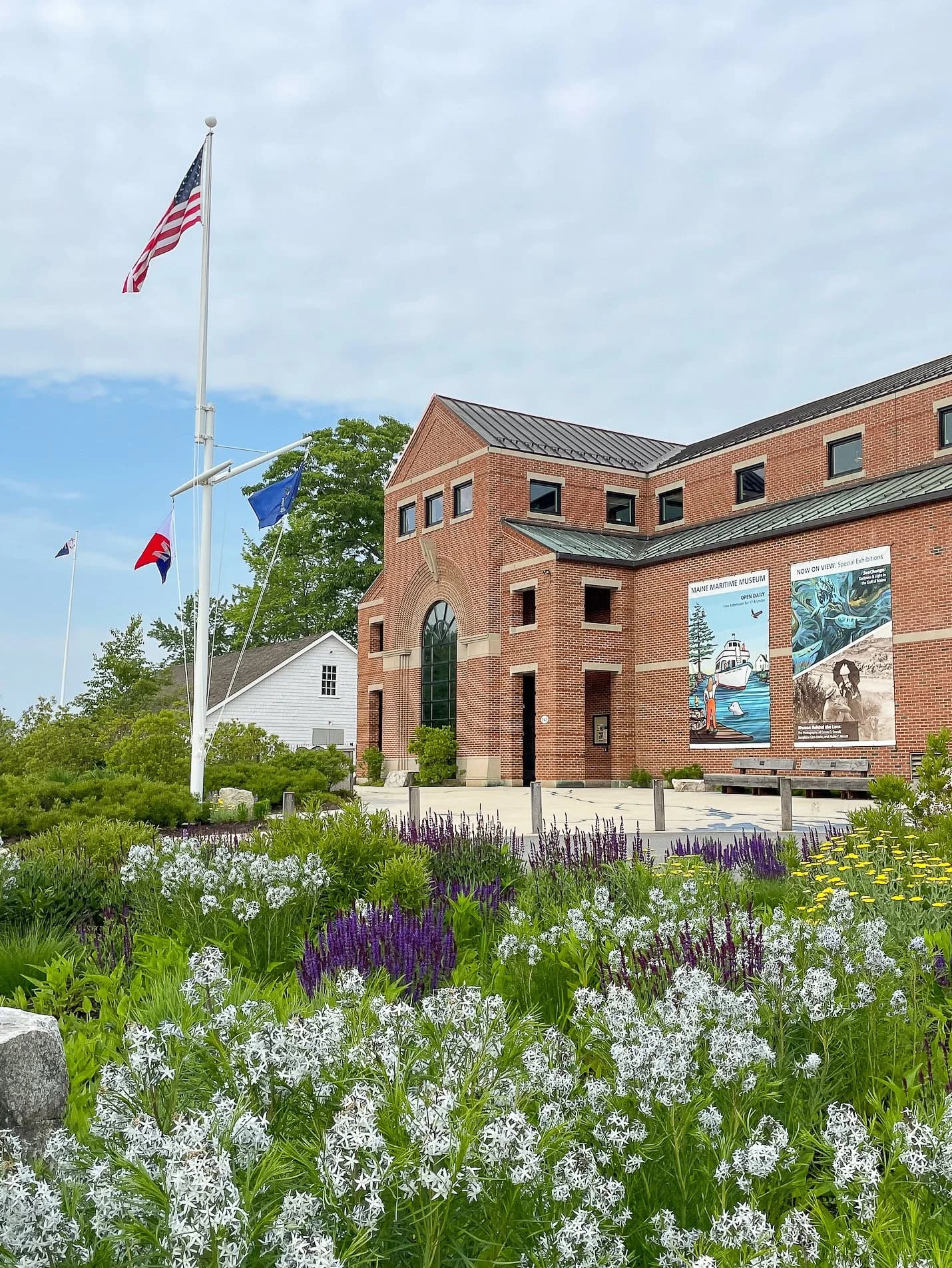
At 243 Washington Street on Bath's waterfront, the Maine Maritime Museum sits on a 20-acre riverside campus that includes the intact Percy and Small shipyard, the last surviving wooden shipbuilding facility of its scale in the United States. Peak-season admission runs $22 for adults and $20 for seniors; children 17 and under are free through 2026, thanks to support from Central Maine Power. Off-season rates (from late October onward) drop to $14 for adults and $12 for seniors. Guided shipyard tours run daily at 11 a.m. and 1 p.m. from mid-May through October and are included in the price of admission. The museum is open most days from 9:30 a.m. to 5 p.m., with slightly reduced Wednesday hours.
Best season: Late May through September, when shipyard demonstrations are fully staffed and the waterfront is navigable by boat tour.
Local spend: Flight Deck Pizza and Beer Garden operates its primary location in Brunswick, making it a natural bookend to the drive.
Don't miss: Maine residents can borrow a free day-pass from their local library, a program many longtime residents still don't know about.
2. Fort Popham State Historic Site, Phippsburg
Fort Popham is a semicircular granite fortification at the mouth of the Kennebec River, begun in 1861 and never fully completed, sitting roughly 14 miles south of Bath via Route 209. Admission is free. The fort is named for George Popham, leader of the short-lived Popham Colony of 1607, one of the first English settlements attempted in North America, and its location places visitors within sight of where that colony briefly stood. Parking is limited, especially on weekends in July and August, so arriving before 10 a.m. makes a real difference.
Best season: Memorial Day through Labor Day for full access to the interior chambers; the site is open year-round but staffing and interpretive signage are most useful in summer.
Local spend: Percy's Store in Phippsburg, a classic Maine country store just north of the fort, is the place to grab something before the beach.
Don't miss: The spiral granite staircase inside the fort's main tower. Most visitors photograph the water views and leave without climbing it.
3. Bath Historic District and Front Street, Bath
Front Street in downtown Bath runs parallel to the Kennebec River and concentrates more intact 19th-century commercial and residential architecture per block than almost any comparable Maine city. The district grew directly out of Bath's shipbuilding economy: counting houses, chandleries, and merchants' homes line streets that once served the largest shipbuilding port in the United States by tonnage. Most businesses operate year-round, with reduced winter hours, making this the one stop on this itinerary that works in any season.
Best season: Year-round; summer brings full retail hours and outdoor seating at waterfront restaurants, while fall foliage over the Kennebec adds a different kind of appeal.
Local spend: Reny's, the beloved Maine department store chain, anchors Front Street with a store that draws locals from across the county and is itself something of a regional institution.
Don't miss: The view of Bath Iron Works' construction cranes from the waterfront end of Centre Street, just one block off Front. The working shipyard and the 19th-century streetscape exist within the same frame.
4. Harriet Beecher Stowe House and Brunswick-area literary landmarks
Just across the county line in Brunswick, the house where Harriet Beecher Stowe lived while writing "Uncle Tom's Cabin" sits at 63 Federal Street and is listed on the National Register of Historic Places. Stowe completed the novel in 1852 while her husband Calvin was a professor at Bowdoin College, making Brunswick a pivotal address in American abolition history. The site is managed by the First Parish Church of Brunswick, which owns the property; visiting access is limited and seasonal, so confirming hours through local historical societies before making the trip is essential. The broader Brunswick walking tour, which connects Bowdoin College's historic campus with Federal Street landmarks, adds context that the house alone cannot provide.
Best season: Late spring through early fall, when walking conditions are best and local historical society programming is most active.
Local spend: The Tontine Mall area along Maine Street in Brunswick has independent shops and restaurants within easy walking distance of the Federal Street landmarks.
Don't miss: Bowdoin College's own Museum of Art, which is free and on the same walking loop, houses one of the stronger small-college permanent collections in New England.
5. Riverfront trails and Main Streets of Topsham, Bowdoinham, and Bowdoin
The three smaller Sagadahoc County towns of Topsham, Bowdoinham, and Bowdoin offer what the busier sites cannot: unhurried access to the working landscape of the Midcoast. Topsham sits directly across the Androscoggin River from Brunswick and hosts seasonal farmers' markets, river access points, and preserved farmland corridors. Bowdoinham, on the Cathance River, is one of the few towns in the state with functioning agricultural land that reaches the tidal river edge. Programming, market hours, and trail access vary significantly by season and by town; the Sagadahoc County visitor centers and individual town websites carry the most current schedules.
Best season: June through October, when farmers' markets are running and river trails are fully passable.
Local spend: Topsham's Route 196 corridor has several locally owned cafes and food businesses that serve the working community rather than tourist traffic.
Don't miss: The tidal flats visible from the Cathance River Nature Area in Bowdoinham at low tide. The area is a documented stopover for migratory shorebirds and is largely unknown outside the birding community.
Taken together, these five stops trace the full arc of Sagadahoc County's identity: a shipbuilding economy that built the American Navy, a Civil War fortification that was never needed, a literary address that helped end slavery, and a working agricultural landscape that has quietly persisted through all of it. The county fits inside a single half-day loop, and most of it costs less than $25 per person to see properly.
This article was produced by Prism’s automated news system from verified source data, official records, and press releases, then run through automated quality and moderation checks before publishing. The system is built and supervised by the people who set the standards it runs under. Read our full AI policy.
Did this article answer your question?