Maine Maritime Museum Offers Bath Visitors a Window Into Shipbuilding History
More than 50,000 visitors a year flow through this 20-acre Kennebec River campus, pumping tourist dollars into Bath's restaurants and shops while keeping the city's 400-year shipbuilding identity alive.
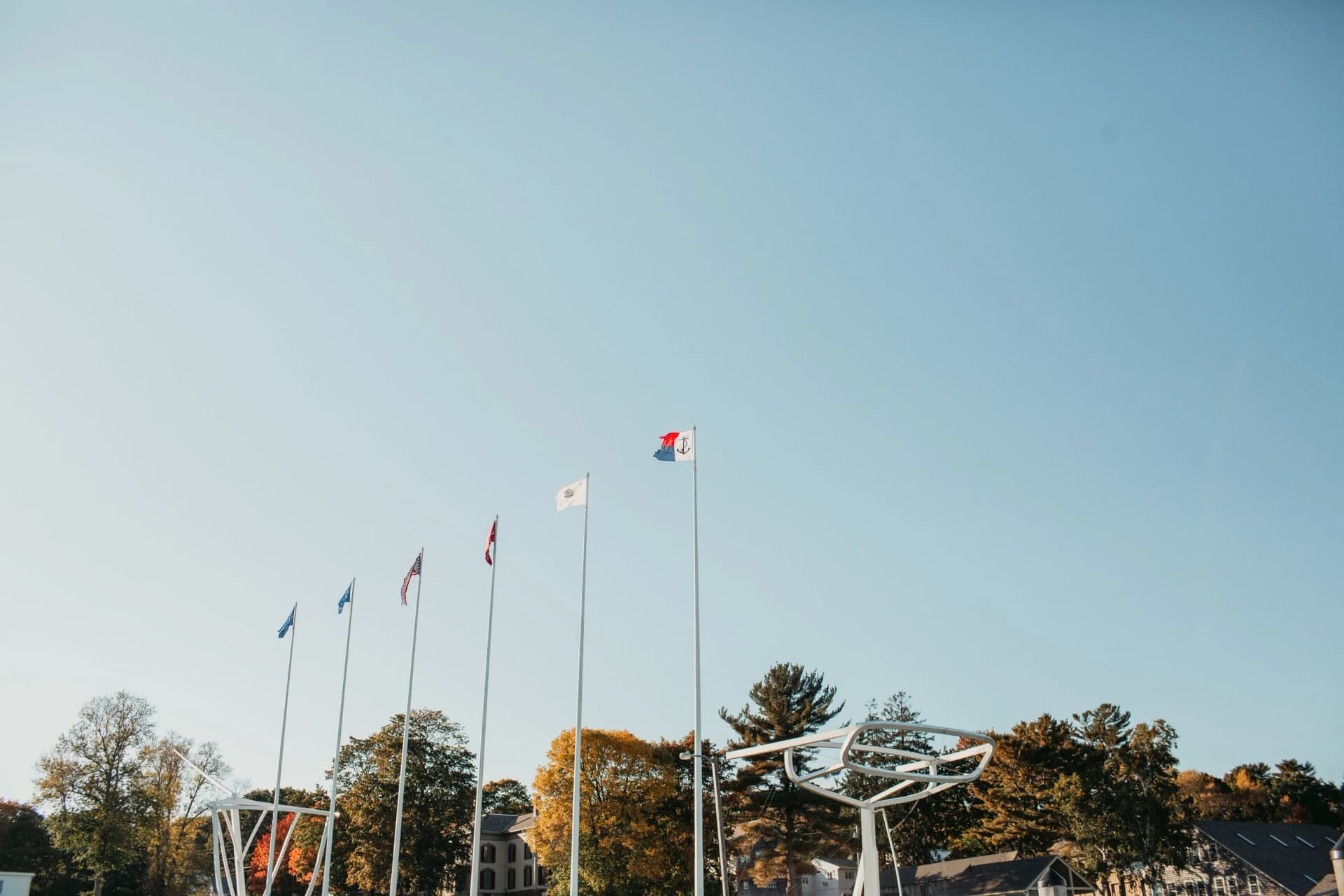
Bath built more ships than almost any other American city, and the Maine Maritime Museum is where that record still pays. Anchored at 243 Washington Street on the Kennebec River, the museum draws more than 50,000 visitors annually, employs 30 staff, and mobilizes more than 250 volunteers whose combined effort props up both a working cultural institution and the broader Sagadahoc County economy in ways that no admission ticket can fully capture. Under Executive Director Chris Timm, the museum has deepened its programming connecting Bath's industrial past to its present identity as home to Bath Iron Works, one of the U.S. Navy's premier active shipyards.
The Campus: Nation's Only Intact Historic Shipyard
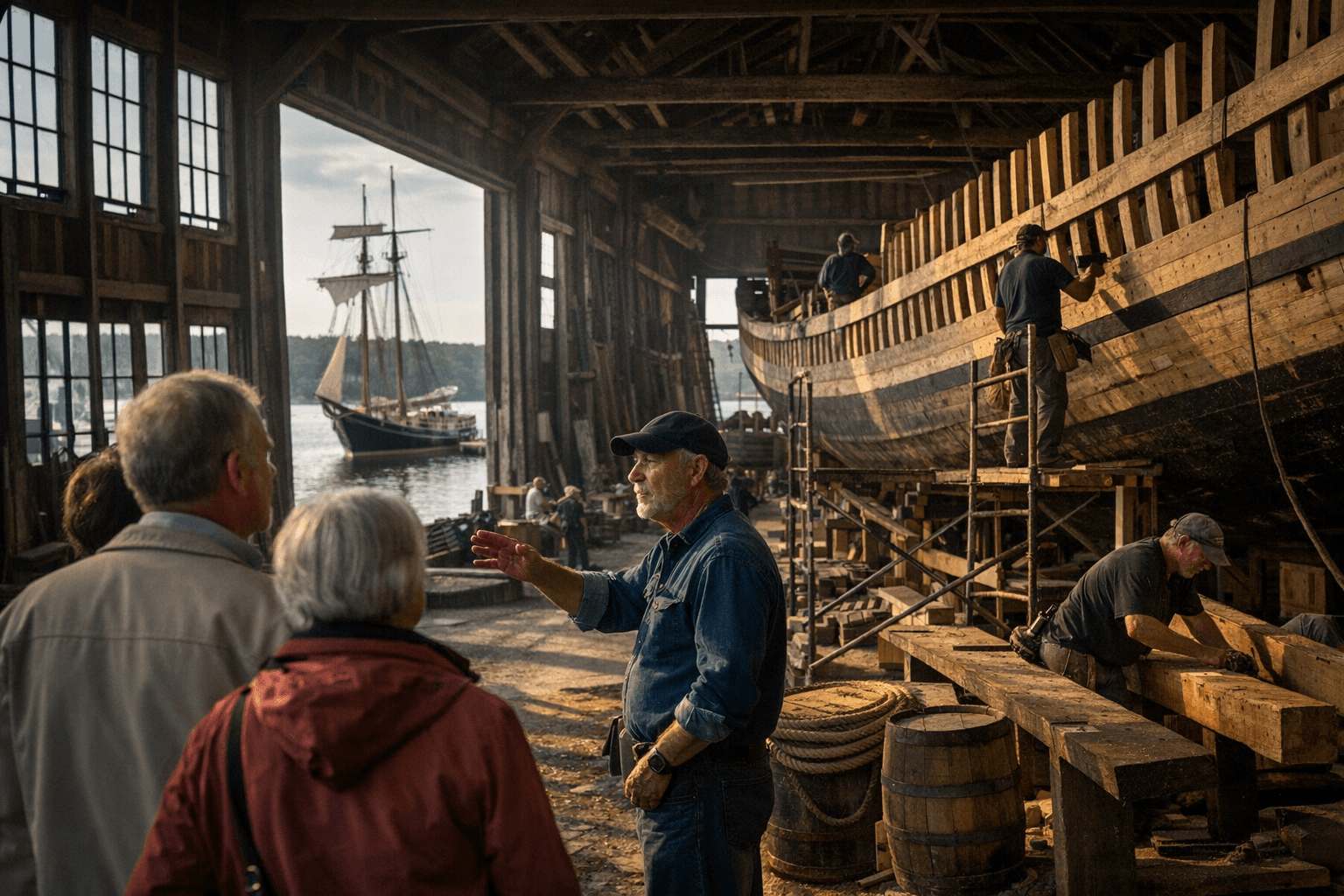
The 20-acre waterfront campus is the foundation of the museum's appeal, and the Percy & Small Shipyard is its crown jewel. It is the only surviving shipyard in the United States where large wooden sailing vessels were built, a distinction that no other maritime museum in the country can claim. The five original 19th-century shipyard buildings remain standing, and guided tours bring them to life daily at 11 a.m. and 1 p.m. from mid-May through October, included with general admission. Dominating the yard is a full-scale sculpture of the schooner Wyoming, the largest wooden sailing vessel ever built in North America, a structure so massive it stops first-time visitors cold.
The campus also includes the Kenneth D. Kramer Blacksmith Shop, built on the footprint of the original forge and open for live demonstrations seasonally, a Watercraft Restoration Center where wooden boats take shape in real time, and a pirate play ship for younger visitors. It is the kind of place where a family divides naturally: one parent watching a blacksmith work iron, another tracking a docent through a restored Victorian house, children climbing aboard a play vessel.
What's Inside: Exhibits That Connect History to Today's Shipyard
The indoor Maritime History Building houses air-conditioned galleries with more than 20,000 objects and millions of rare documents spanning Maine's maritime industries. The exhibit that resonates most sharply for local readers is "BIW: Building America's Navy," which traces Bath Iron Works' century-plus role in naval construction and places the shipyard's current work, visible from the museum's own riverfront, in full historical context. For BIW workers whose access badges don't extend to public interpretation, and for their families, the exhibit provides something rare: a clear-eyed account of why the shipyard matters nationally.
Other permanent highlights include the Lobstering & Maine Coast exhibit in the Leon L. Bean Building, the remains of the clipper ship Snow Squall housed in its own dedicated building near Deering Pier, and "Into the Lantern: A Lighthouse Experience," which recreates the disorienting, luminous view from inside a working lighthouse lantern room. The Nathan R. Lipfert Research Library, open Tuesdays and Thursdays, serves historians, genealogists, and anyone tracing a seafaring ancestor through Maine's deep maritime record.
The Donnell House: A Shipbuilder's Home, Preserved
Seasonal docent tours of the Donnell House offer a sharp contrast to the industrial scale of the shipyard next door. The preserved Victorian-era home of the Donnell family, prominent figures in Bath's 19th-century shipbuilding trade, gives visitors a ground-level view of what prosperity looked like when Bath launched more tonnage per capita than almost anywhere else in America. The house is open seasonally; check the museum's calendar before planning your visit around it.
On the Water: Lighthouse and Nature Cruises
From May through October, the museum operates narrated cruises on the Kennebec River. The lighthouse and nature cruises give passengers a vantage point unavailable on foot: a close look at Navy vessels under active construction at BIW, the sweep of the river toward Merrymeeting Bay, and Maine's lighthouse towers rising from the water as they were meant to be seen. Cruises require separate tickets and run on a set seasonal schedule; booking ahead saves a trip back to the ticket window.
The Economic Ripple Beyond the Gate
Every one of those 50,000-plus annual visitors needs a meal, and most find one on Bath's Front Street, where locally owned restaurants, shops, and lodging options like the Historic Inn at Bath absorb the museum's overflow with regularity. The museum functions as the anchor that gives tourists a reason to spend a full day in Sagadahoc County rather than passing through on their way to Freeport or Portland. School groups from across the region use the campus as a field classroom, and the museum's educational programming extends that reach into the off-season.
The shoulder seasons, spring and fall, offer the strongest case for a visit. Crowds are thin, special programming runs with intensity, and the experience of walking an otherwise empty Percy & Small Shipyard on a clear October morning carries the kind of weight that a midsummer visit, surrounded by bus tours, cannot quite replicate.
Planning Your Visit
- Address: 243 Washington Street, Bath; open year-round except Christmas Day, New Year's Day, and Thanksgiving (9:30 a.m. to 5 p.m. daily)
- Admission: Children 17 and under are admitted free; general admission tickets are valid for two consecutive days
- Shipyard tours: Daily at 11 a.m. and 1 p.m., mid-May through October, included with admission
- Cruises: Seasonal, May through October; separate tickets required; check the museum's official website for current schedule and pricing
- Groups: $18 per person for parties of 15 or more with advance reservation; free bus parking available
- Research Library: Open Tuesdays and Thursdays (verify hours before visiting)
The BIW hull visible downriver on any given weekday is the sharpest argument the museum could make for its own relevance. Bath has built warships for the U.S. Navy for well over a century, and as long as that work continues, the Maine Maritime Museum is not merely a history stop; it is a live diagram of how a small Maine city earns its place in the national economy.
This article was produced by Prism’s automated news system from verified source data, official records, and press releases, then run through automated quality and moderation checks before publishing. The system is built and supervised by the people who set the standards it runs under. Read our full AI policy.
Did this article answer your question?