Mt. Ararat valedictorian leads talks on empathy, debate and civic engagement
Nick Doughty's valedictorian honor reflects a larger lesson at Mt. Ararat: Topsham students are being trained to disagree with rigor, empathy and civic purpose.
A valedictorian defined by civic work
Nick Doughty is one of Mt. Ararat High School’s valedictorians, but the most important part of his story is not the honor itself. In Topsham, he has also been the captain of the football team and a student leader who pushed classmates to think more carefully about politics, disagreement and empathy. Emily Vail, his English teacher, has described him as someone with the courage to challenge people and raise the level of conversation in the classroom, which is exactly the kind of skill schools are trying to strengthen as public debate grows more polarized.
That makes Doughty’s graduation story less about ceremony and more about civic preparation. At a time when many local education conversations center on budgets, buildings and schedules, his path raises a sharper question for Sagadahoc County: are schools teaching young people how to disagree without turning every difference into conflict?
How the Can We? Project works in practice
The clearest answer in Doughty’s story comes through the Can We? Project, a Waynflete School initiative launched in 2018. Waynflete says the program trains high school students in productive dialogue across political and other differences through a three-retreat sequence. Its lessons cover the psychology of political polarization and how American government is designed to work, giving students a framework for conversation before they ever get deep into argument.

What students are asked to do
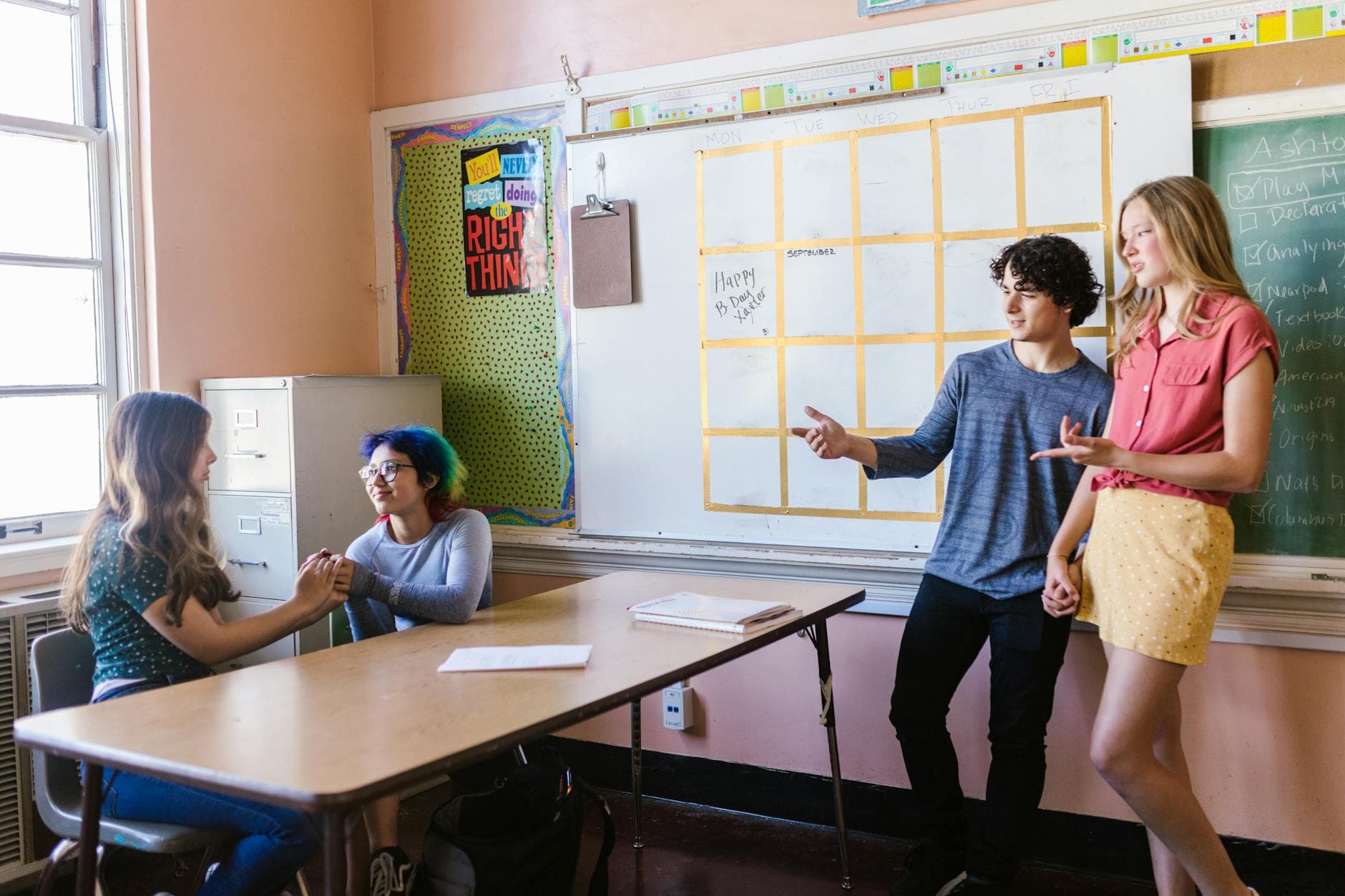
The project is built on a simple but demanding idea: listening must come before persuasion. One exercise may ask students to tell a partner a personal story, then retell that story in the first person to a group. The point is to slow students down, force close listening and make them inhabit another person’s perspective instead of rushing to judgment.
Waynflete says the project shifted to a school-based delivery model that reached 14 schools and nearly 300 students in the 2023-24 school year. That wider footprint matters because it shows this is not a one-off retreat or a niche enrichment activity. It is part of a growing Maine network that treats constructive dialogue as a teachable skill.
What Doughty brought back to Mt. Ararat
Doughty did more than participate. He helped lead workshops for Mt. Ararat faculty and helped start a debate team at the school, turning his own experience into something other students could use. That matters in a high school setting, where the habits students form in classroom discussion often shape how they approach public life later on.

His view is rooted in a practical civic insight: people form beliefs from their experiences, so exposing students to different viewpoints can make it easier to care about the person holding them. That does not mean disagreement disappears. It means disagreement can become more useful, because it is tied to understanding instead of performance or hostility.
Vail’s own classroom history helps explain why Doughty found that environment at Mt. Ararat. She has already been associated with work to broaden course material, including a 2020 report that she was proposing more diverse texts for an AP literature class. Put alongside Doughty’s role in debate and dialogue, that history suggests an English department where difficult conversations are not avoided but handled with care.
Why this matters in Topsham and across Sagadahoc County
For a county that often sees school stories through the lens of facilities, staffing and state funding, Doughty’s example shows another side of public education. The stakes are not only academic achievement, but whether students learn how to take part in a democracy without retreating into contempt. That is a community issue, not just a classroom issue, because the habits built in school eventually shape town meetings, work places and local volunteer life.
Mt. Ararat’s recent graduation history also shows that top academic honors are not rare there. The school had a trio of valedictorians in 2024 and even eight valedictorians in 2022, so Doughty’s distinction fits into a pattern of strong senior classes rather than standing alone. Around 185 seniors were expected to graduate at a noon ceremony on Sunday, June 9, 2024, with the ceremony moving indoors to the gym if it rained, and the school’s 2026 graduation materials point to the 53rd commencement on Sunday, June 8, 2026, while the district calendar lists June 14, 2026.
Those details matter because they show how often Mt. Ararat’s senior class ends up in the public eye. Doughty’s story uses that familiar milestone to ask a more difficult question: what kind of adults are these students becoming?
A path toward philosophy and public life
Doughty plans to continue at the University of Chicago, where he will study philosophy. The university’s Department of Philosophy emphasizes clarity, logical precision and conversation across disciplines, which fits a student drawn to rigorous discussion and civic-minded thinking. For someone who spent high school learning how to listen, argue and lead, that next step looks less like a departure from his civic work and more like its continuation.
In that sense, Doughty’s valedictorian moment is bigger than graduation. It suggests that at Mt. Ararat, and in the wider Topsham community, civic education is not just about knowing how government works. It is about building the judgment, empathy and discipline to keep talking when disagreement gets hard.
This article was produced by Prism’s automated news system from verified source data, official records, and press releases, then run through automated quality and moderation checks before publishing. The system is built and supervised by the people who set the standards it runs under. Read our full AI policy.
Did this article answer your question?