Aggressive ballot signature drives spark frustration at San Francisco stores, Muni
Clipboard crews at Muni stops and grocery doors are pushing San Franciscans hard, turning signature gathering into a test of civics, access and trust.

At the Muni J-Church stop near Dolores Park and outside grocery entrances in the Mission and West Portal, San Franciscans are being pressed to sign ballot petitions amid warnings that transit will collapse without them. The approach has grown so aggressive that routine errands now come with a political sales pitch, forcing residents to decide where lawful petitioning ends and harassment begins.
The pressure is tied in part to Stronger Muni For All, which launched signature gathering on March 3 to qualify a parcel tax for San Francisco’s November ballot. Supporters say the measure would raise about $160 million a year for Muni. The San Francisco Municipal Transportation Agency is projecting budget deficits of more than $300 million beginning next fiscal year, and says that without new funding it could be forced to eliminate 20 bus routes, end cable car service, or stop regular operations at 9 p.m.
The measure would expire in 15 years and be adjusted annually for inflation. Mayor Daniel Lurie is among its backers, along with transit advocates, organized labor and the San Francisco Chamber of Commerce, all arguing that transit is central to the city’s recovery and affordability. Campaign organizers have also leaned on ridership numbers to make the case, saying weekday Muni use is back to about 75% of 2019 levels and weekend ridership is about 92%.
The signature drive briefly hit a setback on March 11, when the campaign paused after lawyers identified a filing oversight, then said the effort would restart imminently. At the same time, allegations of fraud and cash-for-signature schemes sharpened the controversy. California election officials said they were investigating a San Francisco incident after video showed a sign reading “Sign petition for $5,” with a woman appearing to direct people on what name and address to use. Officials said offering money or gifts for ballot measure signatures is illegal.
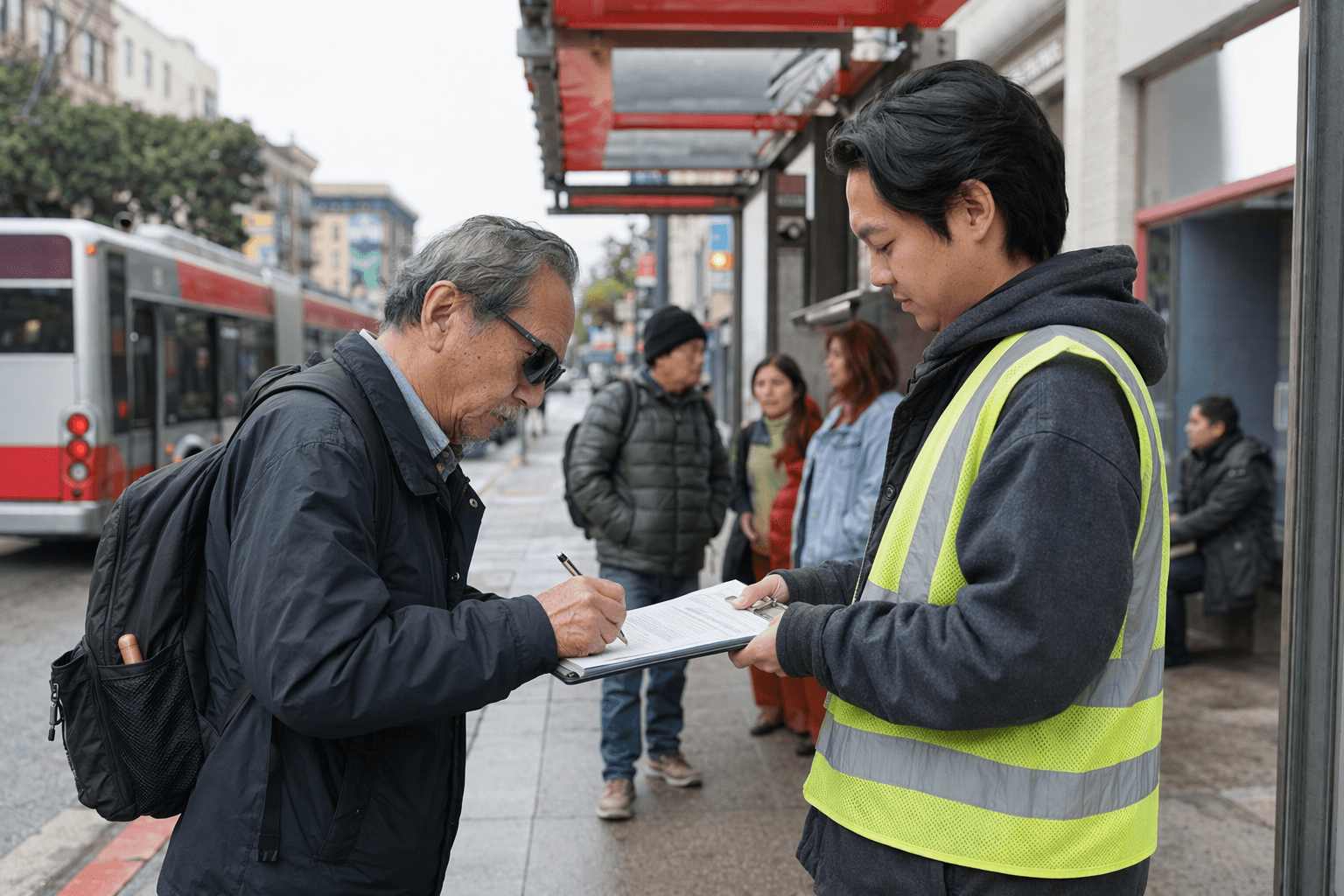
In April, ABC7 San Francisco reported a Tenderloin case in which a couple was said to have paid homeless people to sign other people’s names on petition forms tied to Building a Better California, the effort behind a proposed billionaire tax measure and another proposal involving taxes on retirement savings.
The same scramble is spreading beyond one campaign. The Connect Bay Area Act is collecting signatures in five Bay Area counties for a regional sales tax supporters say could raise about $1 billion annually for Muni, BART, AC Transit, Caltrain and other agencies. On the ground, that means San Franciscans at station entrances and store doors are now navigating not just a pitch, but a widening fight over how the region funds transit and how far petitioners can push before the public pushes back.
This article was produced by Prism’s automated news system from verified source data, official records, and press releases, then run through automated quality and moderation checks before publishing. The system is built and supervised by the people who set the standards it runs under. Read our full AI policy.
Did this article answer your question?