AI boom reshapes San Francisco economy, housing, and wealth gaps
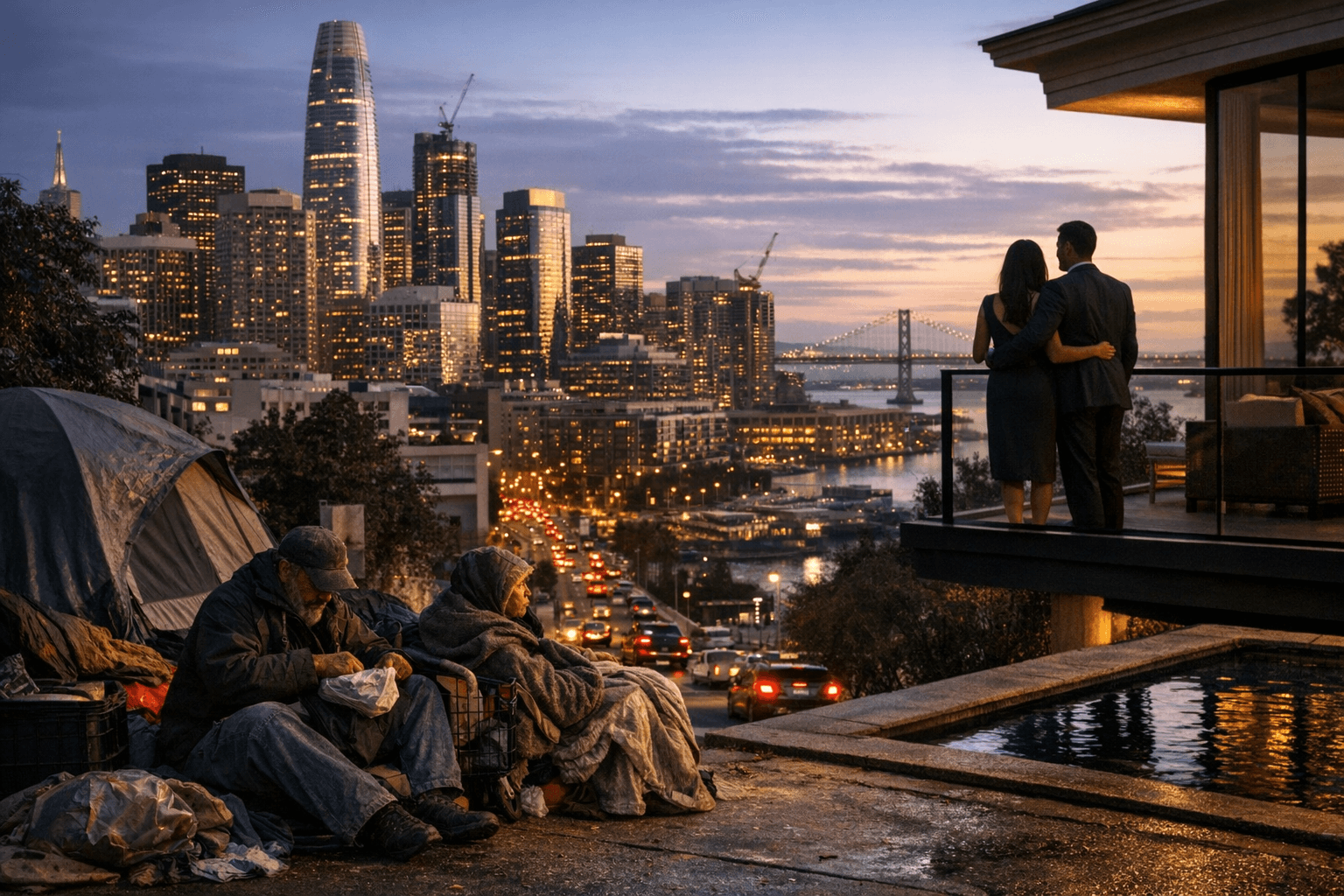
San Francisco's AI surge is lifting downtown and luxury homes, but it is also deepening rent pressure and wealth gaps from Mission Bay to the Financial District.
A boom that is different, and why that matters
In San Francisco, the newest tech wave is not just filling offices in Mission Bay and the Financial District. It is pushing rents, home prices, and the city’s inequality debate into the same frame, which is why Chief Economist Ted Egan’s warning matters so much.
Egan, who has been San Francisco’s chief economist for 19 years, said at an April 2026 panel that the AI boom is a “totally different” tech boom from anything the city has seen before. The claim is more than a sound bite. It reflects a shift in where the jobs are landing, how fast the money is flowing, and how sharply the benefits are concentrating in a city that is still recovering unevenly from the pandemic era.
San Francisco’s own economic reporting shows that recovery was not complete entering 2026. The city’s unemployment rate was 4.3% in December 2025, while apartment asking rents and housing prices were rising faster than statewide trends in early 2026. At the same time, downtown foot traffic and transit ridership improved during 2025, a sign that the urban core is gaining life again even as the broader economy remains strained.
The city’s Office of the Controller has also decided to track the economy more closely. The Status of the San Francisco Economy report is set to move to quarterly updates starting with the late-April 2026 edition, a change that underscores how fast the picture is moving and how much policymakers want to know whether the AI boom is broadening recovery or deepening splits.
Why the housing market is flashing red
The clearest place to see the pressure is housing. Unlike earlier tech waves that were centered in Silicon Valley, the current AI wave is anchoring itself in San Francisco, with firms such as OpenAI, Anthropic, and Scale AI recruiting aggressively and offering top-dollar pay and incentives. That shift is showing up in both rental demand and homebuying, where the city is behaving less like a separate market and more like a magnet for high-income workers arriving all at once.
By late 2025, San Francisco and San Jose were described as the two fastest-selling home markets in the country. Redfin data cited in September 2025 showed San Francisco pending home sales up 17% from a year earlier and at their highest level since 2021, while office visits were up 19% year over year in the same month. Those are the kinds of numbers that suggest the city’s high-end labor market is not just strong, but still accelerating.
The price response has been dramatic. Local reporting cited by Smart Cities Dive put the median San Francisco home price at $1.85 million in November 2025. Another report in April 2026 said the median home sale price had reached $2.15 million, a new record. That is not a subtle market move. It is a signal that the wealth being generated by AI is spilling directly into housing, with the most visible gains flowing into already expensive neighborhoods and the most serious pain falling on anyone trying to buy for the first time.
Inventory tells the same story. San Francisco County was the only county in the Bay Area not to record an annual increase in housing inventory in fall 2025. When demand rises and supply does not, the pressure does not stay abstract. It shows up in bidding wars, faster sales, and a city where the chance to stay put gets harder with each new surge in compensation.
The shortage predated AI, and that is the point
The AI boom did not create San Francisco’s housing crisis. It landed on top of a shortage that has been building for years. A 2022 Chronicle housing analysis found that from 2015 to 2021, the city permitted about 24,600 housing units total, far below what would be needed to meet its housing element goals. The same analysis said only about 9% of the city’s housing stock was affordable.
That matters because it means the city entered the AI era with very little cushion. Even if new jobs create more tax revenue and stronger commercial demand, the housing system is still too tight to absorb the income surge without pushing lower- and middle-income residents further out. In a place where one sector’s pay packages can move the market, the lack of affordable supply becomes a direct inequality engine.
The pressure is visible across the city’s geography. Mission Bay, where much of the AI economy now has a footprint, feels very different from neighborhoods where a sudden increase in cost is not a sign of growth but a threat to long-time residents. The city’s challenge is not simply to celebrate that demand has returned. It is to decide whether that demand can be converted into housing that people earning ordinary wages can still reach.
Downtown is getting busier, but the recovery is uneven
The city does have reasons for optimism. Downtown foot traffic improved during 2025, and transit ridership also rose, suggesting that workers, shoppers, and visitors are returning to the core. The office market has benefited too, with the rise in September 2025 office visits pointing to renewed activity that could help restaurants, coffee shops, and ground-floor retail survive in districts that spent much of the post-pandemic period in retreat.
But the broader labor market remains damaged. A Chronicle analysis found that San Francisco had lost more than 45,000 jobs since 2019, with restaurants down 19% from 2019 and accommodation jobs down 30%. That is the other side of the AI story: a rebound concentrated in higher-paying tech and finance-adjacent sectors, while the city’s hospitality and service economy is still digging out.
That imbalance matters for neighborhoods that depend on foot traffic but do not share equally in equity gains. A stronger office cycle can help the Financial District feel less hollow and make nearby streets busier. It does not automatically solve the affordability gap for workers who do not receive startup stock or six-figure salaries.
What City Hall can still do
City Hall does have some tools, but none of them are quick fixes. In 2023 and 2024, the Treasurer, Controller, and Chief Economist ran a business tax reform project after city leaders asked them to examine vulnerabilities in San Francisco’s tax system during the post-pandemic recovery. The effort included stakeholder meetings in summer and fall 2023 and three roundtables with business, labor, and other groups, a sign that officials were already thinking about how to stabilize city finances in a period of rapid change.
That tax conversation is now even more relevant. If the AI boom boosts employment, office activity, and high-end real estate, it could also widen the city’s tax base at the top while leaving the service economy behind. The question is whether San Francisco can use public finance to capture more of the upside without depending entirely on a narrow slice of wealth.
The policy test is therefore larger than one sector or one neighborhood. It is about whether the city can convert a concentrated AI windfall into broader housing supply, steadier revenue, and a more durable recovery for the parts of San Francisco that have not shared equally in the rebound.
Egan’s point that this boom is different may be right for the most obvious reason: the money is already reshaping San Francisco itself. The harder question is whether the city can shape it back, before the gains harden into a smaller set of winners and a much larger class of people who can no longer afford to stay.
This article was produced by Prism’s automated news system from verified source data, official records, and press releases, then run through automated quality and moderation checks before publishing. The system is built and supervised by the people who set the standards it runs under. Read our full AI policy.
Did this article answer your question?

