Alcatraz’s layered history goes beyond its famous prison legacy
Native activists seized Alcatraz in 1969, turning a prison island into a symbol of sovereignty. Its fort, lighthouse, and penitentiary layers still define San Francisco history.

Long before Alcatraz became shorthand for escape-proof confinement, Indigenous activists turned it into a challenge to who gets to define San Francisco history. When Indians of All Tribes occupied the island on November 20, 1969, they began a protest that lasted about 19 months and remains one of the most important events in contemporary Native American history. The island’s meaning changed again that day, linking military power, incarceration, and Native self-determination in one place in San Francisco County.
A fortress before it was a prison
Alcatraz’s public life began as a military outpost, not a tourist stop. In 1850, a joint Army and Navy commission recommended a triangle of defense to protect San Francisco Bay, and the island quickly became part of that plan. Its first lighthouse began service in 1854, making it the first operating lighthouse on the West Coast and the first U.S. lighthouse on the Pacific Coast, a milestone that helped maritime commerce during the Gold Rush era.
By 1859, military command had taken over the island, and Alcatraz was already serving a more hardened purpose. The National Park Service describes it as the site of the first permanent cannons on the West Coast and the first army prison in the nation. At the start of the Civil War, it was the key fort in the center of the most important Pacific port in nineteenth-century America, a role that explains why the island mattered to commanders long before it became famous for its prison.
The penitentiary years fixed Alcatraz in the national imagination
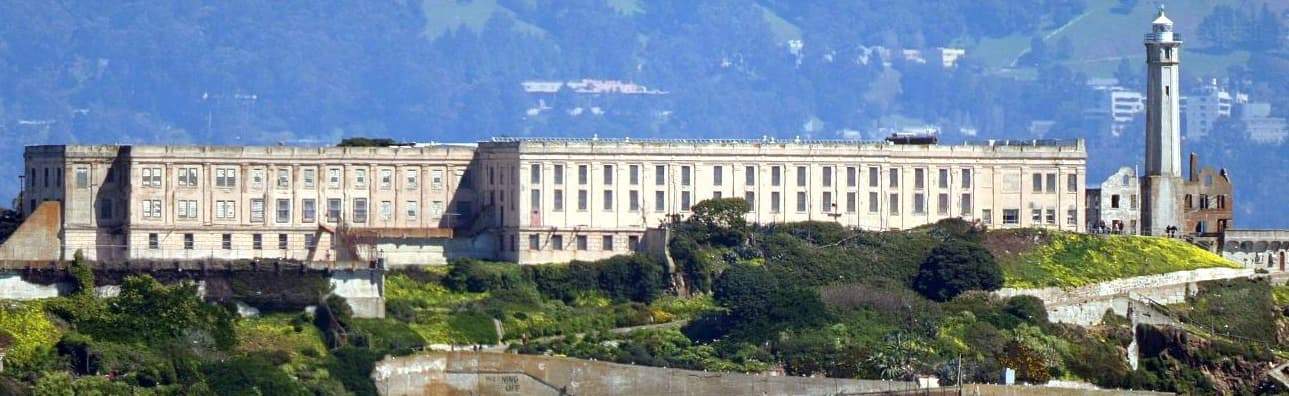
The prison story did not begin with the federal penitentiary, but that era made the island nationally famous. The current cellhouse was completed in 1912, and in 1933 the island transferred to the Federal Bureau of Prisons. From 1934 to 1963, Alcatraz functioned as a maximum-security federal penitentiary, a short but consequential chapter in a much longer military history.
That prison period is why the island still dominates the public image of Alcatraz, even though the site has many other identities. The National Park Service also describes it as a Civil War fortress, a military prison, a bird sanctuary, and the birthplace of the American Indian Red Power movement. Alcatraz is designated a National Historic Landmark, which reflects how much national history is compressed into one rocky outcrop in the bay.
The occupation changed the meaning of the island
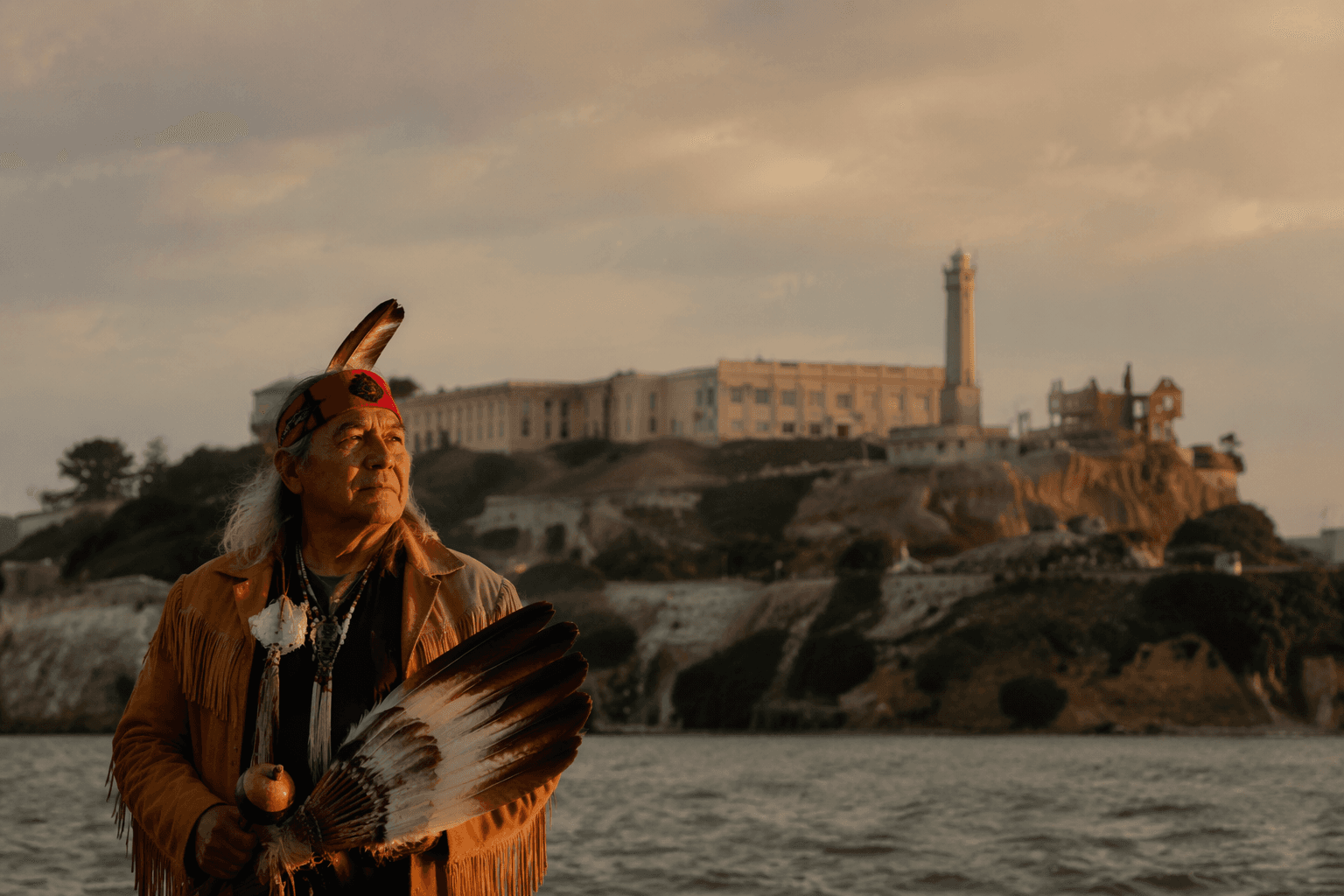
The 1969 occupation is the layer that most directly connects Alcatraz to present-day Bay Area civic life. Indians of All Tribes came to the island to protest U.S. policies that removed Indigenous land and tried to erase Native cultures, and the occupation lasted until June 1971. The National Park Service says it was the first intertribal protest action to focus the nation’s attention on Native peoples in the United States.
Its goals were explicit: to awaken the American public to the plight of the “first Americans” and to assert the need for Indian self-determination. NPS says the occupation launched the Native American movement for sovereignty, power, and independence, which gives the event lasting relevance well beyond the island itself. For San Francisco, the local legacy is not abstract. The occupation made Alcatraz a place where the city’s public history could no longer be told as a simple sequence of fort, prison, and museum.
The occupation also helps explain why the island remains contested rather than merely preserved. The same stretch of land that housed cannons, prisoners, and federal administrators became a platform for Indigenous activism that still shapes how visitors read the site. That overlap matters in a city where public memory is often argued over block by block, and Alcatraz is one of the clearest examples of that struggle.
How to understand the island now
Alcatraz sits inside Golden Gate National Recreation Area, which Congress established on October 27, 1972. The park now ranks among the largest urban parks in the world and welcomes more than 17 million visitors a year, while Alcatraz Island itself receives about 1.2 million visitors annually. Those numbers show that the island is not a sealed-off relic; it is part of a heavily used public landscape where interpretation still matters.
That scale is part of why the island’s layered history resonates across San Francisco County. A single site holds the first lighthouse on the West Coast, the first permanent cannons on the West Coast, the first army prison in the nation, a federal penitentiary, a bird sanctuary, and the site of a landmark Native occupation. Alcatraz endures because it keeps forcing the same question in different forms: whether the city remembers it as a prison, a protest site, or a place where all of those histories still compete at once.
This article was produced by Prism’s automated news system from verified source data, official records, and press releases, then run through automated quality and moderation checks before publishing. The system is built and supervised by the people who set the standards it runs under. Read our full AI policy.
Did this article answer your question?