Analysis finds CEO tax opponents among San Francisco's worst pay-gap offenders
Gap paid its CEO $17.2 million while its median worker made $10,170, and that disparity is now colliding with San Francisco’s next citywide tax fight.
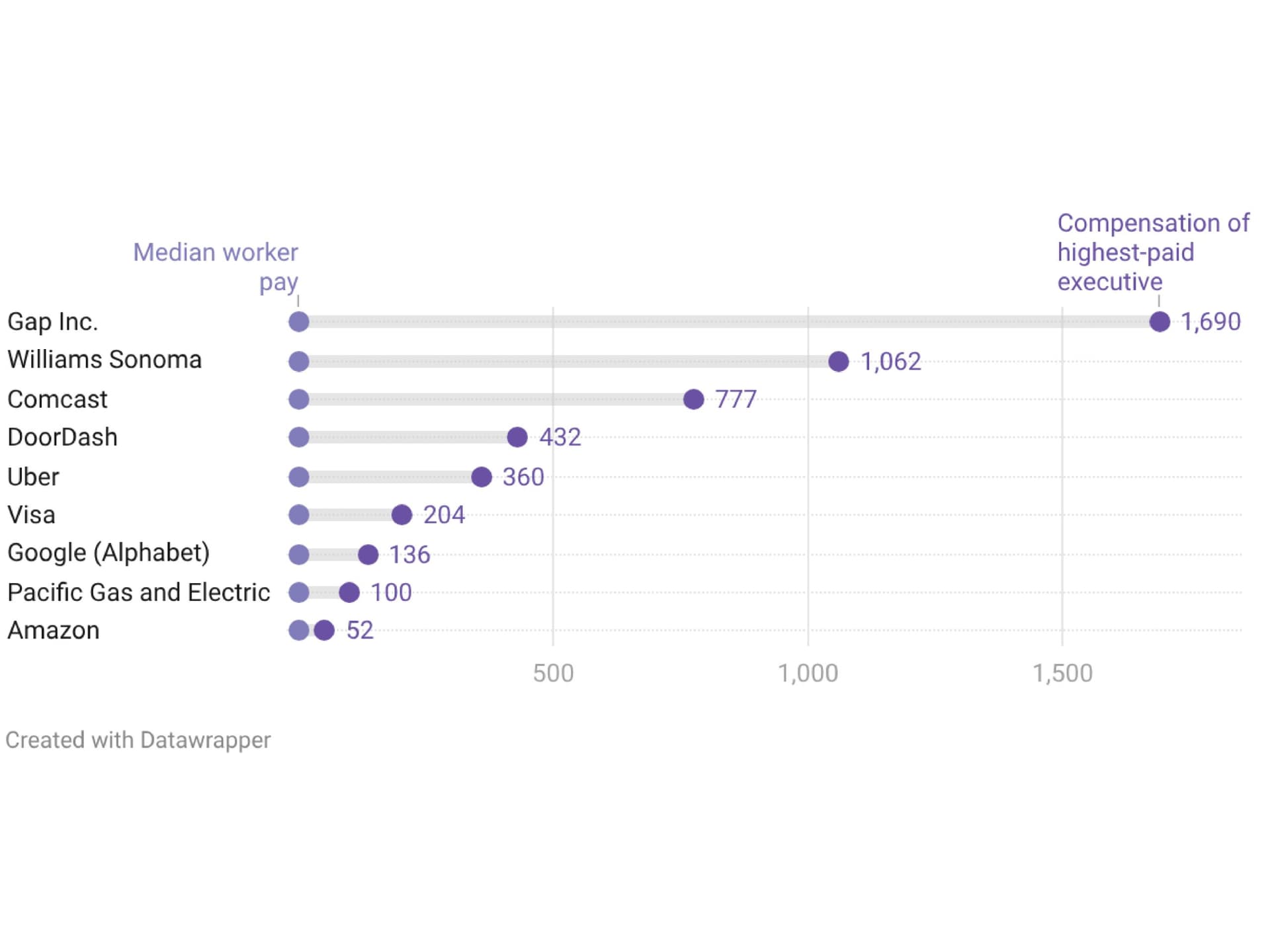
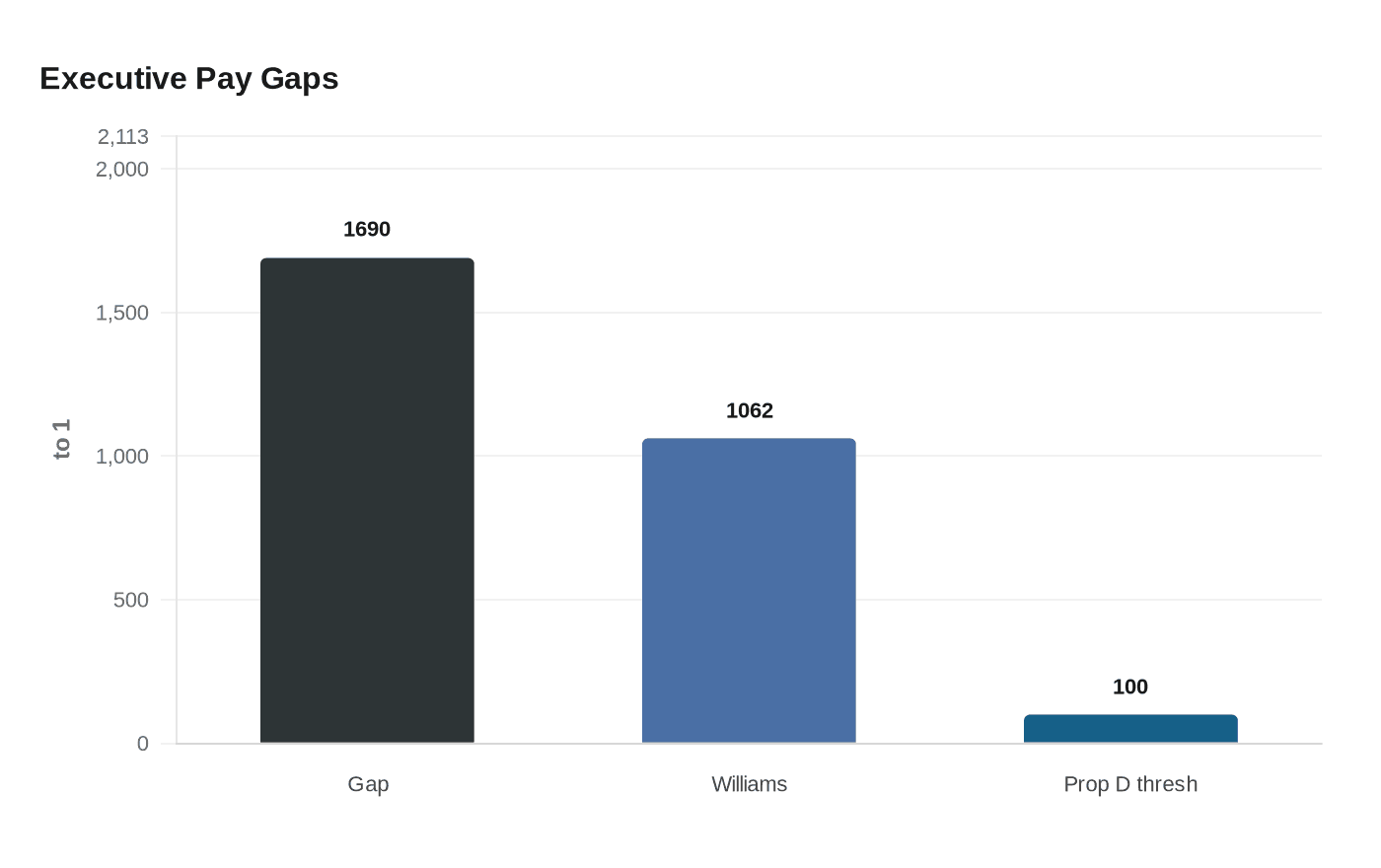
San Francisco’s fight over Proposition D has become a test of corporate fairness, and the numbers at the center of it are stark. Gap’s chief executive took home $17.2 million in total compensation in 2025 while the company’s median worker made $10,170, a 1,690-to-1 gap. Williams Sonoma’s ratio reached 1,062-to-1. Those are the kinds of pay disparities the measure is designed to target, yet they are also the kind of companies helping finance the opposition.
That contradiction is what gives the ballot fight its force in San Francisco County. Proposition D, which will appear on the June 2, 2026 ballot, would tax businesses whose highest-paid executive earns more than 100 times the median employee pay. It also would raise tax rates and require voter approval before future rate cuts. Ballotpedia says a simple majority is enough to pass it.
The measure builds on a tax the city first enacted in 2020, then put into effect on January 1, 2022. GrowSF’s annotated legal text says the original Overpaid Executive Gross Receipts Tax was expected to raise as much as $140 million a year for city services. San Francisco later revised the structure in 2024 through Proposition M, and supporters say large corporations with more than $1 billion in gross receipts saw an 80% reduction in the tax under that change.
Backers of Proposition D, including IFPTE Local 21, SEIU 2015, SEIU 1021 and Teamsters Joint Council 7, have cast the measure as a way to shore up local services against federal cuts, especially to Medicaid-related care. The political logic is simple: if Washington squeezes health and human services, San Francisco should have a stronger local tax tool to protect them. In practical terms, that means money for the city’s own service network, including institutions such as Zuckerberg San Francisco General Hospital and Trauma Center and Laguna Honda Hospital and Rehabilitation Center.
The fairness argument has sharpened because the companies fighting the tax are, in several cases, the very companies the measure is built to pressure. The Institute for Policy Studies says at least seven companies backing opposition to Proposition D have pay gaps above the 100-to-1 threshold. That makes the campaign more than a routine business-tax dispute. It asks voters whether San Francisco should reward firms with extreme executive pay, or use its tax code to push those ratios lower.
The issue is likely to keep growing beyond this election. San Francisco supervisors have separately discussed a broader November 2026 version of the executive-pay tax that could raise roughly $150 million to $200 million a year. For now, Proposition D has put a simple city question on the ballot: whether the companies with the widest internal gaps should be the ones setting the terms of the debate.
This article was produced by Prism’s automated news system from verified source data, official records, and press releases, then run through automated quality and moderation checks before publishing. The system is built and supervised by the people who set the standards it runs under. Read our full AI policy.
Did this article answer your question?