Bay Area Transit Ridership Surges, But Billion-Dollar Budget Crisis Looms
Caltrain trips surged 47% in February while BART hit its best single day since the pandemic; SFMTA still faces a $307M deficit that could gut Muni service.
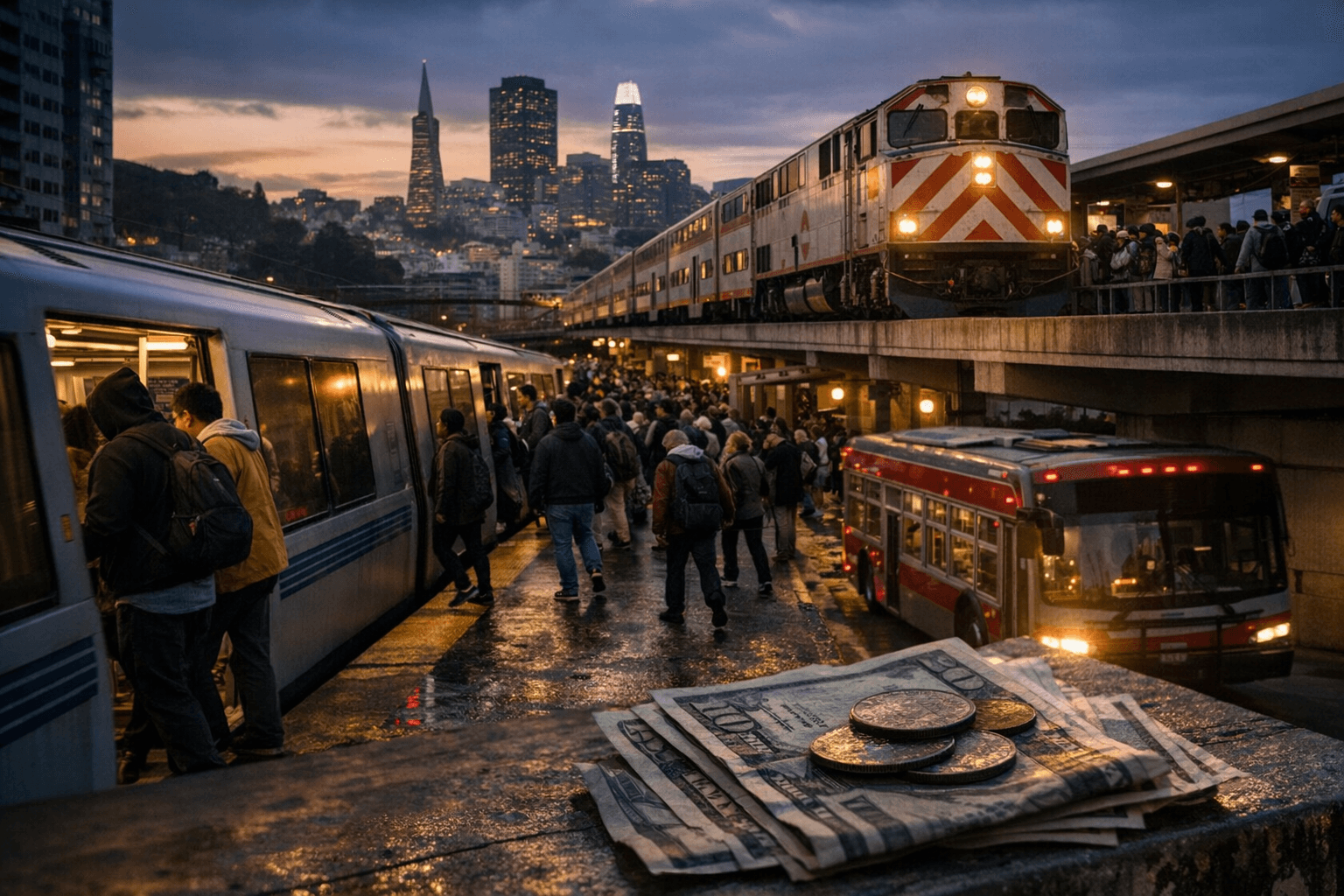
The trains are filling up again. Caltrain recorded a nearly 47% jump in trips this February compared to the same month in 2025, BART hit its highest single-day ridership since the pandemic, and Muni posted year-over-year gains that a SPUR study credited to genuine operational improvements. For commuters boarding at 16th Street Mission or the Embarcadero, the evidence is tangible: the platforms are busier and the cars are fuller.
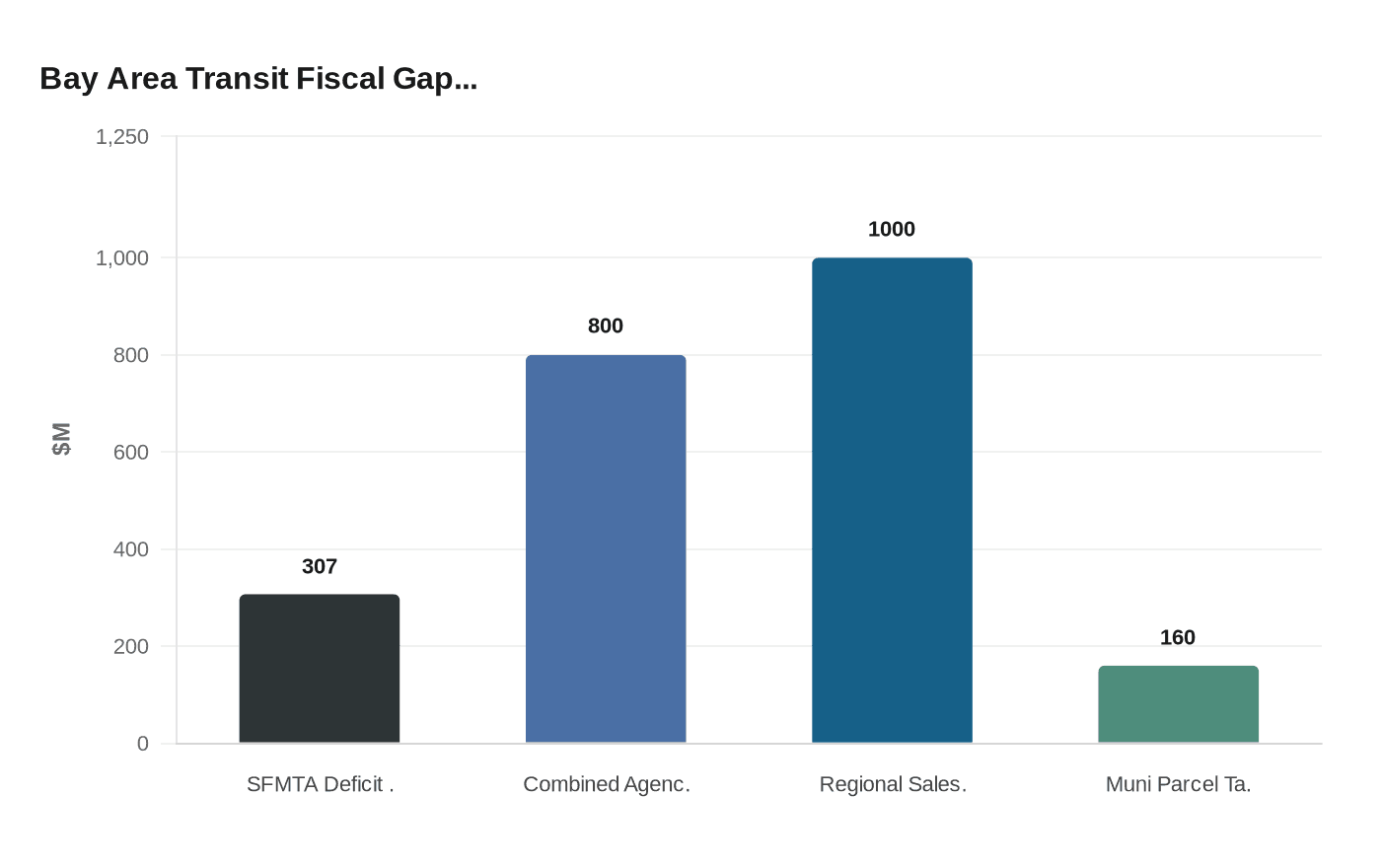
But those headline numbers mask a structural crisis that no ridership rebound can fix alone. SFMTA faces a projected operating deficit of roughly $307 million for fiscal year 2026-27. Across BART, Caltrain, SFMTA and other Bay Area agencies, the combined shortfall could approach $800 million in that single year. The agencies have been patching those gaps with one-time state and federal infusions, a strategy transit advocates warn is unsustainable.
That mismatch between operational progress and fiscal reality is now driving two major funding campaigns racing toward the November 2026 ballot. The first is a five-county regional sales tax projected to generate roughly $1 billion annually. The second is a city-focused parcel tax directed at sustaining Muni operations, estimated to bring in about $160 million a year if San Francisco voters approve it. Advocates are currently gathering signatures to qualify both measures against a tight deadline.
What a "yes" vote would buy: frequency on the lines that Sunset and Mission residents use to get home after midnight, and the staffing that keeps buses and stations safe. A failed measure would likely force SFMTA to choose between fare hikes, route eliminations, and reduced service on the corridors that transit-dependent workers in the Tenderloin and SoMa rely on for essential commutes.
The political environment is difficult. Downtown office occupancy has not fully recovered from the pandemic, making voters cautious about new taxes. Transit supporters argue that current ridership momentum is fragile without stable investment; critics contend that agencies need to demonstrate tighter cost management before asking for more.
San Francisco's transit network is also bound up in broader stakes: greenhouse-gas reduction targets, housing access for residents who cannot afford to drive, and the commercial health of neighborhoods that depend on foot traffic. The signature-gathering campaigns, public hearings, and polling expected over the coming months will determine whether those ambitions hold or become casualties of a billion-dollar funding gap.
This article was produced by Prism’s automated news system from verified source data, official records, and press releases, then run through automated quality and moderation checks before publishing. The system is built and supervised by the people who set the standards it runs under. Read our full AI policy.
Did this article answer your question?