Berkeley police face staffing crisis as budget cuts loom
Berkeley police were already short nearly 19% of sworn officers and supervisors as city leaders weighed 10% cuts and a $29 million deficit.
Berkeley police faced a staffing crunch that city leaders could not ignore: a consultant found nearly a 19% vacancy rate among sworn officers and supervisors, even as the department said it needed 15 more officers on patrol teams to curb burnout, morale problems and overtime. For San Francisco and other Bay Area cities balancing public-safety demands against shrinking budgets, the numbers pointed to a familiar risk, thinner patrol coverage and less backup when the next call came in.
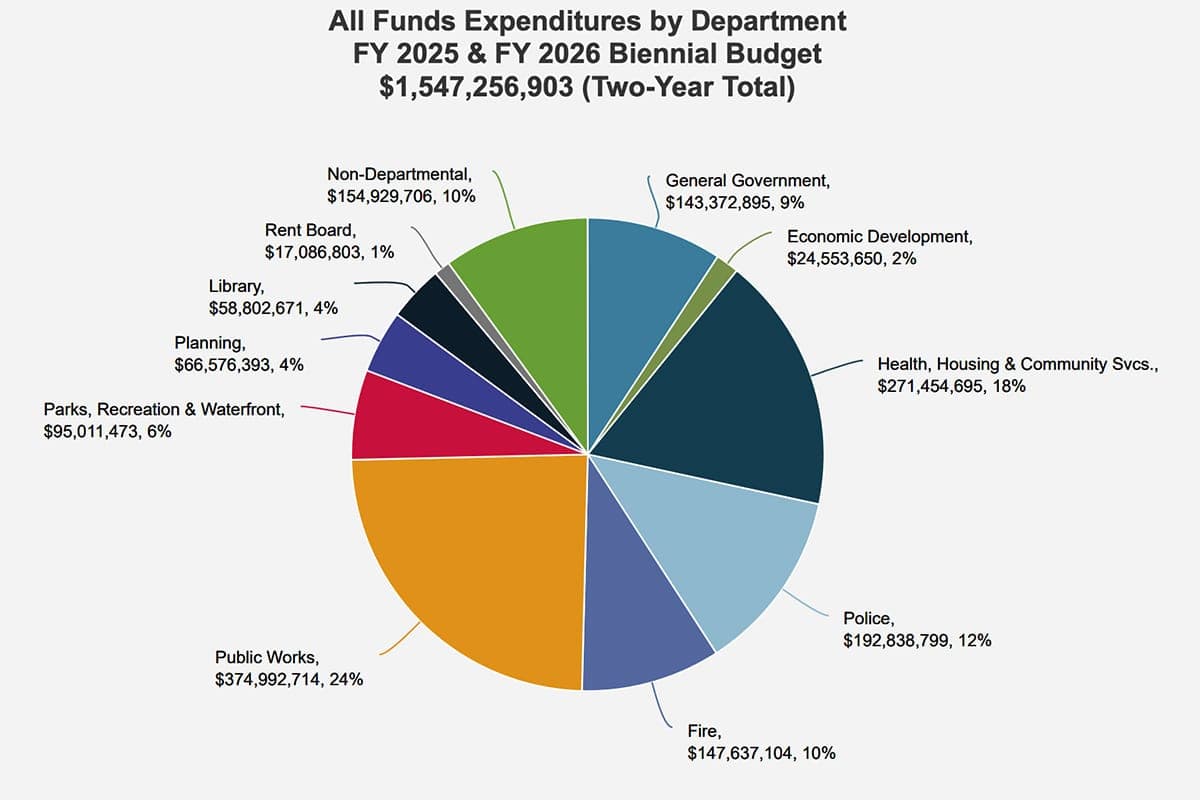
Berkeley was bracing for a projected $29 million general fund deficit, and city leaders had discussed cutting General Fund spending by about 10% across the board. The city imposed a hiring freeze in April 2025 to help close the gap. Officials said the FY 2025-26 budget had already been difficult to balance, with salary and benefit costs totaling about $380 million and making up roughly 48% of all-funds spending. City leaders including Paul Buddenhagen, Jen Tate and Rashi Kesarwani were weighing what the next round of reductions would mean for both police and fire staffing.
The Berkeley Police Department's FY 2025-26 budget presentation showed 283 general-fund police positions in FY25 and FY26, along with 303 total positions in both years. The department also requested converting six community service officer positions to permanent roles, a sign that even modest staffing adjustments had become part of the broader budget fight.

Citygate Associates described the department as being stuck in a vicious cycle. Vacancies forced the remaining officers to absorb more work, which deepened burnout and made recruiting harder. The result was not just a paperwork problem inside City Hall. It was a service problem on the street, where fewer officers meant less slack for patrol, less room for specialty units to cover routine calls, and more pressure on mutual-aid help from neighboring agencies.
That pressure mattered beyond Berkeley's borders. If one East Bay department was struggling to keep patrol teams full while the city prepared to cut costs across the board, the warning extended to San Francisco and other nearby cities that depend on steady staffing to keep emergency response dependable. Berkeley's fire department was also exposed in the coming cuts, making the city's budget fight a test of how far local government could stretch before public safety began to fray.
This article was produced by Prism’s automated news system from verified source data, official records, and press releases, then run through automated quality and moderation checks before publishing. The system is built and supervised by the people who set the standards it runs under. Read our full AI policy.
Did this article answer your question?