House Democrats hold shadow hearing in San Francisco on election threats
House Democrats turned San Francisco into a warning sign, tying 78.93% turnout and ballot trust to a fight over citizenship checks and federal election control.
San Francisco’s election office has built its reputation on trust, and the numbers show why that matters: the City and County of San Francisco certified its November 5, 2024 consolidated general election with 412,231 ballots cast out of 522,265 registered voters, a turnout of 78.93%. As House Democrats warned in the city, even failed efforts to rewrite election rules can still confuse voters, chill participation, and test confidence in how ballots are counted.
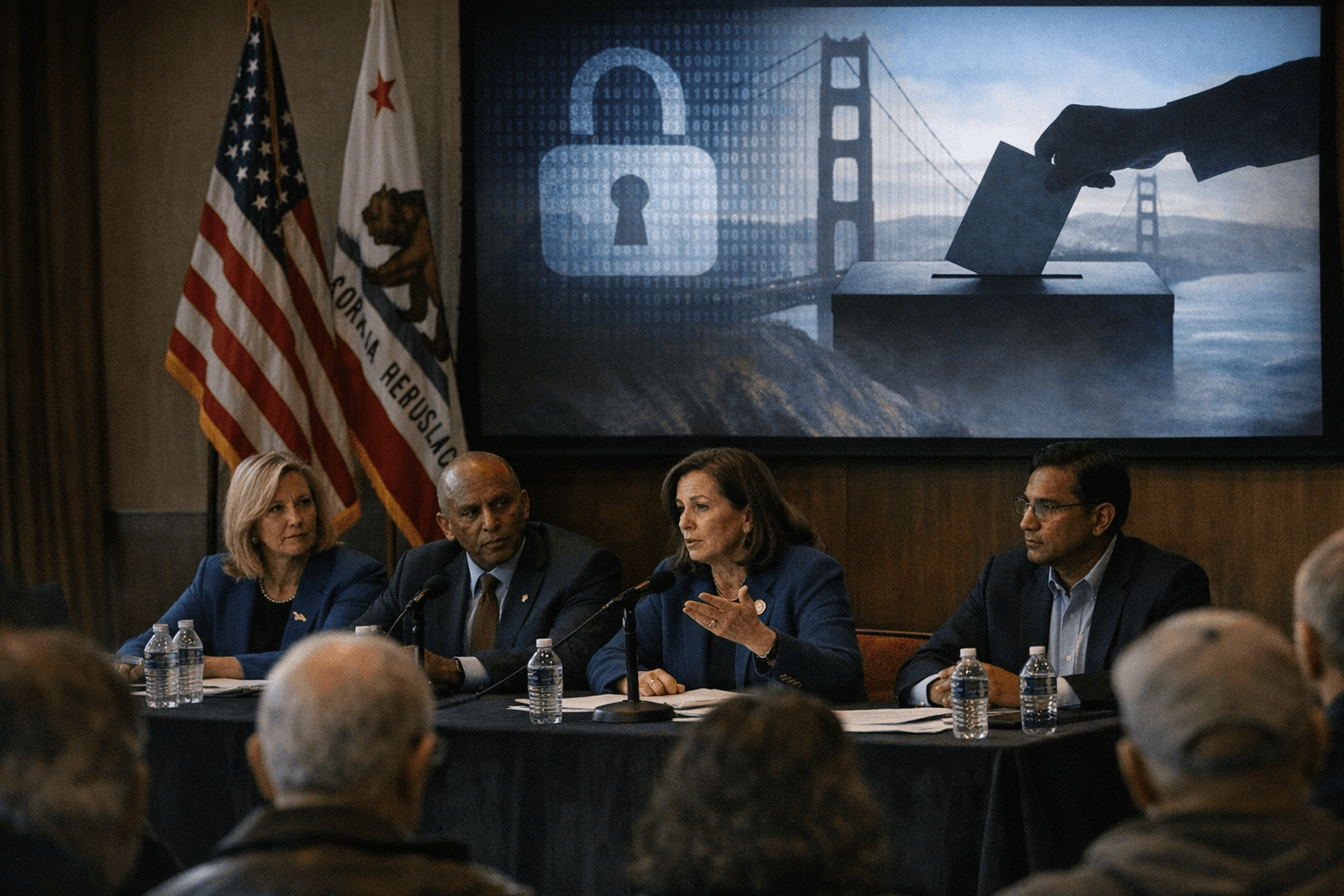
That was the backdrop for a shadow hearing in San Francisco on April 9, where Democrats used the city as both stage and symbol in their fight with President Donald Trump and congressional Republicans over election control. The House Administration Committee has framed the effort around election security, electoral reforms, voting rights, and anti-corruption work, but the political message in San Francisco was narrower and more immediate: local election systems still have to function under pressure from Washington.
The choice of San Francisco was deliberate. In a city where the Department of Elections says it conducts federal, state, district, and municipal contests in a manner that is “free, fair, and functional,” Democrats are trying to show that local election administration can remain a point of civic pride even as national politics turns hostile. For San Franciscans, the concern is not only legal theory. It is whether federal threats over registration, mail ballots, and citizenship checks could make ordinary voters doubt the process before they ever reach the ballot box.
The San Francisco event came as part of a broader California strategy. Two days earlier, the committee had scheduled a companion shadow hearing in Los Angeles at the Japanese American National Museum in Little Tokyo, where Rep. Joe Morelle of New York, the top Democrat on the committee, was set to appear with Speaker Emerita Nancy Pelosi. The committee listed Jenny Farrell of the League of Women Voters of California, Darius Kemp of Common Cause California, Justin Levitt of LMU Loyola Law School, Hector Villagra of MALDEF, and Sonni Waknin of the UCLA Voting Rights Project as witnesses. Pelosi’s appearance at a site tied to the wartime detention of Japanese Americans underscored a historical warning about how fragile democratic rights can be.
The immediate policy fight is over the SAVE Act, H.R. 22, which would require proof of U.S. citizenship to register to vote in federal elections, and over Trump’s March 31, 2026 executive order, “Ensuring Citizenship Verification and Integrity in Federal Elections.” That order directs a State Citizenship List built from federal citizenship and naturalization records, Social Security Administration records, SAVE data, and other federal databases.
California is already headed into another fight. The secretary of state says a proposed voter-identification and citizenship-verification initiative entered circulation in 2025 and could qualify for the November 2026 ballot, making the San Francisco hearing less a symbolic gesture than a warning shot in a live state battle over who gets to vote and how confidence in elections is maintained.
This article was produced by Prism’s automated news system from verified source data, official records, and press releases, then run through automated quality and moderation checks before publishing. The system is built and supervised by the people who set the standards it runs under. Read our full AI policy.
Did this article answer your question?