Bottom of the Hill to Close After 35 Years in 2026
Bottom of the Hill, Potrero Hill’s longtime music venue, announced it will close at the end of 2026 after 35 years, citing pandemic-era losses, rising operating costs, and nearby street and parking changes that made touring logistics harder. The owners will mount a yearlong farewell program culminating on New Year’s Eve 2026, a run that will be closely watched for its cultural and economic impact on San Francisco’s live-music ecosystem.
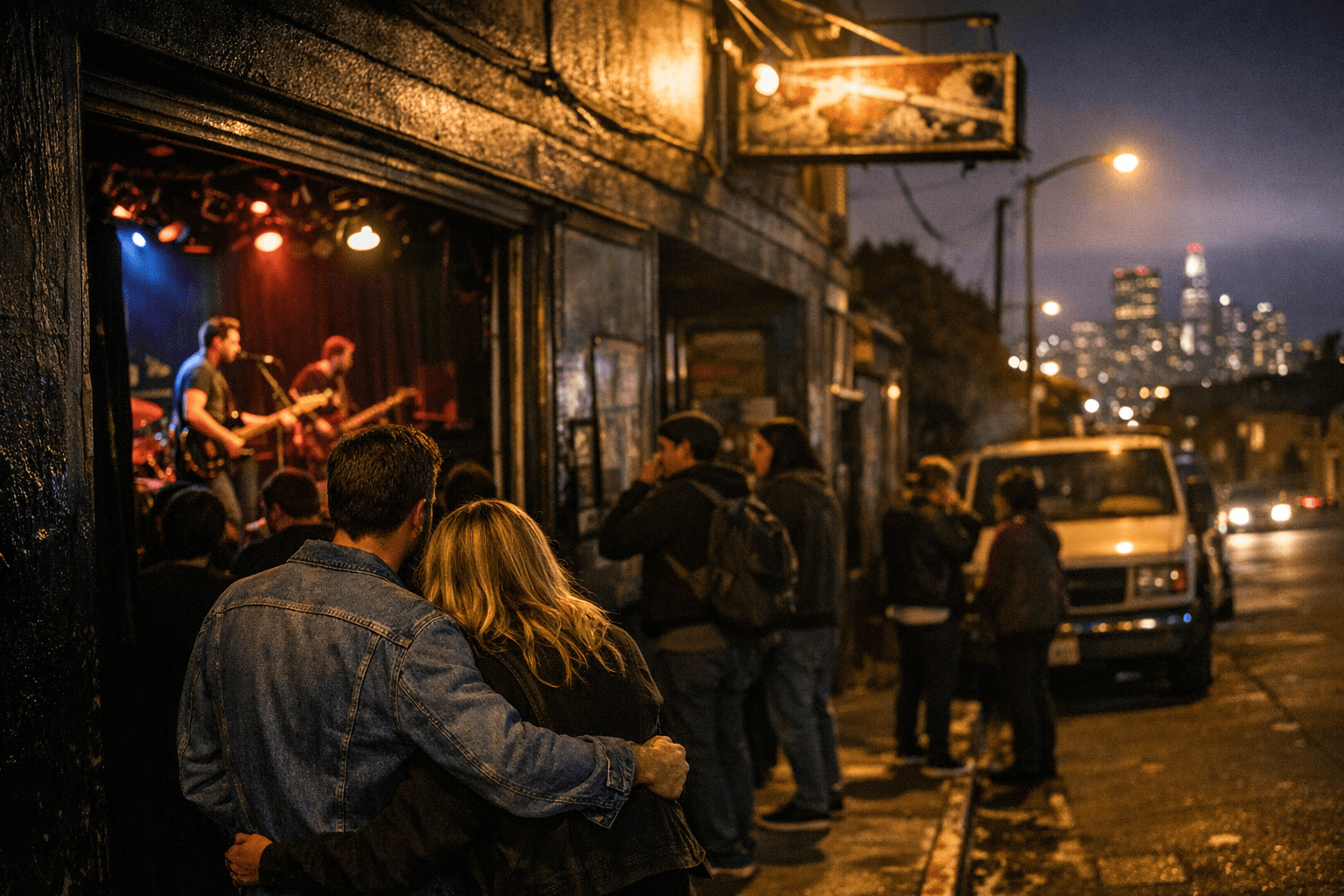
On January 3, 2026, Bottom of the Hill, the Potrero Hill music club that helped launch and support numerous notable acts over its 35-year history, announced it will permanently close at the end of 2026. The owners attributed their decision to lingering pandemic-era financial losses, steadily rising operating costs, and recent street and parking changes near the venue, including a protected bike lane and reduced parking, that they said have complicated touring logistics and load-in routines for bands.
The closing will not be immediate. Owners outlined a yearlong farewell of programming across 2026, with shows scheduled to culminate on New Year’s Eve 2026. They said they are weighing options for the building’s future while encouraging fans and local musicians to use the final year to celebrate the venue’s legacy.
Bottom of the Hill’s announcement reverberated through San Francisco’s music community. Local musicians and longtime patrons expressed sadness and gratitude for the venue’s role as a launching pad and gathering place. For neighborhood residents and the city’s night-time economy, the loss would remove a deep-rooted cultural anchor in Potrero Hill that drew regular foot traffic to nearby restaurants, bars, and small businesses.
Economically, the closure underscores ongoing pressures on independent live-music venues. Owners pointed to pandemic-era revenue shortfalls and rising fixed costs as primary factors, a profile familiar to many small entertainment businesses across the region. The operational challenges tied to street design changes highlight an emerging policy tension: efforts to improve safety and active-transportation infrastructure can have unintended consequences for curb access, loading logistics, and the viability of businesses that depend on vehicle access for tours and equipment.
City policymakers face trade-offs. Protected bike lanes and reduced curbside parking advance public safety and sustainable transport goals, but they can also constrain touring logistics and deliveries that venues rely on. Mitigating measures could include designated loading zones, time-limited curb access near performance spaces, or other targeted exemptions that preserve both street-safety improvements and the operational needs of live-music venues.
As Bottom of the Hill charts its final year, the venue’s timetable gives artists, fans, and policymakers an opportunity to evaluate how city planning choices interact with cultural infrastructure. For San Francisco County, the closure of a 35-year institution will be both a cultural loss and an economic signal about the vulnerabilities small performance venues face in a changing urban environment.
This article was produced by Prism’s automated news system from verified source data, official records, and press releases, then run through automated quality and moderation checks before publishing. The system is built and supervised by the people who set the standards it runs under. Read our full AI policy.
Did this article answer your question?

