Chris Larsen leads San Francisco business revolt against tax ballot measures
Chris Larsen is now the public face of a San Francisco donor revolt over taxes that unions say would protect city services and opponents call a threat to jobs.

At City Hall, the fight over San Francisco’s next budget is turning into a test of who gets to shape the city’s recovery: labor or its billionaire donors. Ripple co-founder Chris Larsen has stepped into the center of that fight, financing opposition to union-backed tax measures that supporters say would help pay for city services, health care and schools, while critics warn they would hit hiring and push employers out.
The immediate battleground is San Francisco’s June 2026 ballot. One proposal would change the city’s top executive pay tax and exempt businesses with up to $7.5 million in gross receipts from both that tax and the gross receipts tax, while raising the top executive pay rates for larger firms. Ballotpedia estimates the measure would reduce annual city revenue by $30 million to $40 million, a hit that could matter as the city tries to close a projected $800 million deficit in its $15.9 billion budget for fiscal years 2025-26 and 2026-27. Mayor Daniel Lurie has refused to line up with either side, saying in February that “neither measure moves San Francisco forward.”
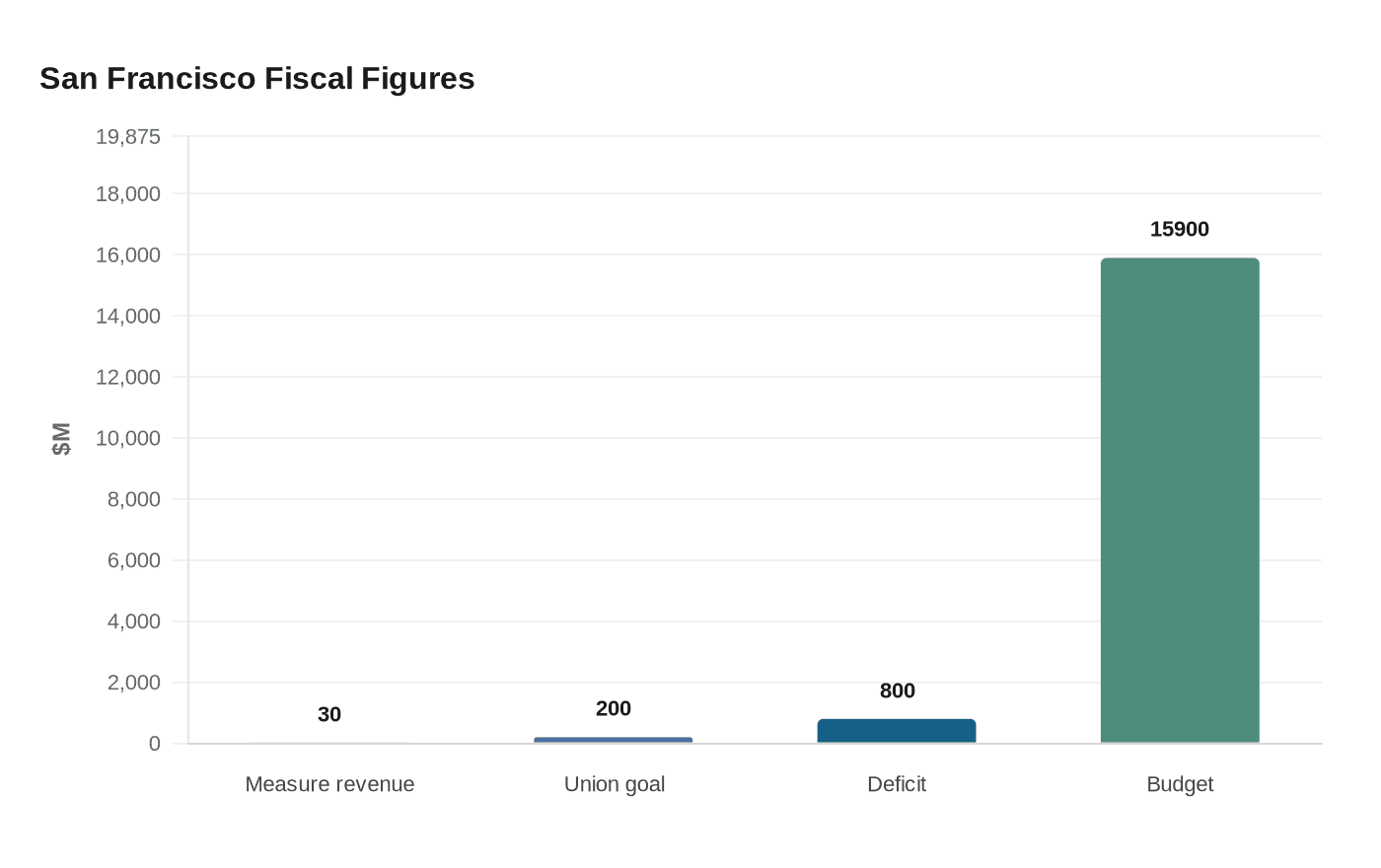
The tax clash began in November 2025, when a coalition of San Francisco unions announced a signature drive aimed at raising about $200 million a year for the city. Union leaders say the money would shore up programs and services that residents rely on every day, including the people and operations that keep the city running. Business opponents say the measures would make San Francisco less competitive just as downtown still needs investment and employers need reasons to stay.
Larsen has become the named face of that resistance. Bloomberg reported that he has called the union-backed ideas “stupid, job-killing” and is putting money into the opposition effort. Mission Local reported that Larsen and Michael Moritz, who spent $1.5 million to defeat Lurie in the mayor’s race, are now helping bankroll parts of his agenda, a sign that San Francisco’s billionaire class is no longer moving as a single bloc.
The conflict is spilling beyond city limits. In California, SEIU United Healthcare Workers West is backing the California Billionaire Tax Act, a statewide proposal that would impose a one-time 5% tax on billionaires’ net wealth above $1 billion. Attorney General Rob Bonta issued the official title and summary on December 26, 2025, and supporters say the campaign will reach the November 2026 ballot if it gathers 874,641 signatures. Backers say the money would go mostly to health care, with additional funding for education and food assistance.
Mission Local noted that San Francisco voters approved Proposition M less than two years ago, a broad business-tax overhaul backed by labor, business leaders and community stakeholders. That makes the current fight more than a technical debate over tax rates. It is an opening battle over whether San Francisco’s recovery will be financed by higher taxes on executives and wealthy residents, or protected by keeping the city more attractive to employers, investors and the downtown economy.
This article was produced by Prism’s automated news system from verified source data, official records, and press releases, then run through automated quality and moderation checks before publishing. The system is built and supervised by the people who set the standards it runs under. Read our full AI policy.
Did this article answer your question?

