Connect Bay Area rally launches drive to avert $800M transit deficit
Bay Area coalition launched a signature drive in San Francisco to place a regional sales tax on the November ballot to avert an $800M annual transit shortfall.
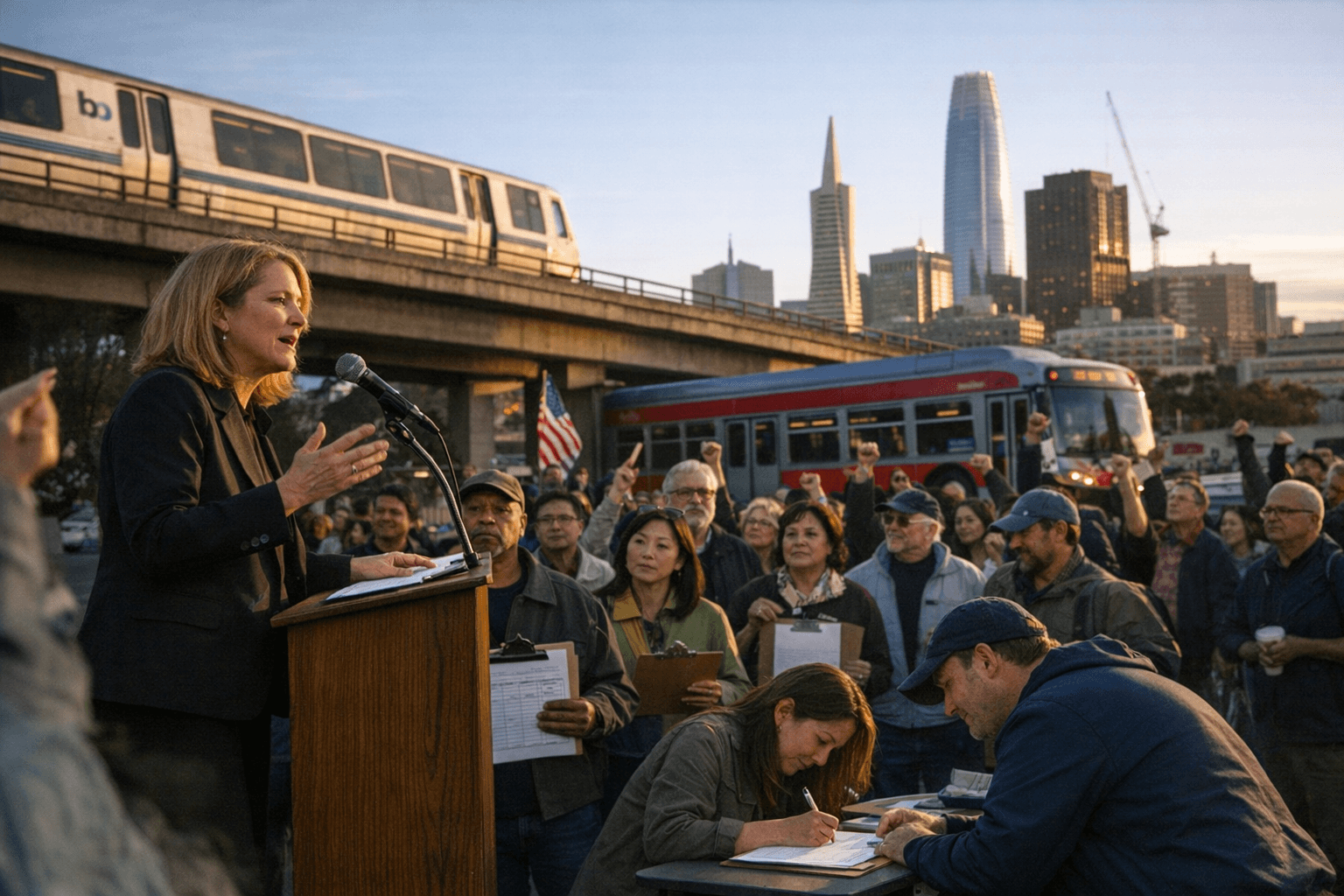
A coalition of transit advocates and elected officials held a kickoff rally at Embarcadero Plaza on January 23 to launch Connect Bay Area, a campaign to qualify a regional sales-tax ballot measure aimed at staving off a looming fiscal cliff for Bay Area transit agencies. Organizers said the drive seeks roughly 186,000 valid signatures by June to place the measure on the November ballot.
The proposal framework being circulated would impose a half-cent sales tax in most Bay Area counties for 14 years. In San Francisco, officials have discussed a separate option that would raise the rate to a full cent to provide additional support for San Francisco Municipal Transportation Agency operations, commonly known as Muni. The Metropolitan Transportation Commission recently completed an independent review that projected roughly an $800 million annual deficit for Bay Area transit agencies if no new revenue is secured.
The rally drew state and local leaders as speakers who warned that failing to act could force deeper service cuts, fare increases, and deferred maintenance across regional systems. For San Francisco residents, those shortfalls would directly affect Muni routes that many commuters, seniors, and low-income riders rely on for work, medical appointments, and daily errands. Transit advocates framed the campaign as essential to preserving the region's transit network and maintaining connections to jobs and services.
Connect Bay Area organizers described the campaign as a regional effort that will require coordinated signature gathering and outreach across multiple counties in the nine-county Bay Area. The June signature deadline reflects the legal timeline for validating petitions and meeting county clerk requirements in time to qualify a measure for the November ballot. If successful, the tax would provide a predictable revenue stream over the 14-year period outlined by the proposal.
The stakes for San Francisco are particularly high because the city balances local transit needs with regional commitments to reduce car dependence and meet climate goals. A larger local tax option for San Francisco would channel extra funds directly to Muni, where capital projects and operating shortfalls have been flagged by city officials in recent years.
The next months will test the campaign's ability to translate public concern into verified signatures and to build trust among communities most affected by transit changes. For residents, the effort means an active season of outreach and a vote this November that could determine the stability of transit service for years to come.
This article was produced by Prism’s automated news system from verified source data, official records, and press releases, then run through automated quality and moderation checks before publishing. The system is built and supervised by the people who set the standards it runs under. Read our full AI policy.
Did this article answer your question?