District 2 Supervisor Candidates Split on Evicting Tenants Who Relapse
Three candidates vying for District 2's seat on June 2 split on whether a Marina or Cow Hollow tenant who relapses should face eviction — a question that runs into California disability law.
Jeremy Kirshner, Lori Brooke, and incumbent Stephen Sherrill are running to represent the Marina, Cow Hollow, Pacific Heights, and Presidio in the June 2 special election for District 2, and they do not agree on one of the most charged housing questions in San Francisco right now: should a tenant who relapses into substance use be shown the door?
The question, posed to all three candidates in a candidate Q&A published Monday, cuts to the fault line running through the city's long-running housing policy argument. Some District 2 candidates argued for treatment-first and housing-first responses, saying non-punitive measures should be exhausted before any lease action. Others leaned toward accountability, arguing that landlords and neighbors in districts like the Marina and Anza Vista need enforceable remedies when behavior harms others or damages property.
The debate is not merely philosophical. California's Fair Employment and Housing Act treats addiction as a disability and requires landlords to offer reasonable accommodations before moving to evict, a legal standard that makes relapse-triggered evictions difficult to execute without exposing property owners to discrimination claims. San Francisco's Rent Ordinance further restricts just-cause evictions, meaning a tenant in a rent-controlled unit who relapses but is not actively endangering others or damaging property may have substantial legal grounds to stay. Supportive housing contracts funded through the city's Department of Public Health typically forbid eviction for relapse alone, requiring providers to first connect tenants to clinical services.
That legal landscape has not stopped the political pressure. Sherrill, appointed to the seat in December 2024 by former Mayor London Breed and now backed by four PACs with a combined $1 million in the bank, has consistently placed safe and clean streets at the center of his campaign, calling for visible enforcement and real accountability when laws are broken. Brooke, a Cow Hollow Association president of nearly two decades and co-founder of Neighborhoods United SF who has raised $160,000 for the race, has presented herself as a grassroots counterweight to City Hall's top-down approach. Third candidate Kirshner rounds out the field ahead of the June vote.
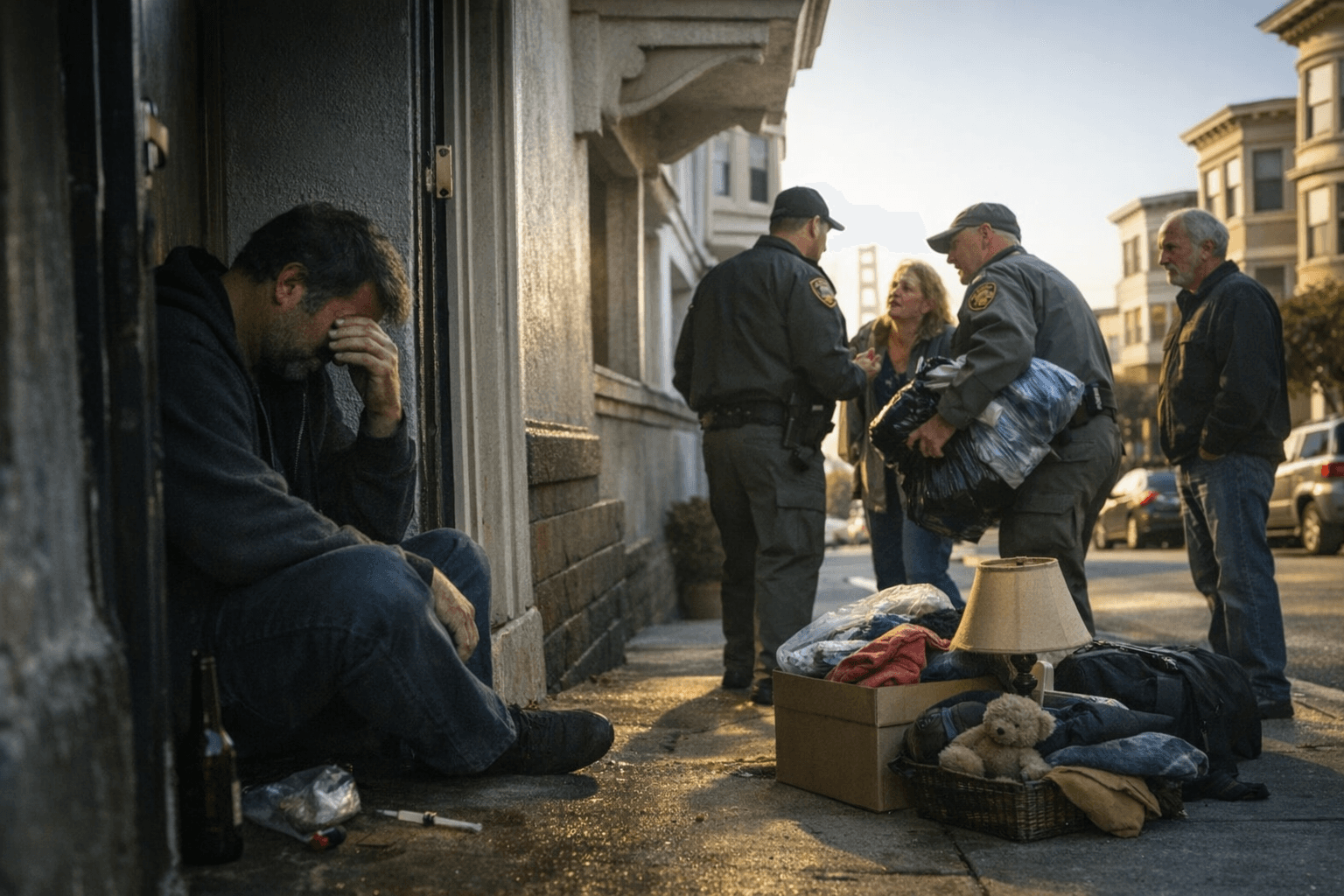
Supervisors hold meaningful levers on this question beyond rhetoric. They vote on the budget for the Department of Public Health's street outreach and residential treatment programs; they shape code enforcement priorities that determine whether a nuisance complaint triggers city intervention; and they can convene, or not convene, the kind of mediation and building-support infrastructure that keeps tenants housed through a relapse rather than cycling into the street.
District 2 voters will cast ballots in the June 2 special election. Winners serve only through January 2027 before facing the same contest again in November for a full four-year term, which means whoever takes the seat will have roughly six months to establish a record on exactly these kinds of policy choices before voters render a second judgment.
This article was produced by Prism’s automated news system from verified source data, official records, and press releases, then run through automated quality and moderation checks before publishing. The system is built and supervised by the people who set the standards it runs under. Read our full AI policy.
Did this article answer your question?