dnata worker John Lacayanga, 28, dies under cargo pallet at SFO
A dnata cargo worker, John Lacayanga, 28, was found dead under a pallet at SFO; the incident raises safety and oversight questions for ramp crews and airport operations.

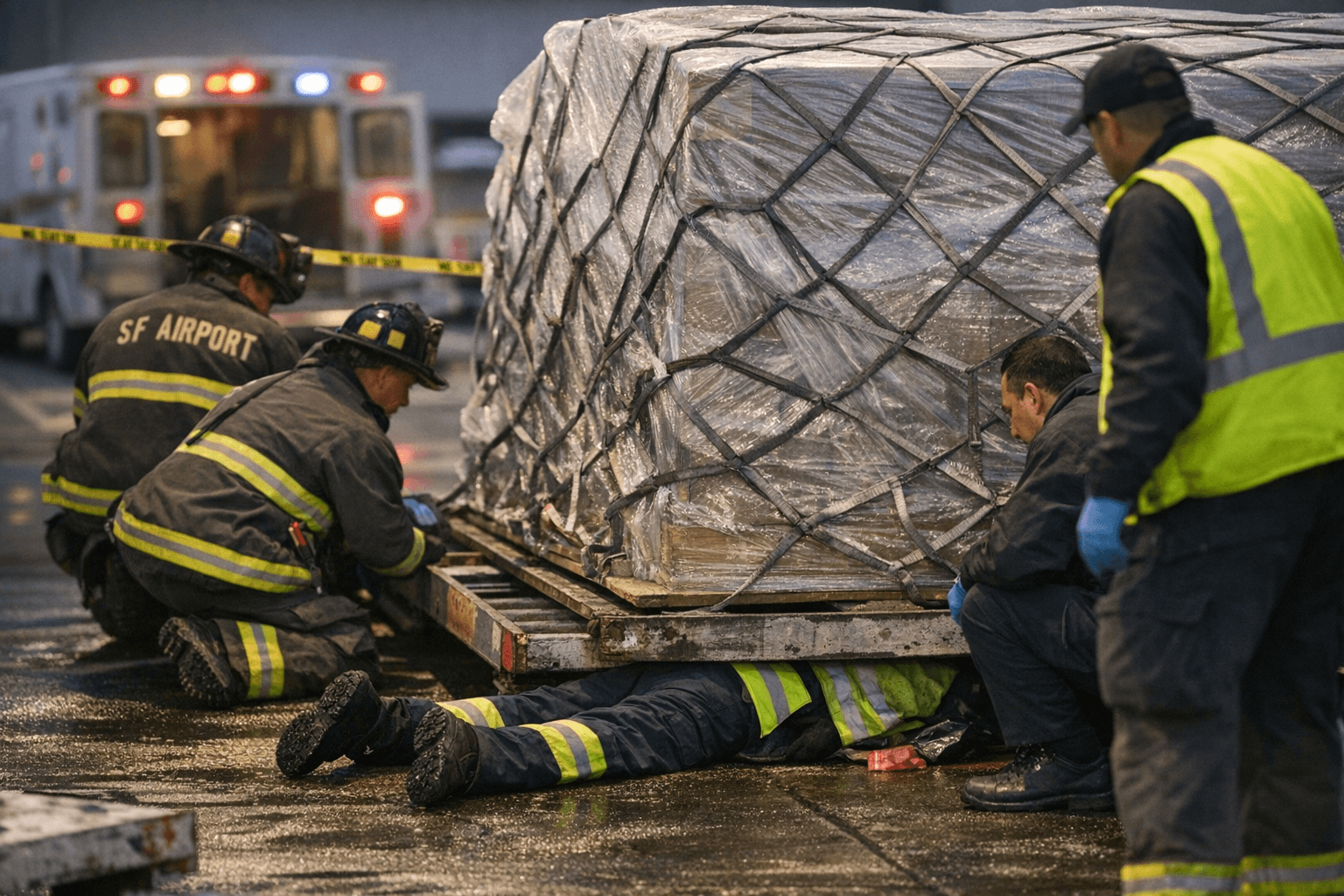
A 28-year-old dnata employee, identified by the San Mateo County Coroner’s Office as John Lacayanga, died after being found beneath a cargo pallet on a vehicle service road between Terminal 3 and the International Terminal boarding area at San Francisco International Airport. First responders discovered the worker on the evening of Jan. 18, 2026; SFO and Fire Department statements said no other vehicles were involved. The incident was reported to authorities Jan. 19 and is being investigated as an accident.
Airport officials said SFO is cooperating with investigators and is providing support to the family. Representatives from the California Division of Occupational Safety and Health (Cal/OSHA) interviewed the employer on scene as part of an initial investigation. dnata, identified in public statements as the Dubai National Air Travel Agency, supplies ground handling and cargo services at numerous global airports and employs ground crews who load and move freight and baggage on and off aircraft.
The immediate operational impact at SFO appeared limited, with authorities indicating the incident occurred on a service road rather than an active ramp with moving aircraft. Still, deaths among ground-handling workers have local consequences beyond any temporary traffic controls: they spotlight safety procedures for cargo-handling, equipment maintenance, shift scheduling and training at a major Bay Area economic hub. Ground crews operate under time pressure to keep flights on schedule, and any review prompted by Cal/OSHA could lead to stricter protocols or targeted inspections that affect workflow and staffing at the airport.
From an economic and policy perspective, workplace fatalities trigger predictable downstream costs for employers and airports. Investigations can result in citations, fines and mandated corrective actions that raise compliance expenses. Insurers may re-evaluate premiums for ground-handling contractors, and airlines and logistics providers often pass increased costs through contract renegotiations. At a city and county level, SFO’s role as a major economic engine, supporting travel, tourism and cargo flows for the Bay Area, means that sustaining safe operations is both a public-safety and economic priority.
For local residents and workers, the case underscores the human risks behind the airport’s round-the-clock operations. Labor advocates and workplace-safety officials will be watching Cal/OSHA’s findings for any recommendations or enforcement actions. For travelers, immediate disruptions are unlikely, but the investigation could prompt tighter on-site controls or temporary operational changes affecting cargo schedules.
As Cal/OSHA and local authorities complete their inquiries, the outcome will determine whether this incident leads to policy changes at SFO or broader shifts among contractors that handle the Bay Area’s air cargo. In the meantime the airport is engaged with investigators and the family, and the community will be paying attention to how officials balance safety, labor pressures and the economic functions that keep flights and freight moving.
This article was produced by Prism’s automated news system from verified source data, official records, and press releases, then run through automated quality and moderation checks before publishing. The system is built and supervised by the people who set the standards it runs under. Read our full AI policy.
Did this article answer your question?

