FAA Order Halts Parallel Landings at SFO, Significant Delays Expected
SFO's signature side-by-side landings are grounded; the FAA ban cuts arrivals by a third and is projected to delay 1 in 4 flights through at least October 2.

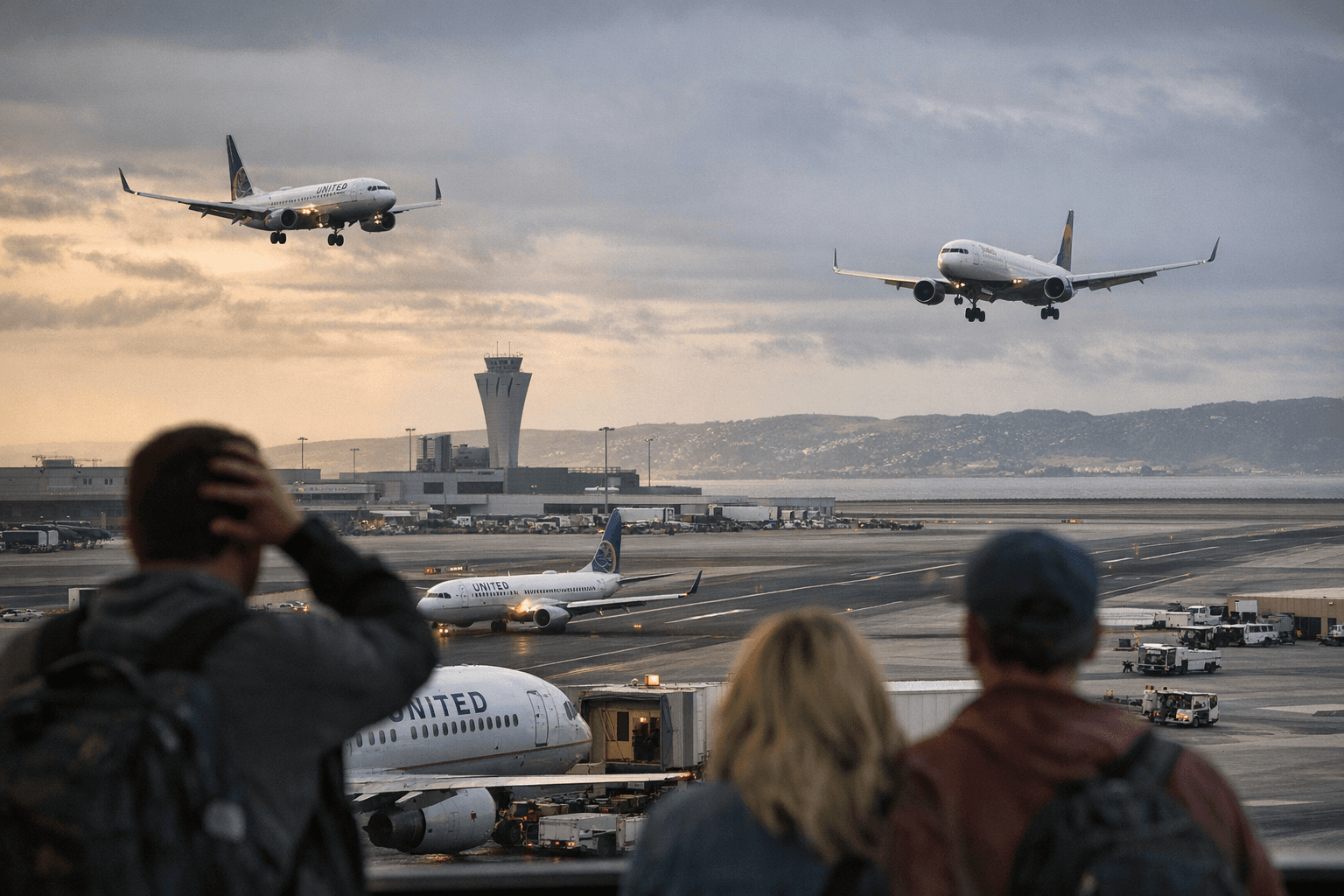
From Visitacion Valley to the Embarcadero, the twin silhouettes descending in formation over San Francisco Bay toward SFO's parallel runways have been a fixture of Bay Area skies since the 1970s. That approach is now grounded. The Federal Aviation Administration banned simultaneous side-by-side landings on SFO's east-west runways on March 31, citing safety concerns and ongoing runway construction, and the airport now projects that roughly one in four arriving flights will face delays of 30 minutes or more.
The restriction prohibits planes from making simultaneous visual approaches to runways 28L and 28R, even in clear weather when pilots can confirm each other's position. Those runways sit just 750 feet apart, far narrower than the spacing that permits independent parallel operations at other major U.S. hubs. By forcing aircraft into single-file sequences, the rule slashes SFO's maximum hourly arrival capacity from 54 to 36. The FAA cited a recent string of near-miss incidents nationwide, including a February 27 collision between an American Airlines plane and a police helicopter in San Antonio and a close call between a United Airlines jet departing SFO and a military helicopter at Orange County's John Wayne Airport.
SFO spokesperson Doug Yakel acknowledged that the delay outlook had deteriorated sharply since the runway project was announced. "While we were forecasting about 15 percent of flights being delayed during our runway project, we expect this change will increase the delay potential to approximately 25 percent of arriving flights experiencing a delay of at least 30 minutes. We are working with the FAA on ways to improve the arrival rate at SFO," Yakel said.
The underlying construction project, a full repaving of runway 1R, runs from March 30 through October 2. The adjacent runway 1L has been converted to a taxiway to reduce ground congestion, leaving only the 28L/28R pair to handle all arrivals and most departures. The north-south runways ordinarily handle roughly 95 percent of SFO's takeoffs.
For travelers, the most acute delay windows cluster around 9 a.m. and again between 8 and 9 p.m. Those with any schedule flexibility should aim for midday departures, build at least an hour of buffer into any pickup or connection tied to an SFO arrival, and avoid short layovers that leave no margin for a 30-minute or longer inbound delay. Passengers should contact their airline directly about fee-free rebooking options; most carriers issue travel waivers during sustained operational disruptions. United Airlines, SFO's largest carrier, said it is reviewing the rule change to assess whether schedule modifications are needed. Alaska Airlines, the second-largest carrier, reported 15 delayed flights on Monday and none on Tuesday, with the picture described as changing by the day. United and Alaska together account for roughly 60 percent of the airport's passenger volume.
Oakland International Airport and San José Mineta International Airport offer nearby alternatives for Bay Area travelers. BART runs direct service to SFO via the Millbrae and SFO Airport stations, and Caltrain connects from the Peninsula and South Bay at Millbrae for passengers arriving by rail.
October 2 marks the first clear benchmark for relief: when runway 1R returns to service, the hourly arrival ceiling is expected to climb from 36 to 45. That still falls short of SFO's pre-crisis peak of 54 hourly arrivals. The parallel approach ban is a separate safety measure from the runway project, and the FAA has given no indication it plans to rescind it. Even after the construction wraps, the airport may be operating at a structurally reduced capacity, making October 2 a milestone rather than a full reset.
This article was produced by Prism’s automated news system from verified source data, official records, and press releases, then run through automated quality and moderation checks before publishing. The system is built and supervised by the people who set the standards it runs under. Read our full AI policy.
Did this article answer your question?

