Fisherman's Wharf Shop Has Surprising Ties to Tommy Wiseau and The Room
A Fisherman's Wharf shop called Street Fashions has unexpected ties to Tommy Wiseau and cult classic The Room — and it's hiding in plain sight.
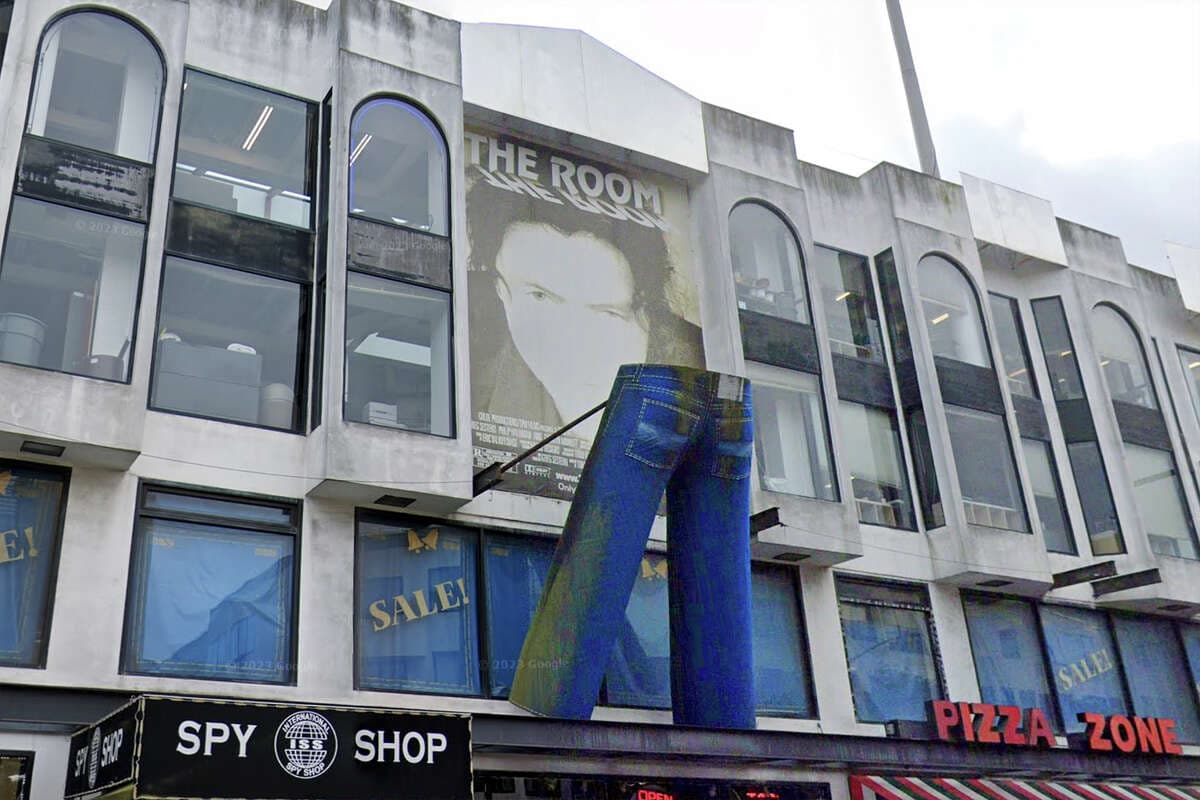
Walk along the tourist-thick stretch of Fisherman's Wharf and you'll pass shop after shop selling sourdough, crab bibs, and Golden Gate Bridge snow globes. Street Fashions doesn't quite fit that mold. The store is hard to miss — its outsized shopfront props announce it with the kind of theatrical excess that feels less like retail strategy and more like a personal statement. As it turns out, that instinct is exactly right, because Street Fashions carries a backstory that connects it to one of the most fascinatingly strange figures in American independent cinema: Tommy Wiseau, the writer, director, producer, and star of The Room.
A Store That Was Always a Little Different
Street Fashions has been a fixture at Fisherman's Wharf for years, occupying a stretch of prime tourist real estate while projecting an identity that has never quite conformed to its surroundings. The shopfront props that draw double-takes from passersby aren't accidental — they're a visual signature that, once you know the backstory, starts to feel entirely on-brand for a business with ties to the man who gave the world "Oh hai, Mark."
The store sits in one of San Francisco's most visited corridors, a neighborhood that draws millions of tourists annually yet retains a handful of genuinely local oddities. Street Fashions is among the latter category, a place that has persisted through the cycles of redevelopment, rent pressure, and pandemic disruption that have reshaped so much of the Wharf's commercial landscape.
Tommy Wiseau and The Room: A Quick Primer
For anyone who hasn't spent a Saturday night at a midnight screening throwing plastic spoons at a movie screen, some context is useful. Tommy Wiseau is the enigmatic filmmaker who wrote, directed, produced, and starred in The Room, a 2003 movie self-financed at a reported cost of $6 million that was initially dismissed as an incomprehensible vanity project. Over the following decade, it became one of the most celebrated cult films in history, with devoted audiences reciting dialogue and attending interactive screenings in cities across the country.
Wiseau himself has long been a figure of genuine intrigue. His origins, his finances, and the source of the money he used to make The Room have never been fully explained. He has lived and worked in San Francisco, and the city threads through his story in ways that fans of the film have spent years trying to map. The connection to Street Fashions is precisely the kind of detail that fits the Wiseau legend: unexpected, specific, and sitting in plain sight for anyone who happened to look.
What the SFGATE Feature Revealed
A feature published by SFGATE on March 16, 2026 brought the Street Fashions story into sharper focus, tracing the history of the shop and documenting its ties to Wiseau and The Room. The piece represents the kind of deep local reporting that puts a precise address to a story that had previously circulated mostly in the oral tradition of San Francisco film nerds and Wiseau obsessives.
The reporting confirms that Street Fashions, with its conspicuous shopfront presence, is not simply a quirky Wharf souvenir outpost — it is connected to the wider Wiseau story that has made San Francisco a kind of pilgrimage destination for fans of the film. The specifics of that connection, the nature of the relationship between the store and Wiseau's world, sit at the center of a narrative that SFGATE traced over the shop's long-standing history at the Wharf.
Why This Story Matters to San Francisco
San Francisco already has a complicated relationship with The Room. Wiseau filmed significant portions of the movie in the city, and several locations, including the rooftop scenes that became iconic among fans, are recognizable to anyone who knows SF's skyline. The Wiseau mythology is, in part, a San Francisco mythology: a story about a mysterious outsider who arrived in the city, accumulated resources through means that remain opaque, and used them to create something that defied conventional explanation.
Finding a retail anchor for that story at Fisherman's Wharf adds a layer of texture to a narrative that has always resisted easy geography. The Wharf is not the San Francisco of tech campuses or Mission taquerias; it is the city's most tourist-facing edge, the place where the postcard version of SF is sold back to visitors. The presence of a shop tied to Wiseau there is a genuinely strange fact, which may be the most fitting tribute possible to the filmmaker's legacy.
Visiting Street Fashions
If the SFGATE feature sends curious readers down to the Wharf, Street Fashions is worth a visit on its own terms. The shopfront is identifiable by the props that have made it a minor local landmark, the kind of installation that prompts tourists to photograph it without necessarily knowing what they're looking at. That ambiguity is part of its appeal.
Fisherman's Wharf is accessible by the Powell-Hyde and Powell-Mason cable car lines, the F-Market historic streetcar, and numerous Muni bus routes. Parking is available in the Wharf garages along Beach Street, though weekend crowds make transit the more practical option. The shop's location within the Wharf's commercial strip puts it within easy walking distance of the Ferry Building, Ghirardelli Square, and the Hyde Street Pier — enough to justify a full afternoon in the neighborhood.
The Broader Cult Film Geography of SF
The Room is not the only cult property with San Francisco roots, but it may be the one whose geography has been most thoroughly documented by fans. Wiseau's decision to film in the city rather than Los Angeles gave The Room a visual identity distinct from most low-budget independent films of its era, and those locations have taken on a second life as destinations for dedicated viewers.
Street Fashions, as a Wiseau-connected business operating at one of the city's most recognizable addresses, slots into that geography in a way that rewards the kind of obsessive local knowledge that San Francisco tends to produce. The SFGATE feature published this week is the most detailed public accounting of that connection yet, and it is likely to send a new wave of curious visitors to a stretch of the Wharf that most tourists pass through without stopping.
For a city that has always had an appetite for its own mythology, the Street Fashions story is a reminder that some of San Francisco's strangest chapters are still being written from a storefront overlooking the bay.
This article was produced by Prism’s automated news system from verified source data, official records, and press releases, then run through automated quality and moderation checks before publishing. The system is built and supervised by the people who set the standards it runs under. Read our full AI policy.
Did this article answer your question?

