Former Google Engineer Convicted in San Francisco for Economic Espionage, AI Theft
A federal jury convicted former Google engineer Linwei "Leon" Ding on 14 counts for stealing AI infrastructure secrets, a case raising local concerns about tech security and national-security risk.
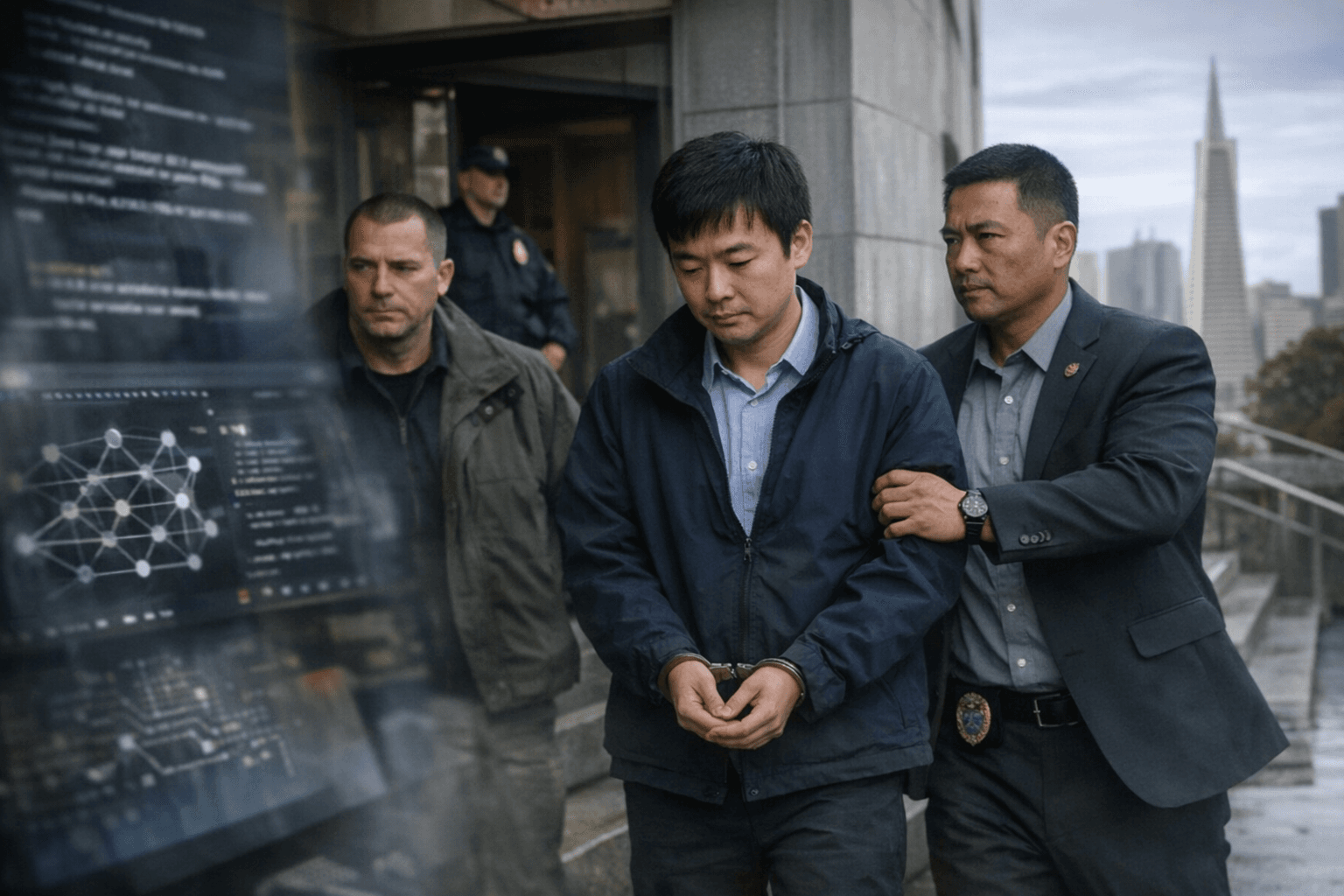
A federal jury in San Francisco found Linwei Ding, also known as Leon Ding, guilty on 14 counts, seven counts of economic espionage and seven counts of theft of trade secrets, for allegedly stealing confidential Google documents tied to the company’s AI training and serving infrastructure. The verdict, returned after an 11-day trial before U.S. District Judge Vince Chhabria, underscores the legal and economic stakes for companies and workers in San Francisco’s tech ecosystem.
Prosecutors said Ding copied and transferred thousands of pages of internal technical material, including design details for hardware and software used in Google’s supercomputing data centers, custom chip and networking information, and GPU- and TPU-related trade secrets. Prosecutors told the court they recovered more than 1,000 unique files totaling roughly 14,000 pages and identified 105 documents as the core of the criminal case, though other descriptions of the trove in reports range from "hundreds of files" to "thousands of pages."
Ding, who began working at Google in 2019 as a software engineer involved in GPU software and data-center infrastructure, resigned in December 2023 after prosecutors say he downloaded stolen documents to a personal computer. The alleged exfiltration activity began in May 2022, according to trial materials and prosecution assertions, with additional reporting describing uploads to a personal cloud account in 2022 and downloads in December 2023. Ding was indicted in March 2024 and hit with a superseding indictment in February 2025; sentencing matters are set to move forward at a status conference scheduled for Feb. 3, 2026.
Federal officials framed the case as central to protecting U.S. technological edge. Roman Rozhavsky, assistant director of the FBI’s Counterintelligence and Espionage Division, said, "In today's high-stakes race to dominate the field of artificial intelligence, Linwei Ding betrayed both the U.S. and his employer by stealing trade secrets about Google's AI technology on behalf of China's government. Today's verdict affirms that federal law will be enforced to protect our nation's most valuable technologies and hold those who steal them accountable." U.S. Attorney Craig H. Missakian added, "The jury delivered a clear message today that the theft of this valuable technology will not go unpunished. We will vigorously protect American intellectual capital from foreign interests that seek to gain an unfair competitive advantage while putting our national security at risk." At the time of the indictment, then-Attorney General Merrick Garland warned, "The Justice Department will not tolerate the theft of artificial intelligence and other advanced technologies that could put our national security at risk." Google vice president Lee-Anne Mulholland said, "We're grateful to the jury for making sure justice was served today, sending a clear message that stealing trade secrets has serious consequences." Another commentator summed the broader threat this way: "The theft and misuse of advanced artificial intelligence technology for the benefit of the People’s Republic of China threatens our technological edge and economic competitiveness."
Ding faces statutory exposure of up to 15 years in prison per economic espionage count and up to 10 years per theft count, plus potential fines in the millions; Judge Chhabria ordered him released pending sentencing, concluding he was not a flight risk. Reporting contains a minor discrepancy on Ding’s age, most accounts list him as 38 while one lists 39, and differences in how timelines are phrased, with some reports focusing on May 2022–April 2023 conduct and others highlighting December 2023 downloads; those items warrant confirmation from court filings.
For San Francisco, the case highlights risks that accompany being a global AI hub: workforce mobility, startup formation, and international investment all intersect with sensitive infrastructure work. Local companies and investors should expect heightened scrutiny of internal controls, while employees who handle model training pipelines and data-center tooling can anticipate closer cooperation between industry and federal authorities. The next legal step is the Feb. 3, 2026 status conference, after which sentencing will determine how the conviction translates into penalties and precedent.
This article was produced by Prism’s automated news system from verified source data, official records, and press releases, then run through automated quality and moderation checks before publishing. The system is built and supervised by the people who set the standards it runs under. Read our full AI policy.
Did this article answer your question?

