Four injured as Arcimoto FUV crashes into Audi near Panhandle
An Arcimoto FUV split Baker and Hayes with a black Audi, sending four people to hospital and putting San Francisco’s odd-vehicle rules back in view.
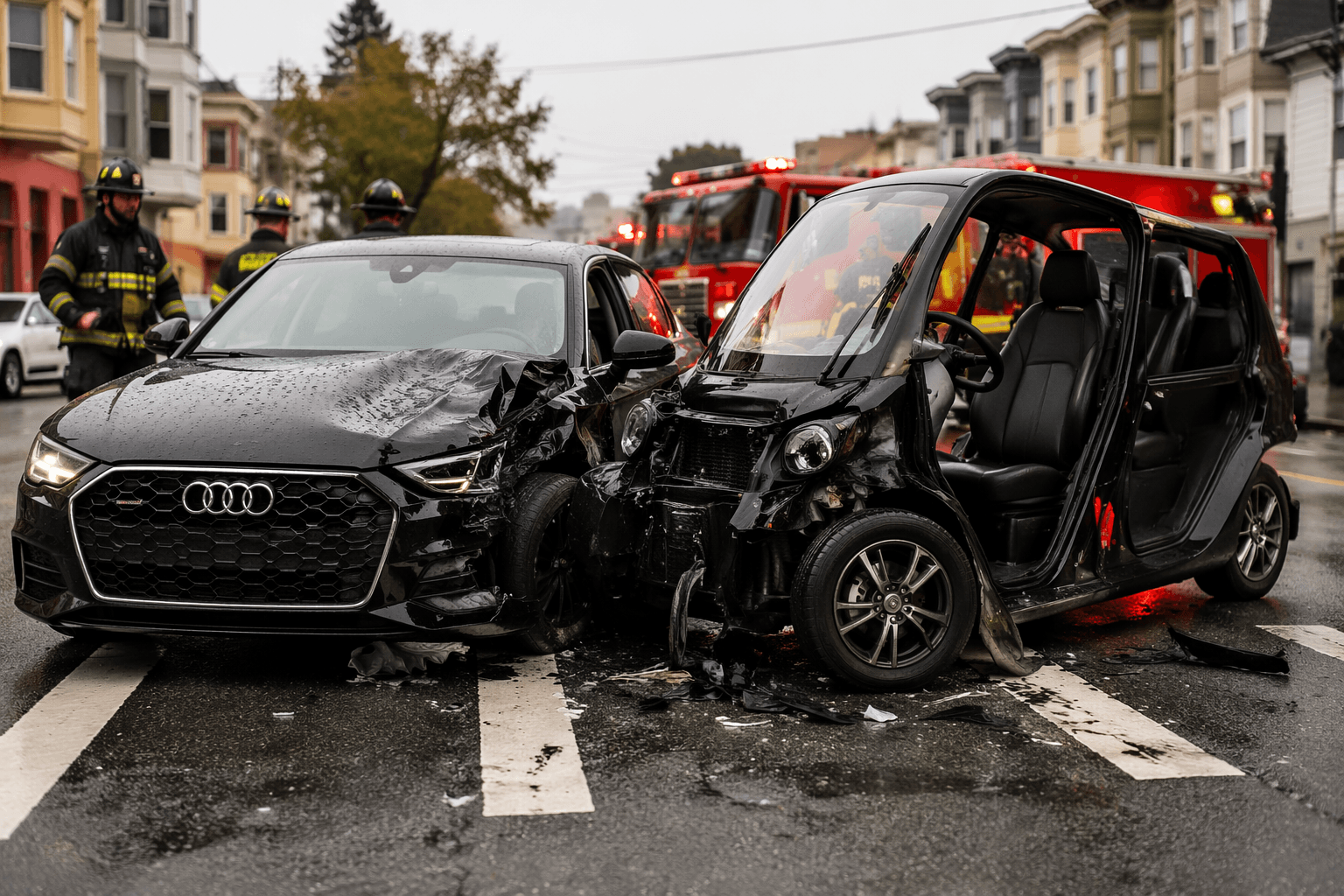
An Arcimoto FUV, the open-sided three-wheeled electric vehicle, slammed into a black Audi at Baker and Hayes streets near the Panhandle, leaving four people with injuries described as minor to moderate and sending them to the hospital, San Francisco police and fire officials said. The crash was reported Wednesday, June 3, and investigators are still sorting out how the collision unfolded.
Video posted online showed the moment the three-wheeler and the Audi collided, with at least one occupant thrown into the roadway. The San Francisco Fire Department told people to stay clear of the area while the San Francisco Police Department worked the scene, a reminder that even a single crash at Baker and Hayes can quickly choke off traffic around the Panhandle.
For drivers trying to understand where a vehicle like the FUV fits, California’s rules are more specific than the vehicle’s shape suggests. The DMV says motorcycles are motor vehicles with up to three wheels, and motorcycles with three wheels or a sidecar require only a Class C driver’s license. State rules also require insurance on vehicles operated or parked on California roads, and DMV motorcycle registration rules call for proof of insurance, title documents and the proper registration paperwork. A three-wheeler can be street-legal here, but it is not exempt from the basic obligations that apply to other vehicles on public roads.
The crash also lands in a city that has spent years confronting how unfamiliar vehicles mix with ordinary traffic. By Oct. 13, 2023, San Francisco had logged 226 self-reported autonomous-vehicle collisions, 84% of California’s total at the time, with the highest concentration in SoMa. After the Cruise crash that roiled public trust, the California DMV indefinitely suspended Cruise’s driverless taxi operation in the state, and the agency’s newer rules now let law enforcement cite AV companies for moving violations while giving emergency officials power to clear driverless vehicles from active incident zones. On San Francisco streets, the enforcement question is no longer whether strange vehicles will show up, but whether regulators can keep pace once they do.
This article was produced by Prism’s automated news system from verified source data, official records, and press releases, then run through automated quality and moderation checks before publishing. The system is built and supervised by the people who set the standards it runs under. Read our full AI policy.
Know something we missed? Have a correction or additional information?
Submit a Tip