Illegal cars surge on Market Street after ride-hail policy change
Illegal cars began spilling onto Market Street after San Francisco loosened ride-hail access, turning a downtown revival test into a daily enforcement fight.
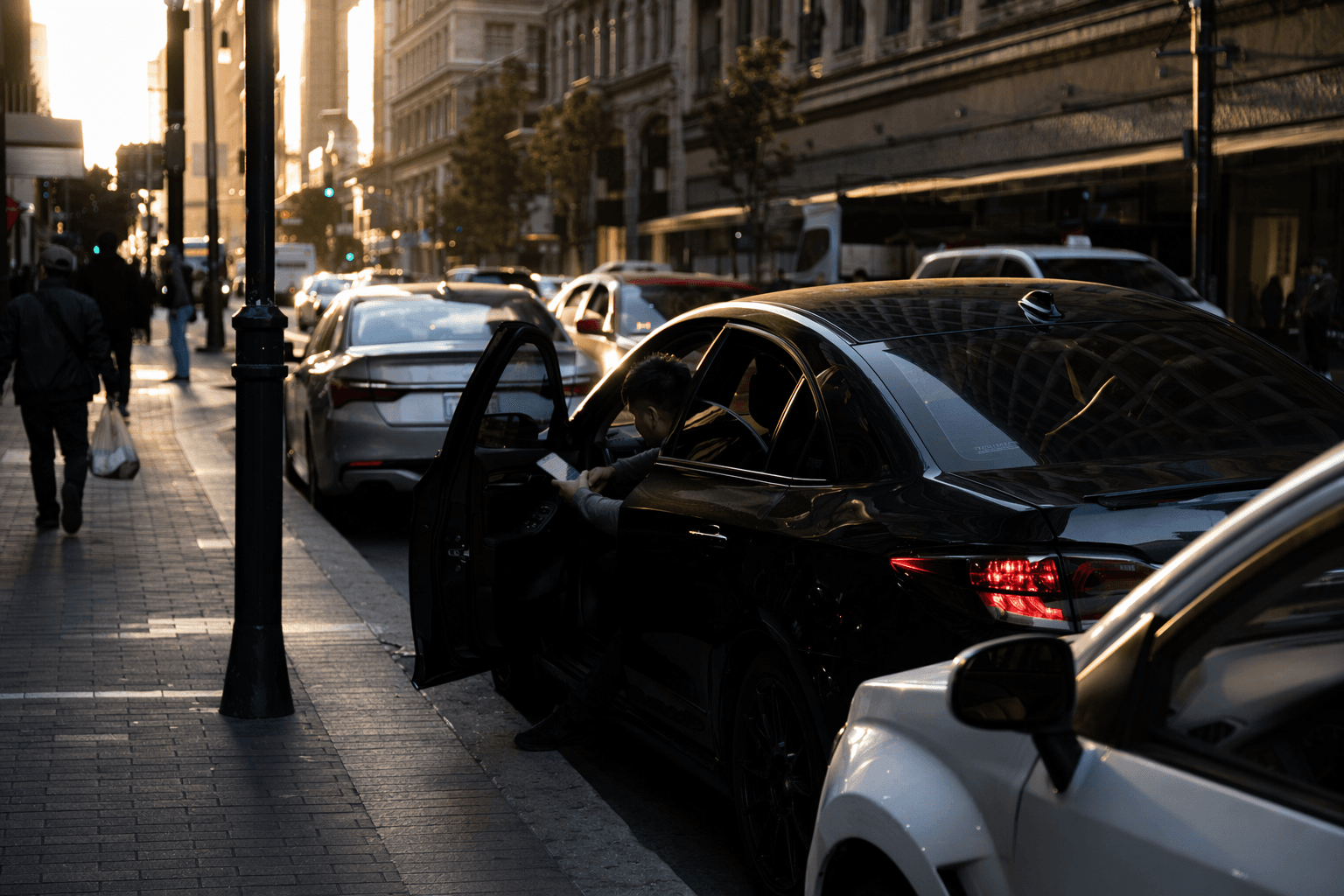
A policy meant to bring new life to Market Street has quickly exposed a harder problem: once San Francisco opened a narrow lane for ride-hail pick-ups and drop-offs, illegal cars began showing up too.
At a Land Use and Transportation Committee update, San Francisco Municipal Transportation Agency representatives described a rollout that was far more limited than the street-level confusion suggests. On Aug. 26, 2025, Waymo and a small number of commercial-plated vehicles on the Uber and Lyft platforms began limited passenger service on Market Street, using seven loading bays in Mid-Market. But only Uber Black had meaningfully started using the access, while Lyft Black had only begun piloting a small number of pick-ups and drop-offs. Waymo itself was not doing pick-up and drop-off on Market Street.
That gap between the city’s intent and what drivers appear to see on the pavement is now the story. Market Street, one of San Francisco’s most symbolic civic corridors, was reimagined to favor transit, pedestrians and commercial access over private cars. The Better Market Street project, approved by the SFMTA Board on Oct. 16, 2019, restricted private vehicles broadly while allowing commercial vehicles on all segments of Market Street for enforcement purposes.

SFMTA planning materials have described Market Street as the city’s preeminent ceremonial street, and the project’s goals included reducing collisions and injuries while improving transit reliability and the pedestrian environment. Earlier planning also envisioned passenger and commercial loading on cross streets rather than unrestricted private-car access on the corridor. Even now, SFMTA says non-commercial vehicles may use yellow zones only briefly for loading or unloading if the driver stays with the vehicle and leaves within three minutes.
That narrow exception matters because Market Street is not just a place where traffic moves. It is where buses, cyclists and pedestrians already compete for space, and where a handful of extra cars can slow service and create new conflict points from Van Ness Avenue to the Embarcadero. The risk now is that a policy written to manage commercial loading could be read by private drivers as an open invitation.
The political stakes grew after Mayor Daniel Lurie backed the change as part of downtown revival. But with illegal cars now appearing on a street built to keep private traffic out, the city is confronting a basic question: whether San Francisco created an enforcement vacuum in the name of innovation.
This article was produced by Prism’s automated news system from verified source data, official records, and press releases, then run through automated quality and moderation checks before publishing. The system is built and supervised by the people who set the standards it runs under. Read our full AI policy.
Did this article answer your question?