Judge allows genocide reference in Golden Gate Bridge protest trial
A judge's ruling lets defense lawyers use "genocide" as seven bridge protesters face felony charges, turning a freeway shutdown into a San Francisco free-speech test.
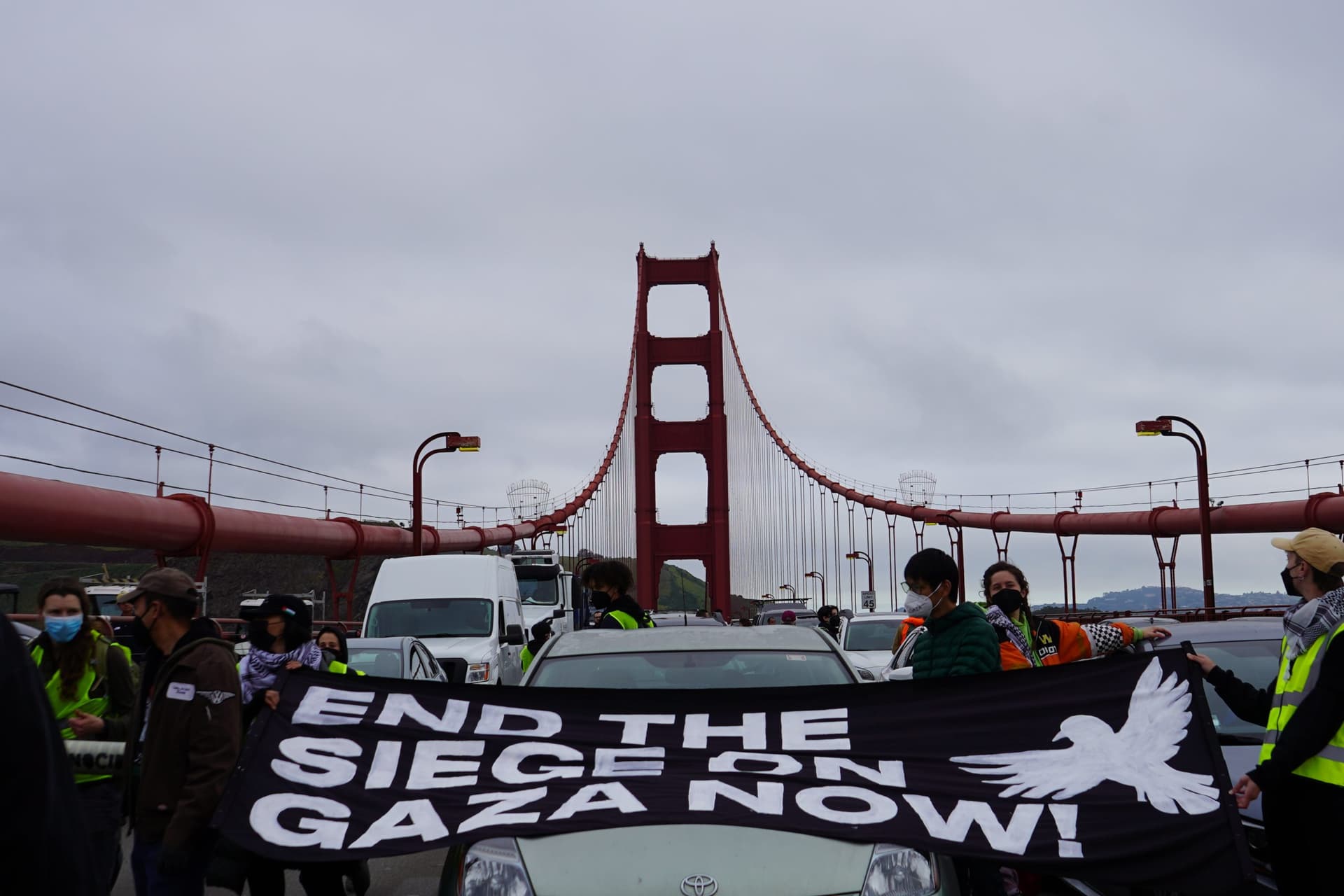
Inside San Francisco Superior Court, the battle over the Golden Gate Bridge protest narrowed to one word with global weight: genocide. Judge Teresa Caffese rejected District Attorney Brooke Jenkins’ bid to keep the term out of the trial, giving defense lawyers room to argue that the April 15, 2024 shutdown was driven by the war in Gaza and not just a traffic blockade.
The case centers on seven pro-Palestinian activists facing felony charges after protesters parked vehicles in the southbound lanes of the Golden Gate Bridge and brought traffic to a stop for about four and a half hours. Prosecutors say some demonstrators used chains through windows and metal attachment devices, including what the district attorney’s office described as sleeping dragons, making it difficult for California Highway Patrol officers to remove them quickly. Jenkins has also said the disruption left drivers trapped on the bridge and amounted to false imprisonment.
The San Francisco District Attorney’s Office announced charges against 26 people in August 2024, including eight felony-conspiracy defendants and 18 misdemeanor-conspiracy defendants. The charging package also included trespassing, unlawful assembly and failure to obey an officer. Jenkins said the shutdown caused missed surgeries, missed medical appointments, missed work and flights, and other hardship for people caught in the traffic jam.

Caffese’s ruling matters because it gives the defense more room to explain why the protest happened and how the activists saw the conflict in Gaza. That makes the trial more than a dispute over a bridge closure. It is now a test of how much political language San Francisco jurors will hear, and how far prosecutors can go in trying to control the words used to describe a highly charged act of civil disobedience.
The Golden Gate Bridge, Highway and Transportation District said the closure cost about $160,000 in lost toll revenue. The district has argued that waiving restitution would encourage more bridge blockages, while Mission Local reported that it initially sought about $163,000 before later dropping its demands. The financial stakes have kept the bridge district in the middle of a legal fight that now reaches beyond traffic and into questions of motive, punishment and public meaning.

The shutdown was part of the nationwide A15 day of action, and the bridge has long held symbolic value for protesters. Mission Local noted that AIDS activists also blocked the Golden Gate Bridge in 1989, underscoring how the span has repeatedly become a stage for dramatic public protest. In 2024, Gov. Gavin Newsom echoed Jenkins’ public-safety argument, saying free speech does not extend to endangering the public, while defense attorney Jeff Wozniak has called the charging decisions overly harsh and said the defendants believed they were speaking up for Palestinians.
With jury selection approaching, the courtroom fight now reaches into a broader San Francisco debate over protest rights, public order and how the city’s courts handle politically charged language when the case on trial is tied to one of its most recognizable landmarks.
This article was produced by Prism’s automated news system from verified source data, official records, and press releases, then run through automated quality and moderation checks before publishing. The system is built and supervised by the people who set the standards it runs under. Read our full AI policy.
Did this article answer your question?