Lurie’s approval stays high as he pushes tough budget agenda
Lurie’s sky-high approval gives him room to sell cuts, contracting changes and charter reforms, even as housing and homelessness remain his weakest spots.
Daniel Lurie entered City Hall with unusual political cover, and San Francisco is already seeing how far that cushion can carry him. A new poll put his approval at 74 percent, giving the mayor room to keep pressing a budget and governance agenda that would have been far harder for a weaker incumbent to advance.
That support matters because Lurie’s biggest wins so far have come on the city’s most delicate fiscal fights. He signed a $15.9 billion two-year budget for fiscal years 2025-26 and 2026-27 after the Board of Supervisors approved it 10-1, closing an $800 million deficit. Months earlier, he had proposed a nearly $16 billion budget that anticipated eliminating about 1,400 city jobs as the city tried to erase a projected $782 million gap.
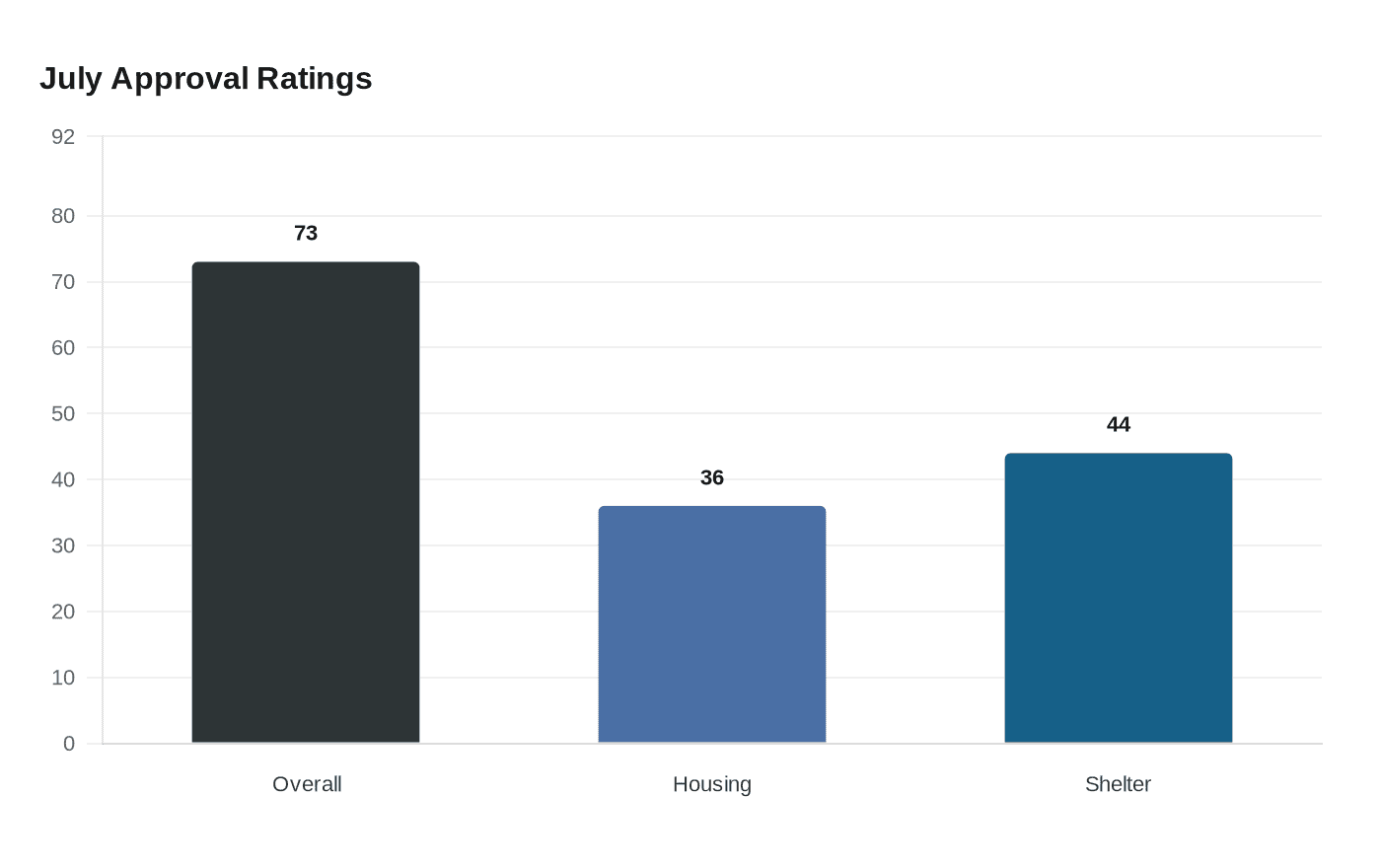
The political picture is even more striking because the approval comes with clear fault lines. In a July 2025 poll of 961 registered voters, Lurie stood at 73 percent approval and 25 percent disapproval just six months into office. But only 36 percent approved of how he handled reasonably priced housing, and 44 percent approved of his handling of shelter for the homeless. Support was strongest among newer residents and weaker among longtime progressives, a split that suggests his broader popularity has not erased the city’s old arguments over cost, displacement and street conditions.
Those tensions help explain the next stretch of his agenda. Lurie has already built working alliances with Board President Rafael Mandelman and Budget Chair Connie Chan, and that coalition now makes more controversial changes more politically possible. In 2026, Lurie and Mandelman proposed charter reforms that would expand executive power over contracting, ballot rules and executive accountability, a set of changes that could reshape how power moves through City Hall.
The first places to feel that agenda will be the parts of city government and the nonprofit network tied to grants, contracts and jobs, along with the neighborhoods that judge the mayor most quickly by what they can see on the street. The new poll showed gains on revitalizing downtown San Francisco and keeping neighborhoods clean, suggesting those visible improvements are helping him bank goodwill.
But that same goodwill will be tested by the problems that have not moved as quickly. Housing affordability and homelessness remain the clearest limits on Lurie’s mandate, and the higher his approval climbs, the more San Franciscans are likely to expect real results, not just fiscal discipline, from the next round of decisions at City Hall.
This article was produced by Prism’s automated news system from verified source data, official records, and press releases, then run through automated quality and moderation checks before publishing. The system is built and supervised by the people who set the standards it runs under. Read our full AI policy.
Did this article answer your question?