Market Match Program, Which Doubles CalFresh Dollars, Faces State Funding Cuts
Gov. Newsom's budget omits Market Match, the program that doubles CalFresh dollars at farmers markets. Funding runs out in early 2027 without legislative action.
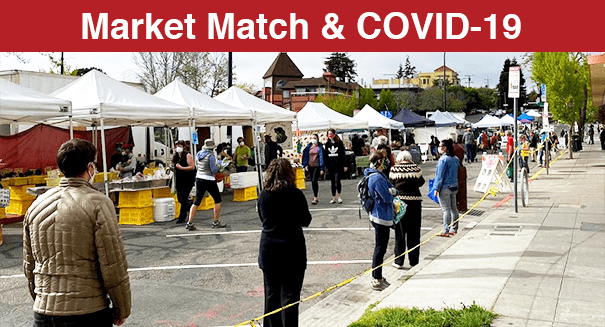
At farmers markets across San Francisco, CalFresh shoppers have spent the past 15 years arriving at info booths to exchange their EBT cards for scrip, then walking away with twice the purchasing power for fresh produce. That arrangement is now at risk. Gov. Gavin Newsom's proposed FY2026-2027 state budget omits funding for Market Match, the statewide nutrition incentive program that matches CalFresh benefits dollar-for-dollar, typically up to $15 per visit, at participating markets and farm-direct sites. If the Legislature does not restore the funding, the program will run out of money in early 2027.
The stakes are significant. Statewide, Market Match logged 650,000 visits last year and generated a combined $25 million in Market Match and CalFresh revenue, the equivalent of 50 million servings of fresh fruit and vegetables, according to Bourque. At a single market where Steve Pulliam serves as executive director, the program distributed $2.7 million in CalFresh dollars and more than $2 million in Market Match dollars through November 2025, serving an estimated 21,000 unique customers in 2023.
"It's $30 a month of extra food for our seniors and our low-income immigrant families," said Bradford, referring to what a typical $15-per-visit match provides over the course of a month. "$30 doesn't sound like a lot, but when you're living on [Social Security], $30 in food is a lot."
That population is large. Families with young children make up 62% of SNAP recipients, according to a 2024 analysis by the Center on Budget and Policy Priorities. A U.S. Department of Agriculture report found that as of fiscal year 2023, 79% of SNAP households included a child, an elderly individual, or a nonelderly individual with a disability.
Market Match was created 15 years ago and is funded through the California Nutrition Incentive Program, legislation spearheaded by former San Francisco Assemblymember Phil Ting. The Berkeley-based nonprofit Ecology Center directs the program, which is distributed by more than 50 community-based organizations and farmers market operators at over 270 sites statewide, with additional funding from the California Department of Food and Agriculture and the USDA's National Institute of Food and Agriculture.
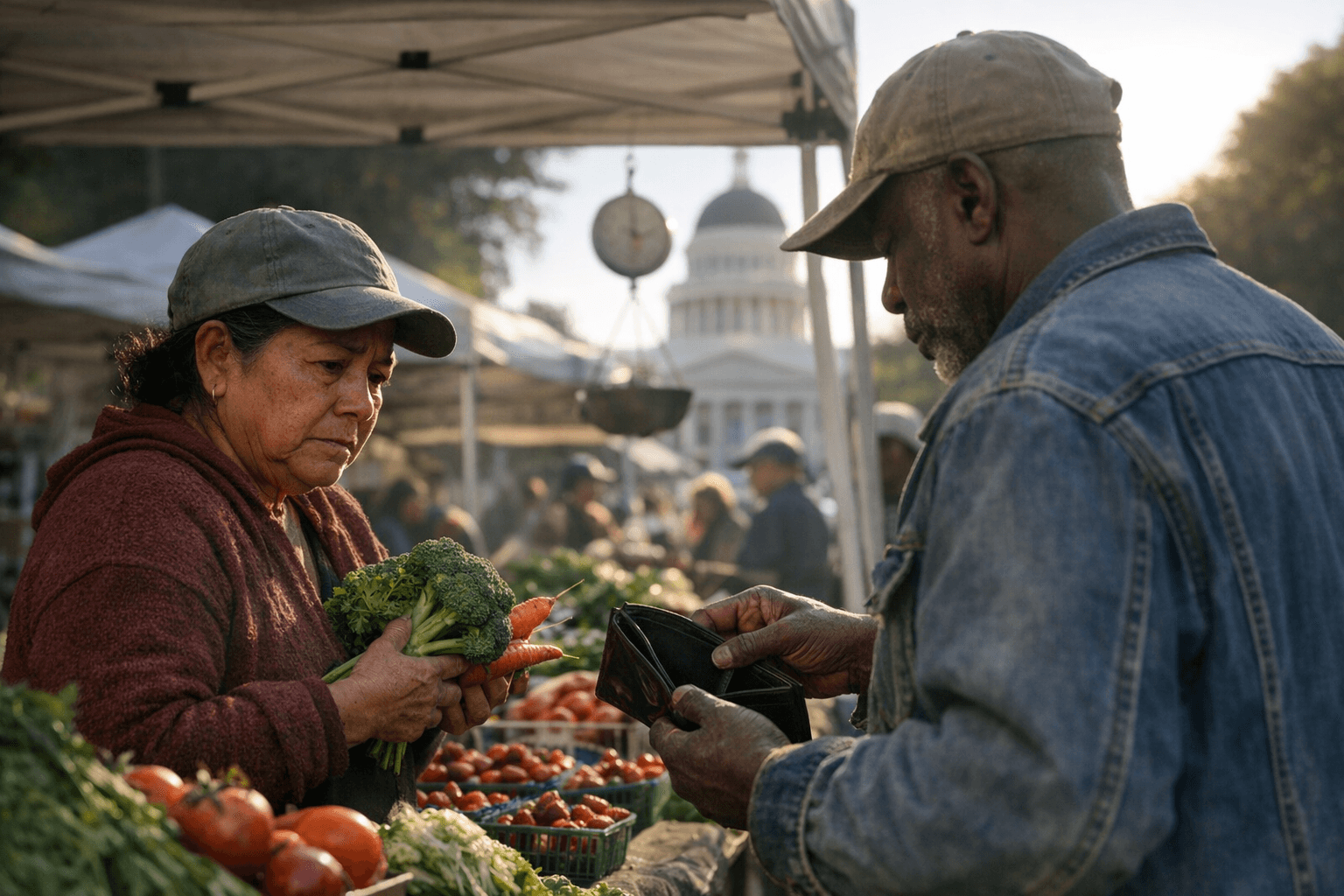
The Agricultural Institute of Marin, which operates nine farmers markets in the region, matches up to $15 in CalFresh dollars at each of its markets, effectively turning $15 into $30 for shoppers. At The Rollin' Root, the match is unlimited, and all fresh fruits and vegetables purchased with an EBT card are sold at 50% off. Across AIM's nine markets, roughly 1,000 CalFresh shoppers visit each week, spending more than $30,000 weekly in combined CalFresh and Market Match funds with local farmers and food producers.
Advocates are pushing back on the proposed cut. The Agricultural Institute is directing community members to savemarketmatch.org, where they can sign a coalition letter and access a sample script for calling state legislative representatives urging support for full California Nutrition Incentive Program funding. A separate legislative push, a proposal introduced by Assemblymember Dr. Joaquin Arambula and co-sponsored by SPUR and Nourish California that would have created a penny-for-penny CalFresh rebate for California-grown produce at participating retailers, did not pass earlier this year, leaving Market Match's existing state funding as the primary vehicle for nutrition incentives at farmers markets.
SPUR has framed the long-term goal as a permanently funded healthy food incentive program integrated into CalFresh at both farmers markets and grocery stores statewide. The organization's Double Up Food Bucks pilot, currently operating at seven grocery stores in Santa Clara and Alameda counties, represents its next step toward that goal. For now, whether Market Match survives past early 2027 depends on what California's Legislature does with the state budget in the months ahead.
This article was produced by Prism’s automated news system from verified source data, official records, and press releases, then run through automated quality and moderation checks before publishing. The system is built and supervised by the people who set the standards it runs under. Read our full AI policy.
Did this article answer your question?