Mayor Lurie, Supervisor Melgar Launch San Francisco Women's Agenda for Citywide Policy
A new citywide Women's Agenda, built on four policy pillars, puts SF on record with its most coordinated push yet for women's health, safety, and economic security.
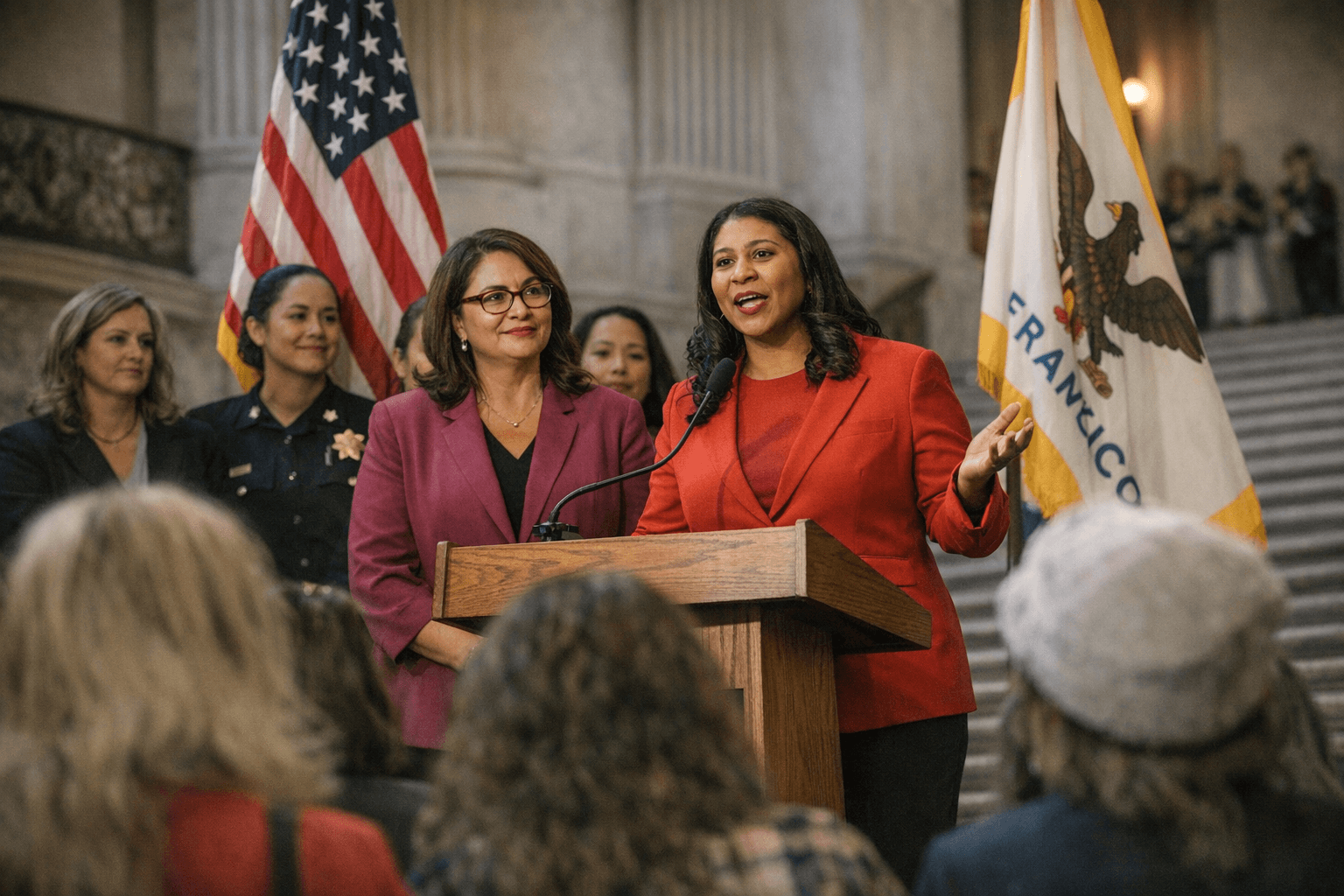
San Francisco's most sweeping cross-departmental commitment to women's policy in recent memory took shape last Thursday, when Mayor Daniel Lurie announced the launch of the San Francisco Women's Agenda alongside District 7 Supervisor Myrna Melgar and the San Francisco Department on the Status of Women.
According to Supervisor Melgar, San Francisco has the worst birth disparities by race of any city in California, a stark backdrop against which the new agenda lands. The Women's Agenda is structured around four pillars named explicitly by Mayor Lurie: health, safety, civic leadership and community engagement, and economic mobility and security.
"The women's agenda builds on years of work by advocates, community leaders, and city partners, and marks the beginning of a clear framework for advancing the well-being, leadership, and opportunities for San Francisco's women and girls," Lurie said. "This work is grounded in four core policy pillars that align closely with my administration's priorities: health, safety, civic leadership and community engagement, and economic mobility and security. Thank you to Supervisor Melgar and the Department on the Status of Women for their leadership, because when women thrive, San Francisco thrives."
The announcement positions the Women's Agenda as the capstone of a series of gender- and family-focused moves Lurie has made since taking office. San Francisco leaders launched the Strong Starts initiative in late February to address stark racial disparities in maternal and infant health, including disproportionately high rates of premature birth and infant death among Black families. Lurie said San Francisco spends more than $20 million on maternal and infant care per year, but outcomes are not the same across communities; Black babies are born preterm at nearly twice the city average and make up 20 percent of infant deaths despite accounting for only 4 percent of all births.
Lurie also announced legislation with Assemblymember Catherine Stefani earlier this year to support survivors of domestic violence. In his State of the City address, he unveiled the Family Opportunity Agenda, aimed at making San Francisco more affordable for families and including steps to ensure every family in the city has access to child care.
For more than 30 years, the Department on the Status of Women and the Commission on the Status of Women have led work in San Francisco on reducing domestic violence and sexual assault, addressing sexual harassment in city government, combating human trafficking, and advancing pay equity, reproductive justice, and gender-inclusive services. The Women's Agenda now formally enlists DOSW as a lead partner in a broader, coordinated citywide strategy.
The announcement did not include a budget figure, implementation timeline, or list of specific programs under each pillar. The Mayor's Office has not yet specified which city departments will take the lead on each policy area, nor what metrics will be used to measure progress. Those details are expected to follow as the agenda moves from launch to implementation.
This article was produced by Prism’s automated news system from verified source data, official records, and press releases, then run through automated quality and moderation checks before publishing. The system is built and supervised by the people who set the standards it runs under. Read our full AI policy.
Did this article answer your question?